
Religion, Revolution, and Betrayal in Safavid Iran: Shah Ismail, Shah Abbas, and the Qizilbash (TT26)
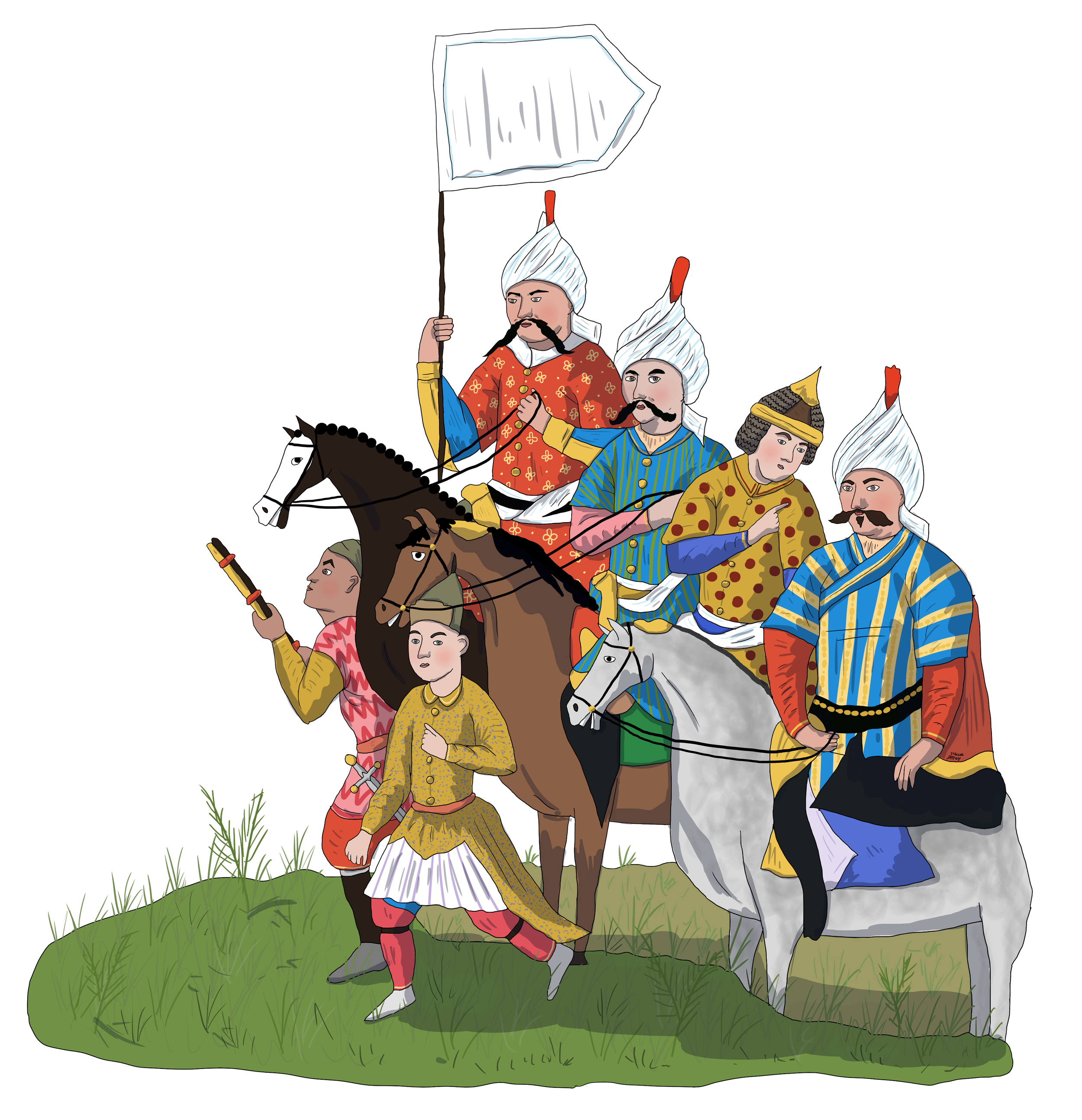
1501. A red-haired teenager named Ismail Safavi entered the city of Tabriz. He was no visitor, however, or ordinary young man. At 14, he was the master of a Sufi order, the leader of an army of fanatical disciples, known as the Qizilbash, and now Shah of Iran - a title his Safavid descendants would hold for more than 200 years. Yet there was more. To his devoted followers, he was the second coming of a litany of Islamic and Iranian figures - he was Jamshid, Fereydun and Khusraw; Khizr, Jesus and Ali come again. Yet even this was not all. He was the Absolute Truth, al-haqq. He was God Incarnate, and had come to bring the world into a new age.
This may leave you with a number of questions. How did this teenage boy come to be so revered, and where did he acquire an army of followers? The Safavids are also the dynasty that enforced Twelver Shiism on Iran - yet these beliefs are far beyond the pale of orthodox Shiism; professing reincarnation (tanasukh) and divine incarnation (hulul). This was not all, as we shall see - Shah Ismail and his Qizilbash followers carried with them a host of beliefs and practices that would scandalise any Shiite cleric. And from there, how did Iran come to follow the legalist, clerical form of Shia Islam that stands as the Islamic Republic’s official religion today?
Today I have come to the world as a Master. Know truly that I am Haydar's son.
I am Fereydun, Khosrow, Jamshid, and Zahhak. I am Zal's son (Rustam) and Alexander.
The mystery of ana al-haqq is hidden in this my heart. I am the Absolute Truth and what I say is Truth.
My name is Shah Isma'il. I am God's mystery. I am the leader of all these ghazis.
My mother is Fatima, my father is 'Ali; and eke I am the Pir of the Twelve Imams.
I have recovered my father's blood from Yazid. Be sure that I am of Haydarian essence.
I am the living Khidr and Jesus, son of Mary. I am the Alexander of my contemporaries.
Look you, Yazid, polytheist and the adept of the Accursed one, I am free from the Ka'ba of hypocrites.
In me is Prophethood and the mystery of Holiness. I follow the path of Muhammad Mustafa.
I have conquered the world at the point of my sword.
Shah Ismail’s Divan, his own book of devotional poetry.
To understand the fall of this form of religiosity, first we must understand its origins, which lie in the late medieval landscape of the Anatolian highlands and Azerbaijan. This occupied a liminal zone at the edge of the Islamic world, populated by recently converted, nomadic Turcoman tribes, Sufi lodges and wandering dervishes. Islam here tended to be mystical and heterodox, focused less on the law, the sharia, and more on miracle-working saints, their shrines, and mystical unity with the divine, this was the true path to paradise, not obedience to legal minutiae. God was beyond all rational understanding, only through genuine religious experience could he be reached. Persian high culture also permeated the lives of the Turkic tribes, instilling in them the idea of javanmardi, a Persianate ethos analogous to chivalry. Integral to the tribes here was also the legacy of great nomadic conquerors of the past, above all Genghis Khan and Timur. Particularly, wine-drinking was extremely prominent, tying together traditional Turco-Mongol culture of heavy drinking with Sufi symbolism, in which wine and drunkenness represented the unveiling of mystical secrets and union with God. Women also enjoyed substantially more freedom than in much of the world, occupying prominent public posts, and mystical religious ceremonies were often not segregated by gender. Here, wandering Turcoman nomads would gather in Sufi lodges and receive initiation from their pirs, while drinking wine deeply, and regaling their companions with tales of days gone by, of the Shahnameh, of the martial deeds of Ali, and of the life of Abu Muslim, who had brought the wicked Umayyads low and avenged the family of the Prophet, only to be betrayed by his patrons, the Abbasids. The Abumuslimnameh, the corpus of stories in Turkish and Persian, telling legendary versions of the life of Abu Muslim, would become central to Qizilbash culture, embodying both their heterodox Shiism and tradition of oral storytelling.
It was out of this environment that famous Sufi figures such as Rumi and Haji Bektash emerged, as well as the great imperial rivals of the Safavids, the Ottomans. But most importantly for us, it was in this environment that Qizilbash Islam, and Qizilbash culture developed, and of course, the Safavid order. It begun its life as a relatively normative Sufi order in the highlands of Ardabil, in the modern Iranian province of Azerbaijan, one of many that populated this landscape, under the leadership of Saif al-Din Ardabili. However, by the time of Ismail’s grandfather Junayd, they had undergone a radical transformation, embracing the violently heterodox tradition known as ghuluww, or ‘exaggeration’, referring to an extremist, heretical and esoteric Shia tradition which took reverence for the imams far beyond the pale of normative Twelver Shiism, at this point well established in Lebanon and Iraq. To provide a brief overview, the Shiism differs from Sunnism in that it affirms that spiritual leadership of the ummah belongs to the ahl al-bayt, the family of the Prophet, traced from his cousin and son-in-law Ali, the first imam, through his descendants with the Prophet’s daughter Fatima, the twelve imams, the last of whom went into ghayba or ‘occultation’ in the year 874. Essentially, this means that he is still alive yet is hidden, and he will eventually return as the Mahdi, the promised saviour who will bring about the destruction of injustice and the end of days.
The notion of the Mahdi was extremely important for the early Safavids, as we will soon see. This also went along with the condemnation of the first three caliphs, Abu Bakr, Umar and Uthman, revered by Sunnis, who were thought to have usurped Ali’s authority. However, ghulat went much further than this in an exceedingly radical sense, hence, they were termed ‘exaggerators’ by more mainstream Shia writers. This included viewing the twelve Shia imams, traditionally seen as infallible spiritual leaders descended from the Prophet as being theophanic manifestations of the divine on earth, an unbelievably heretical idea to both Sunnis and Shias, known as hulul. This was not all, they carried many other seemingly un-Islamic beliefs, such as continuous cycles of reincarnation or metempsychosis, tanasukh, which could only be escaped by achieving unity with Allah through initiation into sacred and esoteric mysteries; the vast majority of souls returned in new bodies upon death.
There was also a belief in cyclical time, and a drama in heaven involving a cosmic fall, which precipitated the creation of the material world. The origins of this tradition are shrouded in mystery, however, it emerged in the 8th and 9th centuries, and many of the aforementioned beliefs can be found in late antique Gnosticism, Neoplatonism and in forms of heterodox Zoroastrianism known as Khurramism. Accordingly, there has been much theorisation about the genealogy of the tradition, particularly its esoteric and gnostic character, leading some to regard the ghulat as Islamic gnosistics. Whatever its origins, the tradition endured underground, producing various esoteric texts and giving rise to numerous rebel movements. On a religious level, these ideas had a profound influence on Ismailism, and gave rise to two offshoots of Islam, the Druze and the Alawites, who, to this day, practice a form of ghulat religion, most likely ascribing to all of the aforementioned beliefs, thought the highly secretive nature of both makes this hard to say for certain. While some ghulat left the fold of Islam, others clandestinely preserved it within Islam, where it found fertile ground in the highlands of Anatolia and Azerbaijan, where it would be embraced by the Safavid order, where most Muslims were recent converts, and central authority had been shattered by Timur. Here, Sufism and ghuluww would fuse. In many ways, the two went well together, both focused on charismatic religious authority, and both had a heavy dose of esotericism. These two provided the spiritual foundation for a truly revolutionary religious and military movement, once the final piece of their religiosity came into play.
This final piece was an antinomian apocalypticism, the core of which was the notion of the abrogation of the law. The idea of the abrogation of the law is one with deep roots in the Abrahamic tradition. In Christianity, the messiah has come, the law has already been abrogated, there is no Christian equivalent to sharia or halakha, though the radicalism of this idea has long since faded. Its most radical variation however, was present within Islam, and to an extent within Judaism. Unlike Christianity, these two traditions have a vast corpus of law, which regulate almost every aspect of a believer’s life, down to its most minute actions.
To many, this can feel deeply oppressive, constricting to soul; reaction to this provides the core of many mystical traditions, Sufism among them. Abrogation, however, was far more radical, it promised not a relief from this at the height of spiritual achievement, but the abolition of the law in in its entirety. This would obviously be an attractive prospect, but how does a religious person reconcile this with the idea that religious law was given by God? The solution is that it is a temporary, necessary evil. In the past, there was a Golden Age, where the presence of the divine was felt immanently throughout the world, there was no need for strict rules, all were pure, eternally basking in God’s presence. Not only was the law absent, but in this idyll, there was of course no oppression, no injustice.
Yet, there was some great disaster, humanity fell, God receded from the world, and this new fallen humanity, desperately longing for reunion with a now-distant God, was given a body of law, to guide them through this broken material world. So, the law is now needed, but once, it was not, and perhaps, one day, it will obsolete once again, the Golden Age could be restored. This is where messianism comes in. When the messianic figure comes, in this case, the Mahdi, the world will be restored to the Golden Age, its natural state. The law would become obsolete, as all would be good and the presence of God would be felt by all. This was the in many ways the crux of Qizilbash religiosity, it had antecedents in both Sufism and the ghulat, and above all, the promise of the abrogation of the law, of total freedom and liberation through mystical union was a powerful revolutionary promise. The Qizilbash revolution would utilise this the most successfully, yet there were not the only revolutionary-messianic movement to do so; Islamic history is replete with analogous movements, the Qarmatians, the Ismailis at Alamut, the Babis in 19th century Iran, and outside of Islam, the 17th century Jewish messiah Sabbatai Sevi would do the same, as would his ‘second coming’ Jacob Frank. Undeniably, it is a compelling promise, that speaks to something in the soul. So compelling, that if someone could prove to be this long-awaited messiah, he could inspire undying loyalty.
A flower has blossomed on the tree, and is now come to be a companion to the Shah.
In Pre-Eternity it was the Mystery of the Shah, and now it has come to be a companion of his Mystery.
No one can become a Qizil-bash, until his heart is a-burning and his breast a-bleeding like a ruby.
In the time of the mystery he was the Light of Muhammad, and now he has manifested himself to the world crowned with a red crown.
His name is Isma'il, he is of one nature with the Prince of the Faithful ('Ali); on seeing him the outsiders would prefer to turn to stone.
The heroic crusaders [ghazi] have come forth with
"crowns of happiness" on their heads
The Mahdi's period has begun.
The light of eternal life has dawned upon the world.
Under what circumstances the Safavids embraced this strain of religiosity is shrouded in mystery, though as mentioned, it was clearly in full force by the time of Ismail’s grandfather Junayd. Throughout his life, and the life of his son Haydar, the Safavids would transform themselves from purely religious figures to leaders of a messianic army. Key to this was the master-disciple connection. In Sufism, a Sufi master takes on followers who wish to embark on the mystical path via a ritual of initiation, the follower becomes a pupil or murid who swears total obedience to his spiritual master, the murshid. This had of course been the basis in which the earlier Safavids had taken on purely spiritual disciples. Now, this was reforged, the spiritual element was still there, with the added element that the Safavid pir was not just a wise sage, but God in human guise. This connection was also militarised, by becoming a disciple of the Safavids you were not just a spiritual follower, you were an eternally loyal solider in his holy army; you had become a Qizilbash.
The sign of this initiation was a red hat created by Junayd, with twelve folds to symbolise each of the Twelve Imams. If one donned this red hat, the world would know he was a Qizilbash. In fact, this is the meaning of the word, Qizilbash means red-head in Turkic. For two generations, the Safavids gradually expanded the ranks of their followers, they spread the word of the imminent incarnation of the Mahdi, the doctrines of tanasukh and hulul, and initiated more and more warriors into their order. Eventually, the time was ripe for the revolution to begin, as the Qizilbash would sweep down form their mountain stronghold in Ardabil, and all the world would tremble.
The time came, as you might imagine, following the accession of Ismail as head of the order, which he did at only 7 years old, following the death of his father. The Qizilbash knew it, the Twelfth Imam, the Mahdi, had manifested himself in this boy. By the time he was 14, the hour was nigh. The revolution began with Ismail’s conquest of Tabriz in 1501, which we began with. You will by now familiar with his messianic status, his previous lives, and his promises of glory and liberation. This was spread by his own poetry, written in the Turkic dialect known as Old Azeri, clearly intended for his Turkic, Qizilbash disciples as devotional texts, and it also served to spread the word of his coming to other Turkic tribes outside of his control, to bring them into the Qizilbash movement, at which it would be quite effective. For those who did not submit however, now Ismail came with fire and sword. The Qizilbash roared out of highlands, carrying all before them, with the teenage Shah Ismail at their head, as commander and messiah.
Within a matter of years, all of Iran stood under Ismail’s authority. The Aq Qoyulnu, a Turkic confederacy who ruled western Iran and parts of Anatolia, were cast down, all their domains were swallowed up by the Qizilbash, the heartland of Iran was no win their power. Ismail then turned east, sweeping away disparate local rulers; the collapse of the Timur’s empire meant there was no great power left to oppose them. For the first time in near a thousand years, all of Iran was under the authority of an Iranian ruler. Kings of the past, the Samanids, the Buyids and others, had been powerful Persian dynasties, ruling openly as Iranians. Yet they never controlled all of Iran. Others, the Seljuks, Ilkhans and Timurids had, yet they were foreign conquerors, who may have been Persianate, but not Persian. Now, for the first time since the fall of the Sassanians, cast down by the Arabs and mourned at the end of the Shahnameh,all of Iran was under the authority of an Iranian dynasty, under the authority of the Shah of Iran. Not only modern Iran, but also Iraq fell under Safavid control. The heartland of both the ancient Sassanians and the Islamic world, both Ctesiphon and Baghdad, were under the shadow of Shah Ismail. The conquest was far from complete, however. Now, as he marched further east, Ismail would face another one of the age’s great conquerors, Shaybani Khan.
Shaybani Khan was the dreaded ruler of the Uzbeks, who had taken the cities of Bukhara, Herat and Samarkand by force, founding a vast empire and expelling the Timurids from the lands of Turan. Samarkand he had conquered from the Timurid prince Babur, who later in life would launch a great invasion into Hindustan, and become the first Mughal emperor. Babur would found a dynasty that would outshine even the Safavids, but now he was a desperate and isolated exile, enclosed in Kabul, who was forever dreaming of a return to his beloved Samarkand. Even after his later great conquests, he saw all of India as poor consolation for the loss of Samarkand, which he still longed for. With the rise Shah Ismail, he saw a chance to retake it, and destroy his hated foe Shaybani Khan. This he did, for a time becoming a Qizilbash himself, donning the red hat and pledging allegiance to Ismail and revolutionary Shiism.
Now however, the bane of the Timurids was cast down at x, and as the Safavids triumphed, the Qizilbash performed one of their most infamous practices: cannibalism. In a state of religious battle-ecstasy, the Qizilbash would devour their foes in a terrible show of devotion to Shah Ismail. This was the ill fate which fell upon Shaybani Khan, taken on the battlefield by the faithful warriors of the Mahdi, he was eaten alive. Shah Ismail is reported to have told his followers ‘whoever among our sincere and special servants loves our imperial head should partake of the flesh of this enemy’. This was not an act of savagery in the minds of the Qizilbash, rather, it was a representation of their revolutionary disavowal of the law, all that was forbidden was now permitted, hence, to transgress in such a flagrant way was the ultimate expression of faith. In the aftermath of the battle, Babur was accordingly granted Samarkand, yet only temporarily, he was shortly expelled once again, for the third and final time, and reverted to Sunnism.
Meanwhile, Ismail had established total dominance over Iran, and was able to force his religious dispensation upon the country. The most prominent part of this was mass, often forced, conversions to Shiism. Iran had in fact been majority Sunni before this, here, the era of Shiite Iran begins. As mentioned, many of these conversions were forced, and Shah Ismail took to remaking Iran in his image. At Friday prayers across the empire, the first three caliphs along with Aisha, the wife of the prophet, were ritually cursed, the epitome of blasphemy to a good Sunni. This was accompanied by the destruction of numerous Sunni holy sites, such as the shrine of the great jurist Abu Hanifa, and the saint Abdul Qadir al-Gilani. In turn, Ardabil, the homeland of the Safavid order, was elevated as a shrine-city and the primary centre of pilgrimage in Iran. Shia public performances also began to proliferate, notably, theatrical reenactments of Husain’s martyrdom at Karbala. However, we must remember that although ‘Shiism’ was forced onto Iran by Shah Ismail, this was not Shiism as exists today.
This was not a faith of clerical legalism, this was the mystical, Sufi version of Shiism as practiced by the Qizilbash. The two share a reverence of the imams, yet in their other beliefs and daily practice they were vastly different. Accordingly, the vast majority of orthodox Shia clergy, at this point entrenched in Iraq and Lebanon, firmly condemned Shah Ismail and his followers. These doctrines, tanasukh, hulul and others, were just as heretical to them as they were to the Sunnis, the good, orthodox clergy detested the Qizilbash.
But why did it matter? God was with them, he had sent them their divine king, no matter what some preening scholar may say.
It should be noted however that while most clergy condemned Ismail, not all did. One Lebanese cleric, Ali Kiraki, chose to endorse Ismail, emigrated to Iran, and became part of his entourage. Yet he did not endorse Qizilbash religiosity at all, he sought instead to guide the Safavids towards the ‘righteous’ path of orthodoxy and the sharia. He was condemned by most of his contemporaries, and made very little serious headway during Ismail’s reign, but in the end, he would have the last laugh.
On an administrative level, Iran was now governed by a Qizilbash confederation, a decentralised state ruled by the oymaqs, chiefs of the Qizilbash tribes, with the Safavid Shah as the master of this religious movement. With the tribes united, it could exert fearsome military power, yet, if not, the central authority could prove very weak, as later shahs would learn.
The utterly transformative nature of these events cannot be overstated. After almost a thousand years, a true Persian Empire had come again, and in military terms, it appeared completely unstoppable, with its legions of warrior-disciples and for or the first time since the fall of Alamut to the Mongols, there was a powerful Shia state. But most important above all was the revolutionary nature of these events. The Safavid religious dispensation, with its radical promises, threatened to remake Islamic civilisation as a whole, if the Islamic heartland could be captured by the Qizilbash, truly, a new world would dawn, where the all oppression would be cast down. Here, we have a revolutionary movement, which tore down and devoured previously invincible warlord, and bent all to its will, under the leadership of a conquering messiah-king, Shah Ismail, the wonder and terror of his age. His name rang out over the world, Turkish tribes under Ottoman authority stirred, and looked to him as their saviour, while orthodox clerics, Sunni and Shia alike denounced the mad heresiarch. In Europe, wild tales of Ismail, or ‘the Sophy’, as they knew him, spread across Christendom.
News circulated that a great prophet had arisen in the Orient, that his armies were unstoppable, and soon, he would turn west and smash the hated Turks, and all of the East would be subject to him. His religious views were a matter of speculation, it was clearly recognised by most that he practiced a different a different form of Islam to the Ottomans, that he was a Sufi, and that he revered ‘Ali, Esse [Hasan], and Ossem [Hussein]’, and that his followers thought him divine. Some, deluded, observers thought that since he opposed the Ottomans, he must be a secret Christian, needless to say there is no basis for this however most intriguingly of all, some of his revolutionary messaging seems to have spread to Europe, and enthused many. During Carnival in Florence, there was a procession lamenting the lot of the poor, who sang this song:
And we are pretty certain
that the Sophy will come soon
who will take from one and give to another
levelling off every sign of wealth
and then it will become clear
who has sense and prudence.
And whoever is a winner, and is well off now,
will soon be unhappy,
because fortune never allows anyone in a happy state to stay that way
The only thing that makes us mourn is that someone tells us
“His coming is delayed too long.”

Not all were filled with such enthusiasm, panic ensured throughout the Ottoman Empire. If Shah Ismail could ride over the sultan, all of the Islamic world would fall at his feet, the Qizilbash revolution would become world-revolution. And this was not out of the realm of possibility. The tribes of Anatolia came out of the same environment that the Safavids did, they were cousins, and they were chafing under the Ottomans’ centralising rule. They were notoriously attracted to charismatic Sufi leaders, if Ismail could gain their allegiance, the sultan would weep. Immediately, efforts began to make this a reality, Shah Ismail’s poetry was clandestinely distributed throughout Anatolia, word of the coming messiah spread, and many headed the call. We have reports from horrified Ottoman investigators of the practices of the Anatolian Qizilbash, giving us a rare insight into their daily practice. They tell us that they did not worship in mosques, rather, in Sufi lodges or tekkes, that they did not practice the five daily prayers, showing disregard for the sharia, that in their ceremonies they danced and drank wine, and that there was no gender segregation; women participated in these ceremonies too. Thus, the hope was, that when the Safavids entered Ottoman territory, the tribes would rise up and join them; with every minute that passed, the strength of the Safavids grew, and their greatest triumph approached.
Sultan Selim the Grim was not a man to be trifled with, however. His name was not undeserved, he was utterly without mercy or humour, he doubled the size of his empire with the conquest of Syria and Egypt, and for the first time, an Ottoman sultan had taken the title of Caliph, commander of all believers. By the year 1514, the time had come for the two of the greatest rulers of their age to face each other in battle, the defender of Sunni orthodoxy against the heretical messiah. They met at Chaldiran, near Lake Van in eastern Turkey. The battle opened with a ferocious charge on the Ottoman flanks by the Qizilbash, hither to invincible, yet it was in vain. The valour of the Qizilbash cannot be doubted, driven on by the apocalyptic faith, they crashed into the enemy lines, inflicting devastating casualties upon the Turks, yet this ended in disaster. Selim’s army was in possession of state of the art gunpowder and cannon, and the warriors of Qizilbash were cut down by its relentless fire; even Ismail himself was wounded. Selim had triumphed, the Qizilbash were forced to retreat in humiliation, but not just the humiliation of a lost battle, all their dreams lay shattered on the field of Chaldiran.
The inner life of Shah Ismail past this point is forever beyond us. Other monarchs of this age are shockingly open to us, Babur and Shah Ismail’s son, Shah Tahmasp, left behind incredibly intimate memoirs, inviting us to share in all of their ambitions, triumphs and sorrows. Yet Ismail remains an enigma to us. He was a living God to the Qizilbash, and like their God, he remains an ineffable mystery, beyond the rational mind. Was he a bloodthirsty monster, a cynic who exploited fanaticism to carve a red path to glory? Or was he a true believer, a mystic who believed in his own revolutionary promises, and shared in his followers’ dream of a new world? If the latter, what must he have felt when it all came crashing down, when fortune deserted him?
The rest of Shah Ismail’s life gives us much more reason to believe the latter. Although he maintained control over a vast empire, he almost entirely retreated from public life after Chaldiran, never again did he lead an army. He took to drowning his endless sorrows in wine, only leaving the palace to take out his anger on the hunt. At 14 he was a world-conqueror, a saviour, a God. At 36, he was dead, having spent the last ten years of his life in drunken misery. The faith of the Qizilbash too, must have been shaken. Their living god was defeated, the great revolution had not conquered the world, the law was not yet abrogated. Yet their religion became entrenched in Iran, as they became entrenched as its elite. Across the Shah’s domains they told stories of the glories of ages past, of the heroism of Ali and Abu Muslim, drank wine, both real and symbolic, while longing for divine love, and the day when their master would lead his disciples to paradise. This need not come in their present life, upon death, their souls would not depart to heaven or hell, they would simply return to this world; for now, the way of tanasukh reigned in Iran.
Yet all was far from well. Upon Shah Ismail’s death, Iran collapsed into total chaos. Her neighbours circled, the heir apparent, Tahmasp, was only ten, and with the death of their messiah-king, the Qizilbash lords were divided amongst themselves. What followed was a brutal civil war, enemy invasion and weak central authority. The Uzbeks attacked from the east, and the Ottomans attacked from the west, all of Iraq fell to them, and worst of all, Tabriz was taken, the capital itself. In response, the court had to flee to the city of Qazvin. Civil war broke out too between different Qizilbash tribes. Eventually, the crisis subsided, the country was reunited, the frontiers were secured. However, until 1532, when he was 18 years old, Shah Tahmasp was a puppet of a series of powerful Qizilbash chiefs, in his own words, he said that he was not Shah in reality until 1532, when he clawed back true power from his regent.
The reign of Shah Tahmasp occupied a strange middle ground between revolutionary mysticism and later Twelver legalism. Tahmasp recognised that the Qizilbash tribes were far too powerful for his liking, he had learnt that in his years of denouement, yet was never powerful enough to reign them in. On a religious level, he broke with the imminent messianism of his predecessor, yet was still mystically inclined, though in a different way, and only subtly attempted to alter Qizilbash religion. This was largely inevitable, the qiyamat had not come with Shah Ismail, and you cannot permanently run a state on a revolutionary footing.
Shah Tahmasp too seemed very uncomfortable with the idea that his followers considered him divine. That is not to say however, that he did not consider himself divinely ordained, his memoirs are replete with descriptions of his own mystical dreams, he repeatedly experienced visions of Ali and the other Imams, who provided him with divine guidance. For the most part too, the Qizilbash continued to act much as they had done under the reign of Ismail, they dominated the administration of the country, and continued to drink, dance and sing, in their lodges.
His reign however did see the growing and insidious influence of the Arab cleric Ali Kiraki, who began to increasingly rail against Qizilbash Islam, demanding the strict enforcement of the sharia and that orthodox Twelver Shiism be elevated instead of mysticism. Under Tahmasp, there were only limited steps taken towards this, after the anarchy of his early reign, Tahmasp did desire to reign in his subjects. Yet, as we have seen, he was still very much as mystic, and was never powerful enough to remake the empire, any sign of internal dissent would signal to the Ottomans that now was the time to strike, and destroy the Safavids once and for all. Regarding foreign affairs, he managed to somewhat restore the empire after the disaster of Shah Ismail’s death. The eastern frontier was secured from the Uzbeks and most importantly of all, Tabriz was reclaimed, and that humiliation was expunged. Despite this, he was forever afraid of the power of the Ottomans, and took a decidedly defensive policy towards them, and never managed to recover Iraq.
He did however see immense success in India helping restore the exiled emperor Humayun to his throne, who in return half-heartedly converted to Shiism, donning the red hat of the Qizilbash, as his father Babur had once done. The Safavids would forever lord this incident over the Mughals, their emperor had submitted to Tahmasp as a student did to a master. Overall, the situation on the ground was not too different from where it had been at the end of the reign of Shah Ismail. The imminent revolution was over, but the Qizilbash were still the great lords of Iran, and it was their religion which mostly dominated, though to a slightly lesser extent.
However upon Tahmasp’s death, much the same as last time occurred. A civil war broke out between different Qizilbash factions, the Ottomans attacked again, and when the dust settled, there was a young Shah controlled by a powerful Qizilbash lord. All of this must have left quite the impression on the young Shah Abbas. Ultimately it instilled one conviction above all else, the power of the Qizilbash must be broken, and an absolutist regime established in its stead. Not only must the their political power be broken, their religion must be extirpated. Abbas must have seen how orthodoxy allowed the Ottoman sultan to exert immense control over his domains, and it was well known that the Qizilbash were united by their faith, if they were to be destroyed, their faith must be destroyed too. As Shah Abbas’ court chroniclers remarked, the din (religion) and dawlat (state) of the Qizilbash were on the same, to break the latter, Abbas needed to break the former. It was decided that ‘the way of tanasukh’, as Qizilbash religiosity was termed, must be eradicated from Iran. During the long reign of Shah Abbas, from 1587-1629, this would indeed come to pass. As a sign of a new absolutist era, the capital was relocated once again to Isfahan, which would become the seat of the Safavid empire for the rest of its lifetime.
Resolved to destroy the Qizilbash, the betrayal was consummated by the great increase of the power of the orthodox clergy. This had begun under Shah Tahmasp, but under Abbas they became to true religious authority within Iran. Following the model of Ali Kiraki, great numbers of clerics were imported from Lebanon and Iraq, and they were granted positions of authority over the religious affairs of the country, in order to break to spirit of the Qizilbash. The sharia increasingly began to be enforced in public, wine and music were supressed, and Islamic dress codes were enforced, upon women in particular, who were increasingly forced to remain inside their households. Heterodox belief was also repressed, only the orthodox Twelver Shiism of the Jafari school was tolerated, and in this effort, the clerics had the full backing of a highly capable and ruthless Shah. They set up madrasas across the country, to train a new generation of clerics. Sufi orders were crushed, symbolic of this was the massacre of the ‘Sufis of Lahijan’. These were a group of Sufis who had been the earliest and most loyal supporters of the Safavids, yet this did not avail them, they now represented a threat to orthodoxy, and none were spared. The betrayal of the Qizilbash could not be made any more explicit.
As for the Qizilbash who stoically maintained their loyalty to the Safavid dynasty, their fate was not much better, forced to live out a bitter parody of their traditional way of life. For example, the Safavid order still existed in name, the Qizilbash still swore their traditional oaths of loyalty to their Shah and spiritual master, yet the spiritual basis behind these oaths was utterly gone, it was mere imitation, with no soul behind it. Eventually, even these elements faded away, many Qizilbash lords and families remained in Iran, and indeed, occupied some prestigious positions, but everything that made them distinctly Qizilbash was gone. The pilgrimage to Ardabil was supressed, instead, Mashhad, site of the grave of the 8th Imam Ali al-Riza was elevated instead, it was far more to the clergy’s liking.
The destruction of Qizilbash religiosity and culture is in many way embodied in the shift of attitudes towards the figure of Abu Muslim. He had been the leader of the military forces of the Abbasid revolution, who had essentially hijacked a revolutionary Shia sect known as the Kaysanites to serve their own ambitions of taking control of the caliphate from the Umayyads. Abu Muslim however was a true believer in the revolutionary cause, who detested the Umayyads for their treatment of the ahl al-bayt; he spread the revolutionary message throughout Khorasan, crushed the Umayyad’s armies time and time again and brought the Abbasids to the throne. Yet the second Abbasid caliph, al-Mansur, perceived him as a threat, and had him executed. The revolution was betrayed, and the Abbasids ruled as an orthodox Sunni dynasty. Yet his legend lived on, and he was enshrined as one of the heroes of the Qizilbash. As a supporter of the Kaysanites, who did not recognise all twelve imams, orthodox Shia clergy disdained him, yet the Qizilbash revered him as an ideal pious warrior, who embodied the principles of javanmardi and love for the ahl al-bayt.
That he was unorthodox mattered little, the ideas he stood for and his heroic deeds spoke for themselves. The legend of his life came to be known as the Abumuslimanameh, as mentioned, it had been in circulation before the rise of the Safavids, and until this point was a dear favourite of itinerant bard-like storytellers, who were a core part of Qizilbash culture. Yet now Shah Abbas and the clergy decreed that it must end, Abu Muslim was ritually cursed from the mosque pulpit, and all stories glorifying him were banned. The bitter irony here is that just as their hero was betrayed by the dynasty he brought to power, so would the Qizilbash be betrayed by the Safavids, and with them the spirit of their revolution.
Some of the Qizilbash however, would not take this lying down.
The turn of the final praiseworthy Sufis has arrived;
What the Arabs taunted the Iranians with has passed.
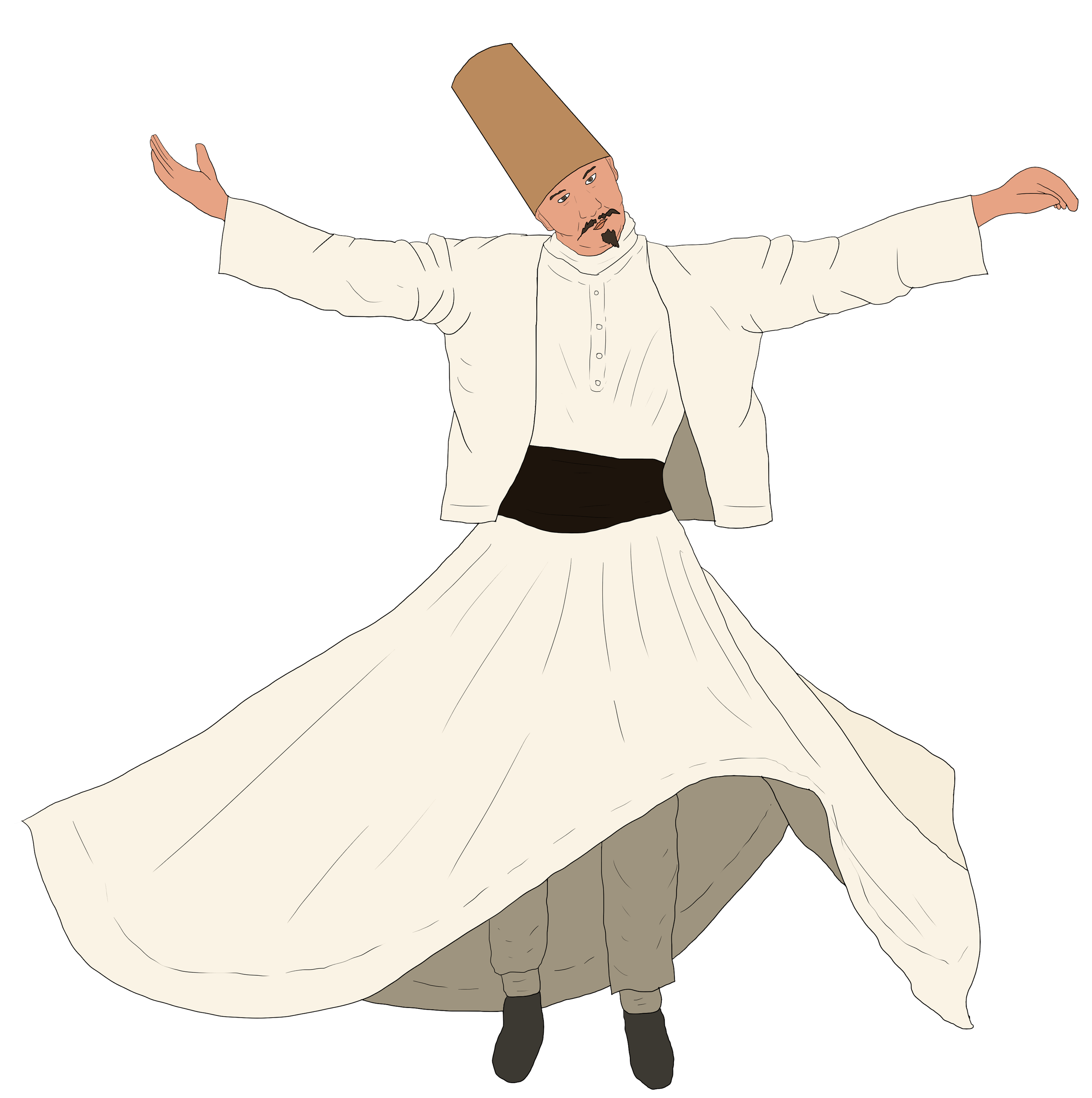
Mahmud Pisikhani, founder of Nuqtavism
With the increase of tensions between the Shah and the Qizilbash, for some, the bond of devotion was irrevocably broken. These men went on to depart from Islam all together, and proclaim a new religious dispensation, known as Nuqtavism. In practice, it shared much with older Qizilbash religiosity, Sufi-esque lodges, wine-drinking, esoteric secrets. But in its belief, it was radically new. The Nuqtavis conceived of two alternating cycles of history one Arab and one Ajami (Iranian). The age they lived in was the end of the 8000 year Arab age, where the Arabs and the religion of the Arabs, Islam, was destined to rule. In language that may be familiar, this age was one were God was distant from the world, and the law was in force. In that ancient Ajami age however, the Iranians had ruled the world, and God’s presence was felt everywhere. This age was distant, lost forever, or was it?
The Nuqtavi dervishes had calculated via keen astrological observance that the age of the Arabs was at an end, and that soon the Golden Age would come again, and the Safavid dynasty would be cast down. Not only was this a clear expression of Iranian nativism, a recognition that Islam was fundamentally foreign, but there was also an element of pre-Islamic survival in the Nuqtavi religion, they worshipped the Sun, and consciously evoked the pre-Islamic past, which they openly desired to return to. Essentially, we must say that this was an attempt to reassert Qizilbash religious power, reformulated after the failure of Ismail and the break with Abbas, but also, a reassertion of the Iranian spirit over a perceived foreign religious domination. The ‘Arabness’ of Islam must have seemed particular acute at this point, as Ali Kiraki dominated spiritual affairs, and ever increasing numbers of Arab clergymen arrived from Lebanon and Iraq.
Yet the Nuqtavi religion is pervaded by a sense of profound melancholy; its promises of a future golden age were quite different from the revolutionary enthusiasm of Shah Ismail. They seem more of a cry of longing for a vanquished past, a past whose fall was recognised as inevitable, yet is grieved bitterly all the same; the hope that it might come again aimed to soothe this grief. This melancholic fatalism is the same spirit which pervades much of the Shahnameh, no matter your earthly glory, it is vain, it too shall pass. But despite this, or perhaps because of it, many believed the promises of the Nuqtavis, their message spread amongst the Qizilbash, and amongst the general Iranian population too. They had followers in prominent positions, their lodges proliferated across the realm, the idea that they may take control of the empire did not seem too far-fetched. This truly would have been extraordinary, Iran may have entirely departed from Islam under the auspices of a new mysticism. Certainly, it did not seem far-fetched to Shah Abbas.
Early in his reign, he had seemingly taken an interest in them. All his relations with the Nuqtavis seem strange and dreamlike, at first, he had even become a Nuqtavi disciple, and was initiated into their mysteries. This was before he knew of their true beliefs however, upon this discovery, he turned violently against them. Then follows an extremely strange affair, that was conducted with utter seriousness. A Nuqtavi dervish was imprisoned, an on the day when they predicted the fall of the Safavid dynasty, Shah Abbas abdicated, and enthroned the dervish in his place, so that the ill fortune written in the stars would fall upon him. Once the stars had changed, he was deposed and executed, and Abbas was restored. He then launched a brutal military campaign against them across Iran, destroying their lodges and executing their leaders. Many of the survivors fled to Mughal India. One such survivor, Abul Fazl rose so high to become the grand vizier of the Mughal emperor Akbar. Not only this, Abul Fazil was the chief propagator of Akbar’s own new religion, the din-i-ilahi, which sought to unite esoteric Islam, Hinduism, Zoroastrianism and Neoplatonism. The fact that a Nuqtavi was the chief architect of this raises some very interesting questions about the Akbari dispensation. However, within Iran, their destruction was complete, and like their predecessors under Shah Ismail, their dream was shattered.
This was accompanied by the breaking of Qizilbash administrative power. The two went hand in hand, the proliferation of the clergy and legalism allowed the state to exercise far greater power, as a strict legal code was enforced upon Iran, naturally strengthening the central government. The power of the tribal chiefs was broken, whose conflict had torn apart the empire in the earlier civil wars, none were left with the power to oppose the Shah. Above all however, the spirit of the Qizilbash was broken. As we mentioned, the dawla and din of the Qizilbash were one and the same, with the religion broken, so too was their power in Iran destroyed. The other great part of this was the proliferation of the ghulam class, personal slaves of the Shah.
These men, often foreigners from the Caucuses, and often eunuchs, began to flood the royal household in Isfahan. They took up the vast majority of administrative duties, forming the governing class of the empire, and as slaves, they were the personal property of Shah Abbas, without families or factions to be loyal to. Thus, the proud chiefs of the Qizilbash were replaced with an army of castrated slaves. The language of slavery too proliferated throughout Iran, the relationship between the Shah and even his legally free followers was not cast in terms of master and disciple, as in the days of Ismail, but as master and slave, the free spirit of the tribesmen was gone.
Shah Abbas, Abbas the Great as he would come to be known, was, whatever else we may think of him, an extremely capable ruler. He had expanded the borders of the empire, reclaiming Iraq from the Ottomans (and the island of Hormuz from the Portuguese) enriched it greatly and built a beautiful city in Isfahan, all the while crushing all his internal enemies. Yet after his death, his successors could not equal him, they proved weak and pliable rulers for the most part. With the Qizilbash destroyed, factions that Abbas used to tear them down began to exert themselves. Slaves became increasingly influential in the royal household, but of more consequence, the Shia clergy grew to dominate Iran, both spiritually and economically. By the start of the 18th century, their control was near total. All of the elements which they had started to bring into Iran, the suppression of wine, music and mysticism became total, women totally receded from public life.
Qazis enforced the rulings of the Jafari school on the public, and 6000 bottles of the finest wine from Shiraz were publicly smashed. Purism and legalism had won. Even the great conqueror of the 18th century, the Iranian Napoleon, Nader Shah, who saved Iran from an Afghan invasion, united his shattered country after the fall of the Safavids, who sacked Delhi and carried off the Peacock Throne to Mashhad, could not break their hold on their country. The consequences of this should be apparent, centuries later, their rule is still in force, despite the efforts of shahs, presidents, or, for that matter, the Iranian people.
You can think what you will of Shah Ismail and his Qizilbash. Maybe you think that they were violent madmen, who brought only murder and destruction to Iran under the leadership of a delusional maniac. Or maybe, their revolutionary fire might still attract you, the promise of real religious experience, the abolition of pedantic legal restrictions, and the tyrannical clergy with them, along with all other tyrants; above all, the dream of a new world, the dream that was betrayed by those the Qizilbash loved the most, by a grasping tyrant, surrounded by his army of foreign eunuchs and slaves. Or perhaps, it is their later incarnation, the Nuqtavis, with their desperate, nostalgic longing for a past which they never knew, which most speaks to you.
Like much in this story, it remains a mystery as to what Iran might look like today if Shah Abbas had not triumphed, and a form of Qizilbash Islam reigned instead of legalism. It is not a complete mystery however, what Qizilbash Islam might look like. You might recall that there were Qizilbash who fell under Ottoman authority. They are, in fact, still around today, unlike the Iranian Qizilbash. They are known as the Alevis, and they make up almost 10% of the Turkish population. They have seemingly left violence and intolerance behind, instead endorsing a radically tolerant form of Islam, while continuing to practice their religion in much the same manner as the early Qizilbash, emphasising mysticism over the law, without gender segregation, while playing music and drinking wine.
This pacific form of religion may seem very far removed from the revolutionary, shrine-destroying, cannibalistic followers of Shah Ismail, but the connections are not difficult to see. Much of this is due their experience of centuries of oppression by Ottoman authorities, but it is at least an interesting thought, that if things had gone differently, this might be the dominant religion of modern Iran.
Reading List:
Babayan, K. & Harvard University. Center for Middle Eastern Studies. (2002) Mystics, monarchs and messiahs : cultural landscape of early modern Iran. Cambridge, Mass. ; Harvard University Press.
Kathryn Babayan, ‘Sufis, Dervishes and Mullas: The Controversy over Spiritual and Temporal Dominion in Seventeenth-Century Iran’, in Melville, ed., Safavid Persia: The History and Politics of an Islamic Society (London, 1996), pp. 117-38.
Kathryn Babayan, ‘The Safavid Synthesis from Qizilbash Islam to imamate Shi'ism’, Iranian Studies 27, (1994), pp. 135-161
Shahzad Bashir, “The Imam’s Return: Messianic Leadership in Late Medieval Shi‘ism,” in The Most Learned of the Shi‘a, ed. Linda Walbridge (New York: Oxford University Press, 2001: 21-33
Friedman, Y. (2010) The Nuṣayrī-ʻAlawīs : an introduction to the religion, history, and identity of the leading minority in Syria. Leiden ; Brill.
Said Amir Arjomand, The Shadow of God and the Hidden Imam: Religion, Political Order, and Societal Change in Shi‘ite Iran from the Beginning to 1890 (Chicago, 1984)
Sussan Babbie, Slaves of the Shah: New Elites of Safavid Iran (2004).
Ayşe Baltacıoğlu-Brammer, “‘Those Heretics Gathering Secretly …’: Qizilbash Rituals and Practices in the Ottoman Empire According to Early Modern Sources.” Journal of the Ottoman and Turkish Studies Association 6, no. 1 (2019): 39–60.
Corbin, H. (1983) Cyclical time and Ismaili gnosis.
Meserve, M. (2014) The Sophy: News of Shah Ismail Safavi in Renaissance Europe. Journal of early modern history. [Online] 18 (6), 579–608.
Mīrī, S. J. (2025) Revisiting the Critical Legacy of Shah Ismail : An Inquiry into the Lost Gnostic Tradition of Khatai. 1st ed. Leiden ; Brill.
Karakaya-Stump, A. (2020) The Kizilbash/Alevis in Ottoman Anatolia : Sufism, politics and community. Edinburgh: Edinburgh University Press.