
From Colony to Dominion to Republic: A Voyage Across Country to Country (TT26)
Introduction
It is interesting to note the importance in which ‘voyage’ has played in our history. From Columbus’s voyage to “Asia” and discovery of the Americas - and to Cook’s voyages across the Pacific, there is no doubt that voyage has fuelled the notions of discovery, and the expansion of knowledge and geography.
However, two examples of voyage hold a personal historical importance to myself, for I would have not existed without them. The voyages of both my parents from the Democratic Socialist Republic of Sri Lanka to the United Kingdom. I will explore the voyages of my parents and their families, not just from one half of the world to another, but across a geographical entity with a constantly changing historical and political status - from Colony to Dominion to Republic.
From Colony to Dominion
The date is January 6th, 1965 - a dry and humid day in the Ceylonese climate. Ceylon had been a Dominion, proud and true, for nearly 17 years. Incumbent Prime Minister of Ceylon Sirimavo Bandaranaike - of the centre-left Sri Lankan Freedom Party (SLFP) - is 2 months away from being toppled by a Throne Speech and sending Ceylon back to the Polling stations for the 1965 Ceylonese Parliamentary Election. She would lose to the leader of the UNP - Dudley Senanayake.
Her uncle, William Gopalwalla, is the last holder of the Governorship of Ceylon. Elizabeth II is the Queen of Ceylon, but something more wondrous was to come that day. My father was born, Gamini Sumith Wickramarachchi, in Pannipitiya, Colombo, Central Province of the Dominion of Ceylon, to Richard Wickramarachchi (12th January 1920-November 2007, Galle, Southern Province of British Ceylon), and Kamla Wickramarachchi, nicknamed Daisy, (14th October 1925-2000, Born in Matara, Southern province of British Ceylon). My grandfather was renowned for his time in Telecommunications and his fluency in both Sinhala and Tamil. My grandmother was well-known for her time as an English teacher and influencing the upbringing of my Father’s family in the English tongue (an issue Ceylon herself was very much struggling with). Both were born during the colonial period of Ceylon (nearly a century by this time), under the Governorship of Sir William Henry Manning, and the Monarchy of George VI.
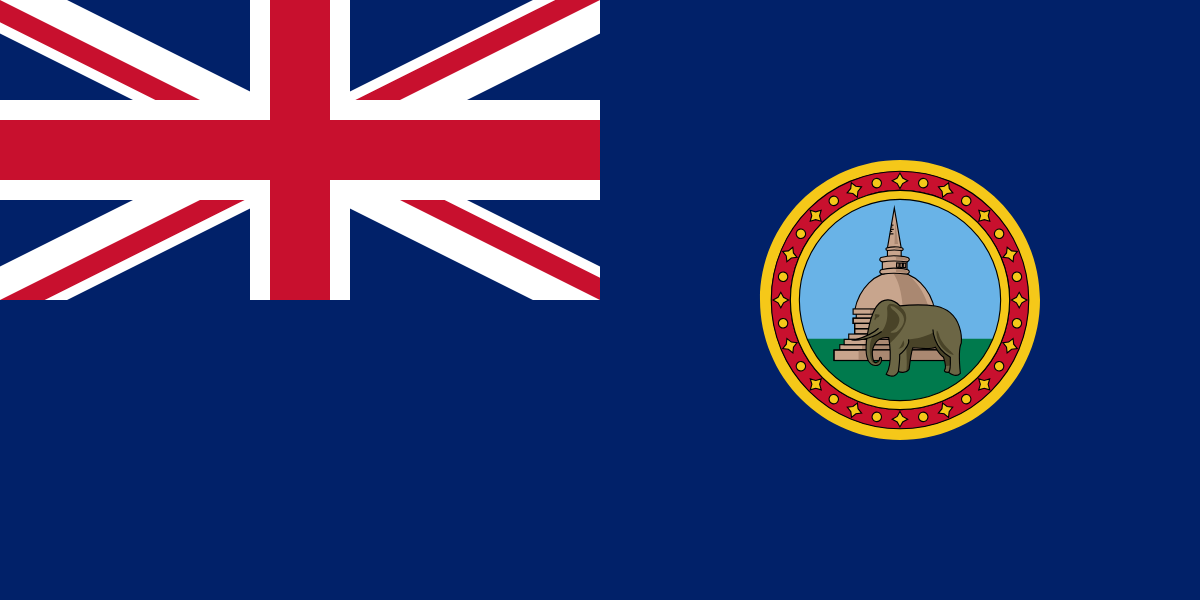
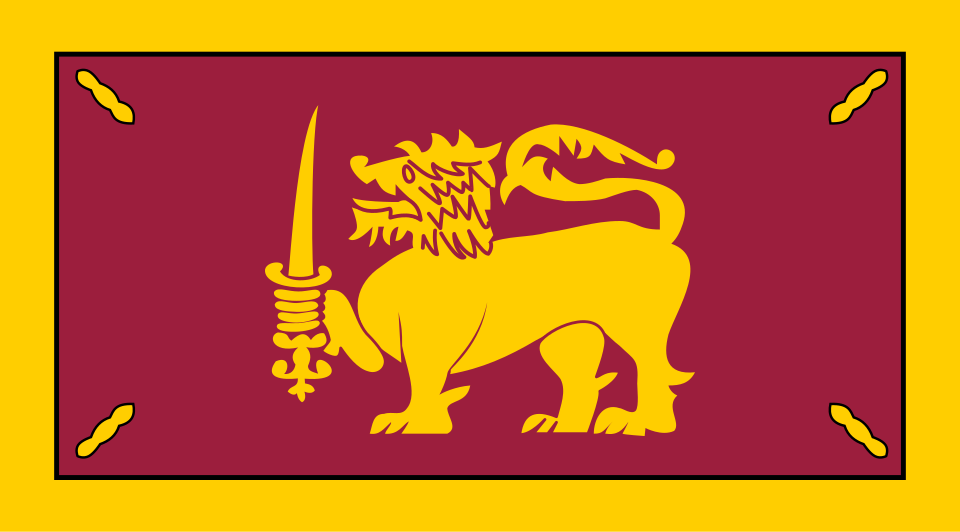
In their early 20s, the last Union Jack in Ceylon was lowered, and a flag adorning a Yellow Lion which had not been seen for over a hundred years was hoisted up. Under the First Prime Minister of Ceylon, Don Stephen (D.S.) Senanayake of the centre-right United National Party (UNP), and the Governor of British Ceylon Sir Henry Monck Mason Moore, British Ceylon through years of negotiations had become a Dominion. George VI continued to reign until 1952, and his daughter Elizabeth until 1972.
On the 4th February 1948, under the Soulbury conventions, the Wickramarachchi family grew. My father was not the first child - in fact he was the last. Born before him was his eldest brother, Thilak Wickramarachchi (16th February 1957-5th May 2023, Pannipitiya, Colombo, Western Province of the Dominion of Ceylon) the only sibling in fact to remain in Ceylon/Sri Lanka and the owner of my Grandparents estate. I had paid many a pleasurable visit due to his gentle hospitality. His eldest and only sister Lalini De Silva (Nee Wickramarachchi) (18th October 1958-, Pannipitiya, Colombo, Western Province of the Dominion of Ceylon) was known for her long career in Jurisprudence and generously hosting our immediate family on our visits to the countryside plains in Surrey. His second immediate oldest brother, Ranil Wickramachchi (11th February 1961-, Pannipitiya, Colombo, Western Province of the Dominion of Ceylon) was known for his expertise in electronics and allowing my brother and I to sit in his workshop in Enfield. His immediate oldest brother, Prasad Wickramarachchi (2nd December 1962-, Pannipitiya, Colombo, Western Province of the Dominion of Ceylon) was a jovial figure who had welcomed us in his many abodes in Nottingham.
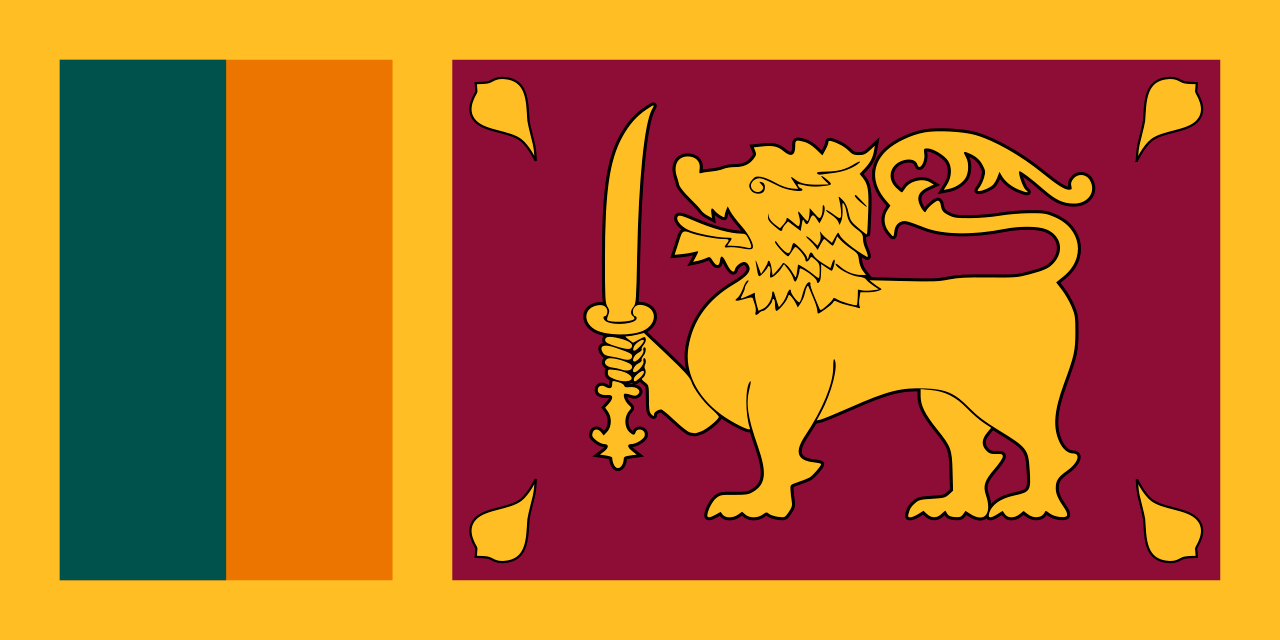
Coincidentally, all my Father’s siblings were born under the primacy of Ceylon’s Dominionship and the Premierships of the Senior Bandaranaikes, and under the Governor Generalships of Sir Oliver Ernest Goonetieleke (1954-1962) and William Gopalwalla (1962-1972). My father was educated at an all-boys’ institution, and was well known for his sportsmanship in Cricket and employment at the Aprico shops which had existed since colonial times. But, he grew up during a tumultuous time in Ceylonese History - the first insurrections of the Communist-Sinhala Nationalist Party, the People’s Liberation Front, (JVP), occured in April-June 1971 - which became well-known for its destruction to property and peoples, and was the second insurrection which Sirimavo would face throughout her three premierships. On the 22nd of May 1972, a new Constitution was passed, and the Dominion of Ceylon became the Democratic Socialist Republic of Sri Lanka. Gopalwalla became its first, non-executive President, and Elizabeth II was no longer the Queen of Ceylon. That was not all for Ceylon’s troubles.
To the Northeast of my father’s family was the place where my mother’s family was formed.
From Dominion to Republic
The date is January 16th, 1975. Another dry and humid day in the Sri Lankan climate. Sri Lanka has been an independent republic, proud and true, for just under 3 years. Sirimavo Bandaranaike is once again the incumbent Prime Minister - having won a landslide majority in the 1970 Ceylonese Parliamentary Elections against Dudley Senanayake. William Gopalwalla has been President for just under 3 years. But something more wondrous was to come that day. Born was my mother, Subani Nadeeka Maligaspe, in Handessa, Kandy, Central Province of Sri Lanka. Her father was M.K Tisera Maligaspe (3rd August 1943-1987, Central Province of British Ceylon) - renowned for his time as a prison officer, and excelling in his personal hobbies of art and boxing. Her mother was Ranjanee Gunawardena (11th February 1948, Western Province of the Dominion of Ceylon), a housewife - the only one of my grandparents to be born in the Dominion of Ceylon and my only living grandparent, and someone in my life who I treasure dearly.
Though, like my father, my mother was not the first child - she was the last. Born before her was her eldest and only brother Dileepa Chiranjeewa (24th October 1973-, Handessa, Kandy, Central Province of Sri Lanka) - well known for his time in the Sri Lankan Army in the 1990s and his interesting anecdotes about Sri Lankan and global political culture. Now, my mother was renowned for her education and further studies at university, including a strong passion in fashion which she channelled in her time at the store Next in Sri Lanka. But she also grew up during a tumultuous time in Sri Lankan History. The 1977 Sri Lankan Parliamentary Elections had seen the Socialist Government of Sirimavo Bandaranaike (my Mother’s mother being a personal supporter for her and her Government) swept back to the opposition, due to her failure to deal adequately with the economic crisis of the 1970s. In her place, a Conservative Political Stalwart won a landslide majority - Junius Richard Jayawardene of the UNP (who both of my grandfather’s favoured at the election). A veteran of colonial, dominion and republican politics, he had changed the constitution again on the 4th September 1978, abolishing the Westminster Parliamentary system which had existed for more than 30 years. He set about establishing a Gaullist system akin to the one used in the Fifth Republic of France.
Gopalwalla was retired after his 6-year tenureship as a Non-Executive President, and Jayawardene replaced him in an Executive Position, reducing the power of the Prime Minister. He chose his housing minister, Ranasinghe Premadasa, to succeed him. The fall of democratic options for Tamils in Sri Lanka to have their own equal footing in society (with their language and religion being stripped of equal status in 1956 and multiple attempts in the 1960s failing to restore), spurred the formation of the Militant Liberation of the Tamil Tigers of Eelam on the 5th of May 1976 by Vellupalai Prabhakaran. He was intent on using direct action to achieve political rights for the Tamil people, which had been demonstrated in 1975 with the assassination of the Mayor of Jaffna, Alfred Durripah. Jayawardene’s Government had continued the pogroms incited against the Tamil people, as the Bandaranaikes did in 1956, 1958 and 1961, in 1977.
Later years saw more violent action taken, such as the Burning of the Jaffna Public Library on May 31st, 1981. Jayawardene had been hastily re-elected as President in 1982 against staunch SLFP Socialist, Hector Kobbekaduwa, before passing a referendum to abolish elections for the time being. A retaliation carried out by UNP supporters and Sinhala mobs and Police for the killings of a Sri Lankan Army Squadron, nicknamed Four Four Bravo, by the LTTE saw a final set of pogroms issued in July 1983, as the Jayawardene Government frantically issued by the Prevention of Terrorism Act to curb the activity of the LTTE and Tamil Nationalists.
Known as Black July, it was the end of peaceful relations between the Sinhala and Tamil people, and the Sri Lanka which my parents had grew up in.
The Sinhala Government and the LTTE were now engaged in Civil War.
From Country to Country
Like other families in Sri Lanka, those of my parents were also affected. My mother’s brother was conscripted for the Sri Lankan Army during the third phase of the Sri Lankan Civil War, Eelam War III (1995-2002), and my father’s sister had to be evacuated as a law firm she had worked in was blown up in a bombing attack. The verdict I have gathered is that the Civil War did not directly affect the voyage of my parents to the United Kingdom - though as a good historian does, I will consider the historical discourse.
The day was the 25th of January 1991 - Ranasinghe Premadasa had been President for just over two years, having won the Presidential and Parliamentary elections against Sirimavo Bandaranaike, who had her Parliamentary ban revoked (issued in 1980). The JVP had caused another insurrection between 1987-1989 - ironic since Jayawardene himself had called for their release and return to politics, seeing the assassination of the husband of Sirimavo’s daughter Chandrika - Vijaya Kumaratunga of the Sri Lankan People’s Party (SLMP). My father recalled that a close friend of his was also assassinated. The Indo-Sri Lankan Peace Accords signed in 1987 had failed due to opposition from the Sinhala Government and LTTE to the Indian Peacekeeping Force (IPKF), which would result in Prime Minister Rajiv Gandhi’s assassination that May. Premadasa himself would be assassinated on May 1st, 1993.
My father set off from the homeland he had known for 26 years to unknown territory.
Landing in the UK on a frosty January evening, he went across the country, staying with family and friends, and gathered many jobs and automobiles as he went. He went between Burger King, Crowne Plaza, and Nissan - until he settled on working in the Ticket Office at Wembley Park Station, with his trusty red Volkswagen Golf. He returned to Sri Lanka upon the death of his mother in 2000 - coincidentally the same year as the death of Sirimavo Bandaranaike during her final tenure as Prime Minister. His siblings, bar one, followed his footsteps in settling down in the UK, and his father even came for visits. His return in 2002 marked a lifetime change - my Father and Mother met. Over the next three years, they started a relationship, and got married in 2005.
At the same time, Sri Lanka started another seemingly lifelong commitment. Amidst a fracturing ceasefire between the Sinhala Government and LTTE, brokered by Norwegian Peacekeeping Forces, the way for the final phase of the Eelam War was paved. Longtime SLFP member and Prime Minister Mahinda Rajapaksa was elected as President against the still-current leader the UNP, Ranil Wickramasinghe.
In November 2005, my parents jointly moved to the United Kingdom - moving into their first home in 2006 - and birthing their first child (myself) on the 18th of June 2007 (Belsize Park, North London, United Kingdom).
And, thus, a lifetime voyage navigating a changing political climate across one country and finding a new homeland in another was ended.
Conclusion
The voyage is complete, but the journey never seems to end. In the following years, my mother found a job in merchandising, which she continues today, and my father moved from ticket operations to becoming a Tube driver for the Northern Line - which he continues today. Our family was blessed once more with the birth of my younger brother, on the 3rd of May 2014 (Northwick Park Hospital, North London, United Kingdom). As I sit and finish typing this article at an admittedly late 11pm on a Saturday evening, I remember the importance of those voyages in forming new life - in more ways than one.
Bibliography
-De Silva, K. M. (1981). A history of Sri Lanka. University of California Press.
-Newmont, H. (2025). A history of Sri Lanka. Independently Published.