Spirit of the Chollima: North Korea at the World Cup 1966 (TT26)
Like history itself, football reserves something of a soft spot for the improbable — at least for the side that was never meant to win and did anyway. Leicester City’s unthinkable title win a season after they barely avoided relegation, and Denmark’s shock victory at the 1992 European championship (which they only qualified for on a technicality), both come to mind. Even at the previous World Cup, Morocco won the world’s hearts as they stunned previous champions Spain and Cristiano Ronaldo’s Portugal to become the first African team to reach a World Cup Semi-final.
Among the great underdog stories across the history of football, there is one in particular that stands out. Sixty years ago, England hosted fifteen other nations for the eighth FIFA World Cup. Among them, to the astonishment of the footballing world and the dismay of the British government, was North Korea - a nation the hosts had been at war with just thirteen years prior.
Their journey to the birthplace of modern football, amidst the height of the Cold War and numerous dramas playing out between the International Federation of Association Football (FIFA) and its subsidiaries, was almost as thrilling as their time there. The reception they received in what by all accounts should have been hostile territory, and the legacy their results on the pitch left behind, were both as remarkable as one another.
It is a story that began long before a ball was kicked in England, in the committee rooms of FIFA, and in the quiet unease of a British government that would rather they had not come at all.
Before they had even stepped onto a pitch, theatrics were already engulfing North Korea’s qualification bracket. Of the 16 places available at the World Cup, 10 were allocated to European teams, 4 to South America, and one for North America. That left the final slot to be contested by the African and Asian football federations, plus Australia. The Confederation of African Football (CAF) was outraged that they did not receive a guaranteed spot at the World Cup, and boycotted qualifiers.
South Africa (who played in Asian qualifiers in order to avoid any politically charged matches with the other African nations) was also suspended because of their apartheid laws which went against FIFA’s non-discriminatory regulations. This decision showed a commitment from FIFA to combatting discrimination in international tournaments which would surely be upheld to this day.
That left only Australia, South Korea and North Korea. Initially, qualifiers were due to be played in Japan, until someone realised that neither they nor North Korea recognised each other - less than ideal for a national team which needed visas to play in the country. After some back and forth, a solution was found when Cambodia, whose head of state was an ally of Kim Il-Sung’s, offered to host qualifiers instead. The only drawback of this was that, for logistical reasons, South Korea had to pull out, taking the rigorous qualification process from twenty teams down to just two.
Those two teams were Australia - and, of course, North Korea. North Korea’s football team was pieced together amidst the Chollima movement, a Great Leap Forward-style ideological drive to achieve rapid economic growth and repair the war-torn country under Kim Il-Sung’s personal guidance. As such, hard work, speed and energy were key parts of the North Koreans’ footballing identity. In the leadup to their qualifiers, they toured the Soviet Union playing preparation matches and collected some impressive wins over Russian sides like Spartak Moscow. They also visited national teams within the Eastern Bloc, and went into the all-important two-legged qualifier experienced and match-fit. Australia, by contrast, hadn’t played an international game in seven years, and their training for the playoffs consisted of two games against amateur sides, which were so intense and competitive that the Australians only managed to scrape victory by scorelines of 17-0 and 26-0.
In spite of their less-than-serious training regime, the general impression onlookers had (to the relief of the British government who were closely monitoring the situation) was that Australia would win comfortably. Those onlookers, who had not seen any of North Korea’s preparations, were in for a shock. Years later, the Australian players from those two games in October 1965 would recall how seriously they had underestimated the Chollima - whose physicality, intensity and sheer doggedness took them by complete surprise and left them totally outmatched. The British government was also taken by surprise when they received news of the result. “Thoughtlessly,” read a report from the foreign office, “the North Koreans have beaten the Australians by an aggregate of 9-2 in the final of their regional qualifying series.”
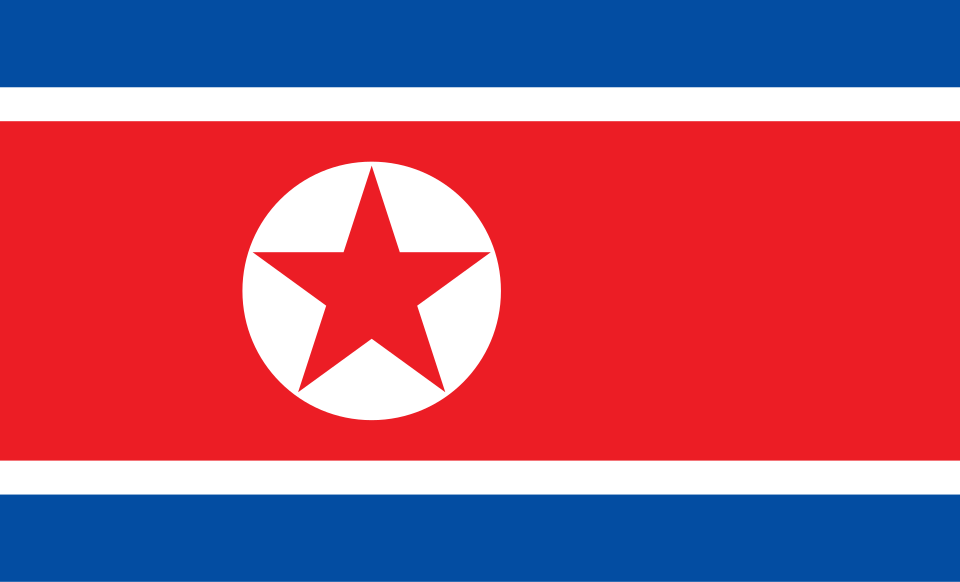
If the tone of that report didn’t make it obvious, the British were very displeased about this result; as was the case with most communist nations during the 60s, the British did not even recognise the government of North Korea, and now their national team would be stepping onto British soil to take part in the biggest sporting event in the world. Most concerning for them was the issue of National flags and anthems. Their obligations as members of FIFA in this respect were clear, but so were their obligations as members of NATO, which the British were afraid could clash with one another. NATO had clear guidelines about sporting contact with communist nations, mainly intended for the German Democratic Republic: they were only to refer to the nation as “East Germany”, and their national symbols and anthems were not to be displayed lest it be inferred that NATO members were recognising or endorsing their communist rivals. The British, therefore, feared that a dangerous precedent would be set if they were to display the flag and play the national anthem of North Korea, with whom they had been at war just thirteen years prior. They considered refusing the Koreans visas and thus not allowing them to enter the country, but here FIFA intervened; any nation which had qualified through legitimate means, they informed the English Football Association (FA), must be allowed to enter and play in the country. If the FA could not uphold these standards, FIFA would host the World Cup someplace else. This demonstrated a commitment from FIFA to ensuring national teams were treated fairly in their tournaments, even if they had political rivalries with host nations, which would surely be upheld to this day.By the time the tournament opened, the British had come up with effective workarounds. North Korea’s flag would be displayed, as doing so was not considered enough of an endorsement for the British to object. National anthems were only played for the opening match between England and Uruguay, and the Final (which they correctly guessed Korea would not reach), in order to avoid the issue of playing that of North Korea. To the government’s relief, the negotiations and preparations for all of this were kept out of the press. Now the government simply had to hold their breath and hope that the Koreans’ stay in England would pass uneventfully.
While their stay would not cause any more political drama, it was anything but uneventful.The North Koreans were placed in group 4, along with the always-strong Soviet Union, 1962 semi-finalists Chile, and two-time champions Italy. They were based in Middlesbrough, staying in a newly opened hotel opposite the airport, and training on a pitch belonging to the local chemical plant. The locals had no idea what to make of this team, total aliens from a nation whose inner workings were completely unknown to the outside world. They first played the Soviets, who did know what to expect from the Koreans who had toured their nation in preparation for qualifiers. The Soviets had a significant physical advantage over the Koreans, whose average team height was just 5ft 5in, and they utilised it by playing an intense, and (according to watching fans), rather dirty match, committing foul after foul against the outmatched Koreans as they ground out a 3-0 win which papers described as very unconvincing. Something else, however, struck the Middlesbrough fans. In the small, energetic but ultimately outmatched Koreans, they saw similarities with their own team.
Middlesbrough that year had been relegated to the third tier of English football, and their supporters were inclined to get behind the underdog Korean side. The fact they played in bright red kits, much like Middlesbrough, was also convenient for the locals. As was the Koreans’ conduct; “They were very smart, they were always polite… they were happy, happy people,” recalled Rob Lewis, who was at the time a young child watching the Koreans play, “and I remember there were lots of other children trying to get their autographs.”
As such, in their next game against Chile, the Koreans enjoyed the support of the home fans at Ayresome Park. Those fans found a lot to love about their performance; “they moved the ball around really well,” another Middlesbrough fan recalled, “and they played really positively as well – they played attacking football.” In spite of this, the Koreans conceded a reckless penalty in the first half and went 1-0 down. The underdogs and fan favourites looked like they would surely go out at this stage, until the 85th minute. The ball fell to midfielder Pak Seung Zin at the edge of the box. His teammates would later reminisce about how hard he trained his legs in order to make his shots as powerful as possible. The practice paid off, as he hit the ball on the volley into the bottom left corner to draw North Korea level, to roaring applause from the people of Middlesbrough. North Korea’s world cup dream was alive - albeit barely. They could still make it out of their group, if they could just beat Italy.
Italy went into the tournament as favourites, having won it twice prior to 1966. Their squad was relatively young, but full of accomplished winners, such as Gianni Rivera of AC Milan, Alessandro Mazzola of Inter Milan, and captain Giacomo Bulgarelli of Bologna, all of whom had won league titles and various trophies at a continental level. They had beaten Chile 2-0 in their opener, before succumbing to a demoralising 1-0 loss to the Soviet Union, but the North Koreans nonetheless had a mountain to climb.
To the disappointment of Ayresome Park, the match started in Italy’s favour with several early chances coming their way. However, a mixture of wasteful finishing and a once-in-a-lifetime performance from goalkeeper Li Chan-Myong meant they could not capitalise. Then in the 34th minute, Italian captain Bulgarelli was injured making a challenge on Korean forward Pak Doo-Ik. Substitutes were only introduced at the next World Cup in 1970: Italy would have to play with ten men for the remainder of the match.
Seven minutes later came one of the World Cup’s greatest shocks. A loose ball was headed on into the box, falling kindly for Pak Doo-Ik. The former print factory worker let the ball come across his body before lashing it into the bottom left corner, past Two-time Italian cup winner Enrico Albertosi.
North Korea were beating Italy. The crowd could not believe it. Neither could the Italians.
The young Azzurri side somewhat lost their heads after this, making panicked moves forward and falling prey to the North Korean defence and goalkeeper. “Behind me was the goal, which was small”, Li Chan-Myong would later recall. “But behind the goal was our nation.” And, unthinkably, his nation prevailed. The Italians had no response and lost 1-0, crashing out of the tournament at the group stage, and being pelted with rotten tomatoes at the airport when they returned home.
This put North Korea in the knockouts, where they would face Portugal in Liverpool. For this game, the Koreans would travel to Merseyside and stay in a Roman Catholic retreat house which the Italians had booked before unexpectedly having to cancel their reservation. In spite of their hosts’ best attempts to accommodate them, the North Koreans did not sleep well. Firstly, being communists, they were used to sleeping in communal dormitories as opposed to the single bedrooms they were given. Secondly, being atheists, they found the crucifixes displayed in the chapel outside completely alien, and the statue of a dying man nailed to a cross left them confused and frightened. Their match at Goodison Park was some 142 miles away from their group games in Middlesbrough, but they would nonetheless enjoy the sounds of a supporting crowd: some 3,000 Middlesbrough fans, at this point fully behind the team who were almost denied entry into the country, made the journey to Liverpool to support North Korea.
Portugal were a much more menacing side than anyone in North Korea’s group. They scored 9 goals in their 3 group games, knocking out reigning champions Brazil in the process. Leading their line was the legendary Eusebio, top scorer in Europe that season and the previous year’s Ballon D’or winner. Once again, it would have been easy to write off North Korea in this match. But those 3,000 Middlesbrough fans knew better.
It took not even a minute for the deadlock to be broken; North Korea drove down the right, and played the ball into Pak Seung-Zin on the edge of the box. He struck cleanly, and the ball went in off the bar. Twenty-one minutes later, a cross found North Korea’s Ya Sung-Kook at the back post, and he headed across goal for Li Dong-Woon. Four Minutes later, Pak Doo-Ik hit a shot into a Portuguese defender, and it deflected into the path of Ya Sung-Kook, who took two deft touches before burying the ball into the bottom left corner. Goodison Park couldn’t believe what it was seeing. Portugal, one of the world’s elite footballing nations, were 3-0 down to North Korea.
This state of affairs, however, was not to last. The inexperienced North Koreans did not know how to hold their lead, and continued playing their energetic attacking style of football instead of holding onto it, as a more tactically astute side would. Eusebio punished them, pulling one back in the 27th minute, then converting a 43rd-minute penalty after a panicked tackle inside the North Korean box. In the second half, he smashed a third past Li Chan-Myong to level the score, before winning a penalty two minutes later and converting to give Portugal the lead. In the 80th minute Jose Augusto would score again for Portugal, to end the match 5-3, with Eusebio’s 4-goal masterclass bringing the high-flying North Koreans down to earth.
In spite of the heartbreaking end to North Korea’s quarter-final run, and rumours circulating in South Korea that the team had been imprisoned upon their return to Pyongyang (Rumours the players, decorated in medals, denied in a 2002 BBC Documentary), the North Koreans were welcomed home as heroes. Not only had they made it out of a group they were expected to finish fourth in, but they had overcome insurmountable odds to do so - not just on the pitch against some of the world’s most elite teams of the age, but also against the backdrop of a political climate in which their place at the tournament itself was in jeopardy, and in which an onlooker would undoubtedly be forgiven for predicting them to be received with hostility by crowds of people whose nation was at war with theirs just over a decade ago.
Perhaps, in that sense, the Chollima’s greatest achievement in England was not their quarter-final finish: it was the enduring memory they left in Middlesbrough. So warm was that reception that thirty-six years later when the BBC made a documentary about their historic performance, the seven surviving members of North Korea’s 1966 squad were invited back to England to celebrate its release. When they returned, the North Korean flag flew once again in Middlesbrough’s town hall to greet the underdogs who had won the city’s support the year football finally came home.
Further Reading:
Most of the interviews from fans and ex-players can be found in David Gordon’s Documentary The Game of Their Lives (2002), which is publicly available on youtube.
Reports from the foreign office on the results of qualifiers, and the political issues North Korean participation in the World Cup might raise, can be found in the National Archives, Kew (FO 371/181150)
More information on the Chollima Movement can be found in Kong Dan Oh, North Korea Through the Looking Glass (2000)
Match reports can be found in FIFA’s archives: https://web.archive.org/web/20170520061656/http://www.fifa.com/worldcup/archive/england1966/index.html