
From Ubiquitous to Unknown: The Rise and Fall of Indian Merchants in Central Asia (TT26)
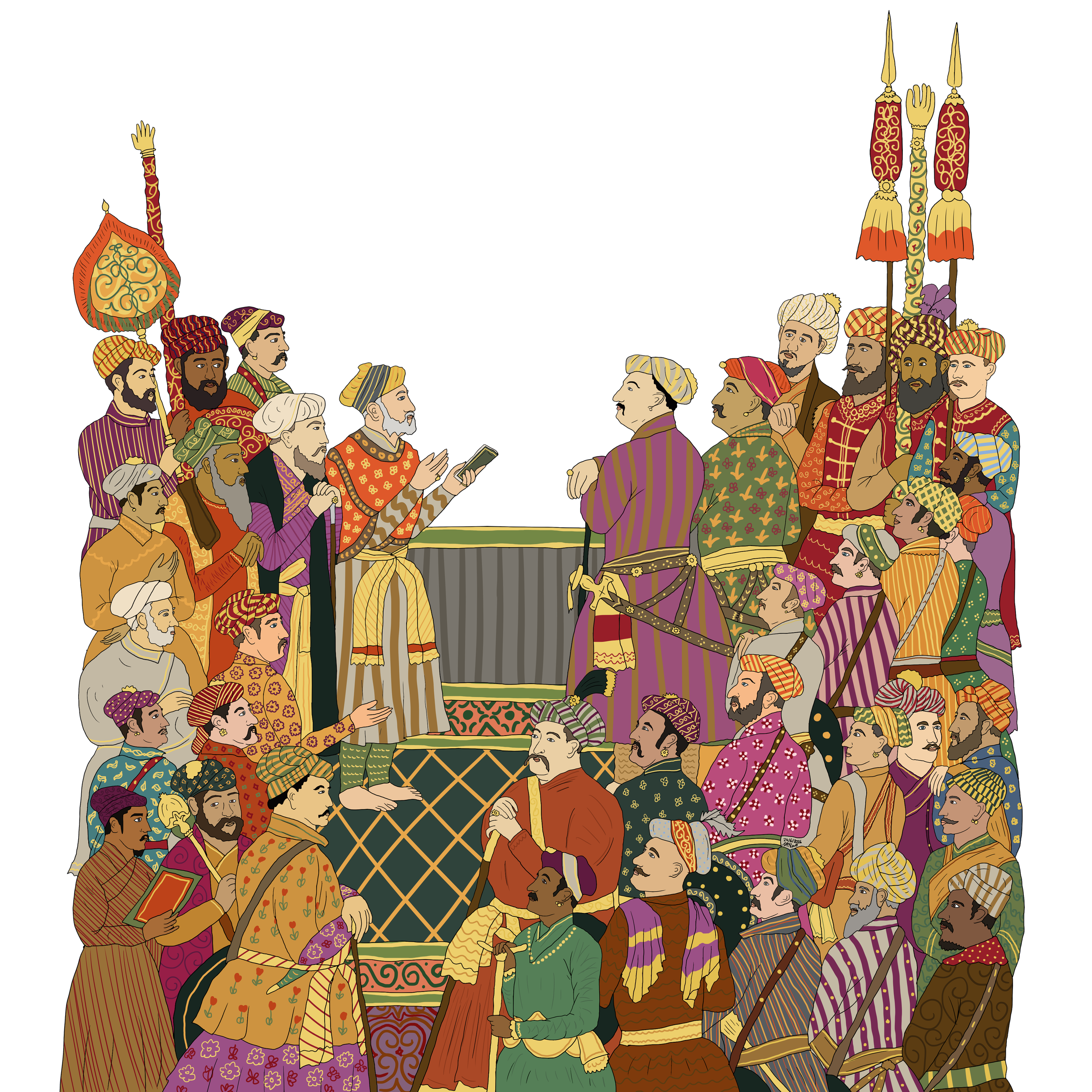
In popular understandings of the history of the Indian subcontinent, Central Asia is commonly viewed through the lens of the multiple migrations and invasions of Central Asian peoples towards South Asia. This narrative is not entirely unjustified - many of these movements, like the Indo-Aryan migration, or the conquests of the Ghaznavids and the Mughals, have had a profound impact on the subcontinent - not only influencing, but shaping its history, culture, and the psyche of its inhabitants. However, it would still be a mistake to see Central Asia’s relationship to the subcontinent as merely that of an incubator for future incursions. Rather, much as India was influenced by Central Asian migrations and conquests, Central Asia too was influenced heavily by an Indian presence - manifesting itself through trade.
Along with challenging the notion that the Indian subcontinent’s relationship with Central Asia was merely one of conquest, the sustained presence of an Indian merchant diaspora in the region - specifically during the early modern period beginning in the 16th century, also disputes another commonly held notion. Namely, that Central Asia experienced a ‘civilisational decline’ following the collapse of the Timurid Empire in the early 1500s, and that this created the conditions for the disappearance of the ‘Silk Road’.
Overland trade between the Indian subcontinent and Central Asia has existed since antiquity - with these pre-Islamic trade networks being responsible for the transportation of goods, as well as the transmission of ideas, including medical practices, mathematical theories, and religions, such as Buddhism, Manichaeism, and Nestorian Christianity. Evidence for the development of sustained Indian diasporic communities in the region comes only in the mid-16th century, shortly after the Uzbek Khanates had consolidated their rule over Central Asia, and their former foe - the Timurid prince Babur - had conquered northern India. This idea is present in sources such as records of property ownership by Indian merchants in Bukhara in 1559 and 1561, and the writings of the English explorer Anthony Jenkinson. This newly emergent diaspora was distinct from the earlier communities of Indian caravan traders that had set up shop in the region, who were largely non-permanently settled, and came about as a result of Mughal and Uzbek investment in the further development of trade routes, as well as increased European involvement in maritime routes, which pushed indigenous traders towards overland routes.
The Genesis and Activities of a Diaspora:
The main beneficiaries of these policies were traders hailing from inland cities in the northwestern subcontinent. Multan, in southern Punjab (modern-day Pakistan), was one such city, which already had a prominent mercantile community in the form of the so-called ‘Multanis’, a heterogeneous group who had been placed in key mercantile and clerical positions under the Delhi Sultanate. Considering Multan’s position as a key destination for caravans travelling into and out of Afghanistan and beyond, it is not unreasonable to assume that the Multanis had been involved in overland trade prior to this period - but as stated above, mentions of them begin to tick up around the mid-16th century. The main destination of the Multanis was Iran, with Jean Chardin, a French traveller, estimating that about 20,000 Multanis lived within Iran in 1623. But they were not restricted to Iran. A 1747 census of Astrakhan, in modern-day Russia, showed Multan and the surrounding region as the origin of almost all of the Indian merchants living there.
The Multani diaspora was largely Hindu, though with a notable Muslim presence; with both sections originating from mercantile castes - the Hindus being largely Khatri, and the Muslims being largely Lohani. Members of other merchant communities from around Multan - such as Bhatias and Vohras - were also part of the broader ‘Multani’ umbrella, with many European travellers referring to all of the Hindu merchants within the region as ‘Banians’ or ‘Banias’ - which is in fact the name of another mercantile community whose members were also present in Central Asia. Following the 18th century, however, the position held by the Multanis was partly usurped by the Shikarpuris, originating from the town of Shikarpur in Sindh (also in modern-day Pakistan), owing to the many invasions that Multan had faced at the time which hampered its position within international trade.
These merchant communities traded in many different commodities. Textiles were one of the most important among them, including silk - of which India was the main exporter in the early modern period - and cotton, which according to the British traveller Jenkinson was among the “fine whites” (textiles) brought by the Indian merchants and was used to make the famed white turbans of Central Asia’s inhabitants. Other goods, such as indigo, rice, spices and tea were also brought by Indian merchants to the markets of Central Asia. From Central Asia, in turn, the Indian merchants brought gold and silver, fruits - particularly melons, apples and pears, which were cherished by Mughal royalty - fur, and Turki horses, which were of particular significance for the Mughal cavalry. Another more depressing trade in which these merchants engaged in was that of slaves - a large portion of whom also had their roots in the Indian subcontinent. In all likelihood, many of these slaves trafficked from India were also Hindus, who - along with other non-Muslims, as well as Shias - were considered fair game for enslavement in Central Asia.
Another equally important economic function of the Indian mercantile diaspora was moneylending. I will return to this theme later in more detail when examining the relationship between these communities and the locals - but for now, it should be noted that it was no accident that these communities appeared around the same time that India’s economy experienced accelerated monetisation owing to the influx of precious materials from European trade. This monetisation empowered family firms, among whom moneylenders were varyingly known as sarrafs, seths, dalaals, or baqqals; and agents of these family firms were encouraged to set up shop in the diaspora - where, as we will see later, they enjoyed certain advantages compared to local traders in those regions.
Living in Diaspora:
Much like modern-day diaspora communities, the Indian mercantile communities living in Central Asia developed a close-knit community consciousness abroad. They tended to live amongst each other, usually in caravanserais or inns which gradually developed into larger communities. These caravanserais - particularly those of the Hindu merchants - were on the interior, designed to mimic Indian styles, through the usage of Indian paintings and - in the case of Astrakhan’s Indian dvor, the construction of a Hindu temple. Astrakhan was also home to a Sikh shrine, which according to a British writer, was viewed by the “Seikhs” (sic) with the same veneration that the Christians of the middle ages viewed Jerusalem, and the Muslims viewed Mecca. In Baku, Azerbaijan, a “fire temple” which was attended by Hindus, Sikhs, and Zoroastrians stands to this day. This was not the case in Bukhara, where Hindus were not allowed to build temples, and thus had to make do with prayer rooms within their caravanserais.
However, both Russian administrators and native rulers allowed Hindus to celebrate their festivals publicly. To conduct rituals, Brahmin priests - referred to by the local Muslims as pirzadas - were hired from India, displaying the level to which these communities attempted to preserve their religious practices. Despite this relative religious tolerance, some Hindu practices, namely cremation, were frowned upon, if not banned, by both local and Russian administrators - and the practice of sati, in which the wife of a deceased man would immolate herself on her husband’s funeral pyre, was heavily curtailed.
That being said, sati was not an especially common practice for the Indian diaspora in the region, even if only due to the simple fact that most of the men in these communities had left their wives back home. In the absence of their wives, Indian men in the mercantile diaspora were expected to remain chaste; but some evidence, such as the existence of the agrizhan community of mixed Indo-Turkic descent in Astrakhan and records of Shikarpuri men in Sinkiang (Xinjiang, modern-day China) taking local Uyghur women as concubines or (more rarely wives, shows that not all of the men in these communities fulfilled these expectations. In most cases, local men did not react well to the prospect of such unions, especially in Xinjiang, where many of the Uyghur concubines were acquired as ‘debt’ and thus, treated as property - which contributed to a heavily anti-Indian atmosphere in the 1933-1934 Kumul rebellion.
These anti-Indian attitudes were echoed in other parts of Central Asia as well. In Bukhara, some early modern writers, such as Sadr al-Din ‘Aini and Mir Muhammad Amin Bukhari, wrote of them with resentment - finding it particularly abominable that a community of largely non-Muslim foreigners should have such economic power over locals. However, for the local elite, there was an economic incentive to protect the Indian merchants - being largely Hindu, their religion did not prohibit them from practicing usury (unlike Islam), and so, when it came to tasks such as moneylending and financial negotiations, it was primarily these Indian merchants who were entrusted. Additionally, their religious status also meant that they were required to pay the jizya (a mandatory tax on non-Muslims), and this combined with their role in financial affairs made them a particularly important source of tax revenue for local elites. This allowed the Indian mercantile community to prosper even in the presence of an indigenous class of traders, and widespread resentment against them.
The Diaspora’s Decline:
As we have seen above, the patronage of local elites, along with state support from the subcontinent - particularly from the Mughals, who saw the benefit of maintaining trade relations with their ancestral lands, was key to the maintenance of this Indian mercantile diaspora. As the latter began to lose control over northern India from the 18th century onward, the Indian diaspora also suffered various shocks. Multan, the home of many of these merchants, was subject to various invasions by the Afghans, Marathas, and Sikhs, which, along with the collapse of the Safavids in Iran, significantly disrupted trade routes between India and Astrakhan. The Indian community in Central Asia, however, remained relatively unmolested up to the late 19th century, owing to continued patronage from the state.
This patronage was significantly reduced following Russia’s colonial expansion into Central Asia, with Russian administrators worrying that the Indian merchants and moneylenders’ involvement in the purchase of agricultural land as collaterals for loans would create an epidemic of landlessness and poverty in the region. Konstantin von Kaufman, the governor of Russia’s newly acquired ‘Turkestan Krai’, therefore, put in place several decrees restricting the access of this community to sources of capital. Simultaneously, these policies enriched a class of Russian property-owners through the establishment of banking institutions by colonial authorities, undermining the position of the Indians.
By the time of the Russian revolution in 1917, only small traces of the Indian commercial communities in Central Asia remained; and following the revolution, the vast majority of those remaining finally returned to India. In neighbouring Sinkiang (Xinjiang), the Shikarpuris enjoyed a position in the local economy for slightly longer - until 1933, when a rebellion led by the Uyghur peasantry saw the destruction of Shikarpuri properties and the deaths of eight members of the community. The remaining Shikarpuris in Xinjiang seem to have left following the Chinese revolution in 1949.
Back home in the subcontinent, the main beneficiaries of this trade - cities such as Multan and Shikarpur - were impacted by the 1947 partition of British India into India and Pakistan. As these cities largely fell within the boundaries of Pakistan, the Hindu middle classes largely deserted them for India. While many of them managed to stake out a position for themselves in the Indian economy, their connections to Central Asia and the adjoining regions were now but distant memories, save for a few families, such as the Shikarpuri-origin Hindujas - today the wealthiest family in the UK - who continued to operate in Iran until the 1979 revolution.
Even with the extinction of these communities, the new Republic of India retained commercial connections with Central Asia. Following the collapse of the USSR in 1991, it has sought to deepen trade relationships with the region through projects such as the the Ayni Air Base, Chabahar port, the Mumbai-Moscow Corridor, and the proposed TAPI (Turkmenistan-Afghanistan-Pakistan-India) oil pipeline. Yet despite this, there remains a widespread gap in knowledge of Central Asia among Indians, as well as of the rich history of the Indian diaspora in the region in general.
Histories of Indian merchant diasporas have tended to focus on communities that came about through maritime trade (i.e the Nattukottai Chettiars in Southeast Asia, or the Khojas, Bohras and others in East Africa) - in no small part due to their greater significance for European colonial history. In light of this widespread ignorance, the history of the Central Asian Indian diaspora emerges as an important tool not only in showing the evolution of India’s economic entanglement with the region, but also in displaying how Central Asia remained economically interconnected with the rest of the world on a highly sophisticated level between the fall of the Timurids and Russian colonial expansion - in spite of the fact that new trade routes between Europe and China had emerged to replace the so-called ‘Silk Road’.
Reading List:
Bagchi, P.C. India and Central Asia (Kolkata, 1955)
Starr, Frederick S. Lost Enlightenment: Central Asia's Golden Age from the Arab Conquest to Tamerlane (Leiden, 2013)
Wink, André. Al-Hind: The Making of the Indo-Islamic World, Vol. II - Slave Kings and Islamic Conquests, 11th-13th Centuries (Leiden, 2002)
Dale, Stephen Frederick. Indian Merchants and Eurasian Trade, 1600–1750 (Cambridge, 1994)
Khan, Nasir Raza. “India’s Connection With the Silk Route” in India Quarterly, Vol. 61, No. 1 (New Delhi, 2005)
Levi, Scott Cameron. The Indian Diaspora in Central Asia and Its Trade, 1550-1900 (Leiden, 2002)
Levi, Scott Cameron. Caravans: Indian Merchants on the Silk Road (New Delhi, 2015)
Levi, Scott Cameron. “Multanis and Shikarpuris: Indian Diasporas in Historical Perspective”, in Global Indian Diasporas, ed. Gijsbert Oonk (Amsterdam, 2007)
Markovits C. The Global World of Indian Merchants, 1750–1947: Traders of Sind from Bukhara to Panama (Cambridge, 2004)