
Why Alexander the Great Never Lost a Battle — and Why His Empire Didn’t Last (TT26)
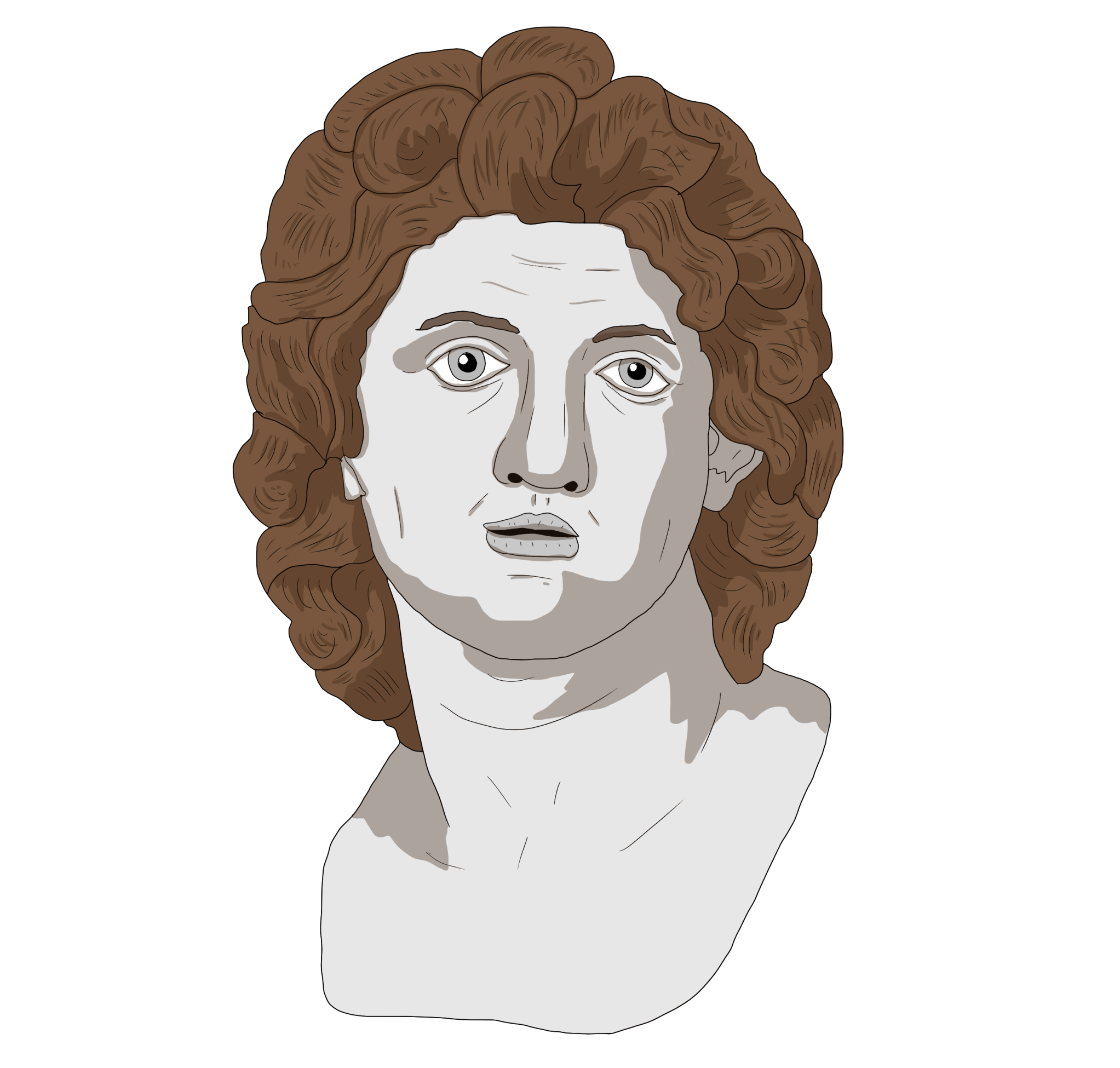
Few people throughout history have inspired as much admiration as Alexander the Great. He was a hero who continued to be imitated in the Roman Empire hundreds of years after his death. Historians have praised his outstanding leadership, his brilliant military strategies, and how he never lost a single battle in his 6 year campaign against Persia for centuries, yet they continue to debate a fundamental question: if Alexander was such a great conqueror, why did the empire he created die with him?
This article argues that Alexander's undefeated record in battle was the result of exceptional leadership, innovative tactics, and a highly disciplined army. However, these military successes did not translate into a stable political system due to the lack of a clear succession plan; without systems capable of holding such a large empire together, Alexander’s conquests fragmented into competing kingdoms after his death.
How Alexander the Great Started his Campaign of Persia
Alexander was born on July 20th, 356 B.C and became king of Macedon in 336 B.C. following the assassination of his father, King Philip Ⅱ. At the time of his death, Philip had already committed to an invasion of the Persian empire in order to unite the Greek states among a common enemy, gain new wealth, and in revenge for the Persian’s invasion in 480. However, he had achieved little more than establishing a bridgehead on the coast of the Dardanelles and laying the foundation for the Corinthian League, a panhellenic military alliance Philip had formed under Macedonian leadership. The Greek states were ready for a war against the Persians in revenge for Xerxes’ (Persian) invasion of Greece and desecration of their temples in 480 B.C.
Alexander was only 20 years old when he took the throne, but he began his reign aggressively in order to affirm Macedonian control. In response to the rise of political tension following his father’s death, he campaigned far north to the Danube and south to Romania to establish and strengthen existing Macedonian control in the region. The Greek states, although already under Macedonian control, were self-governed and in 335, Alexander marched his army south into Greece and dismissed the idea that he was too young and inexperienced to be taken seriously by his senior officers. After his campaigns, he returned to mainland Greece with Thebes as the target, for they had blockaded the Macedonian garrison in an act of rebellion. Thebes was retaken and destroyed.
In 334 B.C, two years after his ascension, Alexander mobilised the Corinthian League and invaded Asia Minor. He held ceremonies at the Hellespont and at the city of Troy to counter a long-standing Greek perception that Macedonians were not truly Greek. This also helped promote Alexander’s model of charismatic leadership. He presented himself as a successor to heroes like Achilles and Heracles and emphasised his role as a liberator of the Greek cities in Asia Minor. This combination would prove extremely effective at motivating his troops and securing the support of the Greeks.
The army that Alexander led into battle was the result of years of improvements under his father, King Philip Ⅱ. One of the most important aspects of this army was the famous Macedonian phalanx armed with the longer Sarissa spears that formed an impenetrable wall. This was complemented by the Hetairoi, Alexander’s elite cavalry, as well as infantry and archers. It was this elite army that won Alexander’s greatest victories in major battles like the ones below.
Battle of Granicus
Alexander’s first major battle was fought at the river Granicus and heralded the beginning of his conquest of the Persian Empire. The Granicus river is located in what is now northwestern Turkey and its strategic importance lay in its position as a natural defensive line for the Persians. The river’s steep banks and strong currents presented a significant obstacle for any attacking forces. The Persians chose this river as a barricade to halt Alexander’s advance and strengthen their own position. Their army was led by the Greek mercenary commander Memnon.
The Macedonian phalanx formation proved extremely effective against the Persian cavalry and infantry. The phalanx was strategically positioned to secure the river crossing and serve as an anchor for cavalry attacks, led by Alexander himself and were the key to breaking the Persian line of defence. He used their mobility to conduct swift attacks on weak points in the Persian defence. The combination of the phalanx and cavalry allowed Alexander to respond quickly to enemy movements and keep pressure on multiple fronts. His presence on the battlefield was another factor. By leading the charge, he not only increased the morale of his troops, but was able to assess the situation and make quick decisions.
Alexander recognised that the Persians positioned their strongest troops defensively along the bank to prevent a crossing, so he instead chose a diversion strategy. He had a portion of his troops prepare for a crossing at one point while secretly preparing his main forces at a less well-defended section. The breakthrough of the Persian lines was the result of a coordinated attack. While the phalanx crossed the river and engaged the enemy’s infantry, Alexander led his cavalry against the Persian commanders. This attack caused a breakup in the enemy’s command and confusion among their ranks. The success of this manoeuvre was crucial to the result of the battle.
Battle of Issus
In the spring of 333, Alexander entered the city of Gordium, where he received oracular support to become king of ‘Asia’. After an ill-advised plunge into the Cydnus River, there was high drama when he fell ill. By then, King Darius ⅡⅠ of the Persian Empire had mobilised his army and was heading for Syria, while Alexander - after his recovery - advanced along the coast through the Assyrian Gates towards Myriandrus as he was planning to engage Darius in the plain beyond the Belen Pass. They later met at a narrow coastal plain near Issus, in November 333.
Modern estimates place the size of Darius’s army at 50,000-100,000 soldiers, in addition to around 10,000 Greek mercenaries; while Alexander commanded an army of 30,000 - 40,000 soldiers. Although Darius considered waiting at Issus for Alexander, he changed his mind hoping to separate Alexander from his base and they met instead at a narrow plain that provided Alexander with a distinct advantage by limiting Darius’s mobility.
The battle did not go well for Darius. Despite his advantage of numbers, he and his men soon found themselves on the defensive, unable to manoeuvre as he would have liked. Darius’s left flank was hampered by mountains and the sea on his right. Alexander, on the other hand, was able to use his trusted phalanx formation. His right flank, consisting of three battalions, extended to the mountains, and his left, consisting of four, extended to the sea, with heavy infantry filling the middle of the battleground.
After viewing Alexander's formation, Darius moved his cavalry to attack Alexander's right flank with hopes of breaking through it. Although hampered by the river bank and Darius’s stockades, Alexander and his cavalry moved quickly through the enemy’s left flank. He and his forces then turned toward the Persian centre where he spotted Darius. Although Darius's brother Oxathres attempted to block Alexander's charge, he failed. Darius fled the battle at first in his chariot and then on horseback. Despite a serious thigh wound, Alexander pursued him until nightfall but returned empty-handed. Meanwhile, Alexander's left flank, under the leadership of Parmenion, was having problems with Darius's right. However, when the Persian forces saw their leader flee, they fled too; many were trampled to death in the mass exit. In all, the Persians lost around 20,000 men while Alexander lost 7,000. Perhaps worst for Darius, Alexander captured his mother, wife, and daughters.
Battle of Gaugamela
The next major action was the siege of Tyre, which ended in a massacre. From there, Alexander continued south and met determined resistance before Gaza fell to him. By November of 332, Alexander was able to invade Egypt and made plans for the building of Alexandria, which he built as a link between Greece and his newly conquered territories. In the Spring of 331, Alexander returned to Tyre, crossed the Euphrates, and then the Tigris. The eclipse of the moon on September 20/21 was taken as a favourable omen for the upcoming battle fought on October 1 at Gaugamela.
Darius, however, had learned his lesson at the Battle of Issus and had carefully chosen Gaugamela for what would be his last battle against Alexander. This time his army was quite different, having brought together men from all over his empire, even including Indian mercenaries – estimates of his army vary from 50,000 to 100,000 to almost a million. Along with 15 elephants (never used), he had 200 scythed chariots. He fashioned longer swords and lances in addition to adding more cavalry. The terrain of Gaugamela was also significant; it was much wider than Issus, ensuring Darius could make use of his chariots and deploy his cavalry more effectively than he had in his previous battle with Alexander. He had the ground levelled, placing obstacles and traps to impede the advances of Alexander's forces. To Darius, it appeared the size of his army and the terrain would give him a significant advantage.
Alexander made camp a couple of miles from Darius, and while on a scouting trip, came upon an advance party sent out by Darius. While some of the party fled, several others were captured and more than willingly told of Darius's numbers and the presence of the traps and obstacles on the field. The night before the battle, Alexander held a council of his generals; Parmenion, the commander of Alexander's left flank, suggested that the larger size of Darius's forces called for an attack at night; however, Alexander disagreed because he thought it would be expected - which it was.
The day of the battle, Alexander is said to have overslept. As in previous battles, he made sure his men were well-rested and well-fed, unlike Darius’s men, who were awake all night expecting an attack that never came. Similarly to previous battles, Alexander and his cavalry took position on the right flank while Parmenion managed the left. In the middle was the Macedonian phalanx with more light infantry and archers on either side. Alexander also did something different in this battle; he chose to place infantry at angles on the ends of both the right and left flanks, to protect against a possible flanking manoeuvre by the Persians. He also placed additional Greek infantry to the rear of the centre to support the phalanx.
As the battle began, Alexander and his cavalry immediately moved to the right at a slanted angle. Following Darius's orders, the Persians, under the leadership of Bessus, moved to their left, countering Alexander in an attempt to outflank him. As the Persians moved further and further to their left and into terrain that had not been cleared, an opening had been created. According to some historians, this entire move by Alexander had been a feint. Seeing the opening, Alexander formed his men into a wedge and quickly moved to his left and into the clearing, charging at the shocked Darius. While Alexander was charging the Persians on the right, Darius sent his scythed chariots towards the Macedonian centre, a move that didn’t quite have the effect he had hoped. As the chariots approached, the phalanx merely opened ranks, allowing the chariots to pass through. The Persians were immediately set upon by the infantry and hand-to-hand combat soon followed. Back on the right, Alexander, seeing Darius, seized upon the opportunity and threw a spear at the shocked king, missing by mere inches. Just like at Issus, Darius realised that victory was hopeless and fled.
When the Persians saw their king flee, they quickly gave up the fight. Darius was later betrayed and arrested by his own general, Bessus, in an attempt to take the throne and put together a stronger resistance against Alexander. However, when the Macedonians were catching up to their retreat, Bessus panicked and stabbed Darius, leaving him to die. Alexander was disgusted at the betrayal and later had Bessus executed. Alexander’s victory at the Battle of Gaugamela virtually sealed the fate of the Persian Empire, which was unable to recover from its severe losses, and opened the way for Alexander to capture key cities including Babylon, Susa, and Persepolis.

Why did Alexander never lose?
These three major battles show just how and why Alexander never lost a battle. With an outstanding army and brilliant tactics, he was able to overcome impossible odds and become King of Asia. At Granicus, he led his cavalry and used a decoy to break the Persian line of defence. At Issus, he used the advantage the terrain granted to the fullest and took the opportunity, the opening that Darius had left to finish the battle, the result of him leading the cavalry and being able to make split second decisions. Then at Gaugamela he won his greatest victory, the one that sealed the Persian Empire’s fate through sheer tactical genius, making a feint and ending the battle in a cavalry charge despite overwhelming numbers.
In a nutshell, Alexander was a great leader, keeping his army’s morale high, well-fed, and well-rested. He fought amongst them too, allowing him to make split-second decisions and take advantage of key opportunities that arose in the midst of battle, which more often than not led to his victory. However, the Persians had also severely underestimated Alexander, despite warnings from Greek mercenaries who knew of him. Additionally and perhaps most importantly, Alexander utilised the phalanx and his cavalry perfectly in a mix of offence and defence.
The fall of his Empire
Before Alexander’s death, many of his loyal troops protested the presence of Persians among their ranks and Alexander’s encouragement to take Persian wives. Many of those he put in charge to govern captured territories were executed for treason. Years after conquering the Persian Empire, Alexander died in his palace at Babylon just shy of his 33rd birthday, likely due to an infectious disease. Upon hearing of his death, many, like Athens, took the opportunity to revolt. Like most other autocrats, he hadn’t left behind a clear succession plan, and when asked on his deathbed, he reportedly replied “to the strongest”. This was ultimately one of the main reasons his empire did not last. The other was the sheer size of his empire that made it difficult to govern.
After Alexander’s death, finding a successor proved to be difficult. Alexander reportedly treated his commanders equally in an attempt to reduce rivalry, which did not help when he left his empire to “the strongest”. Alexander’s senior officers (called the ‘Successors’) were gathered by Perdiccas, and were split in favouring Arrhidaeus (Alexander’s half-brother), or his unborn son and Rhoxane (Alexander’s wife). Arrhidaeus was already in Babylon and was purely Macedonian, unlike the future Alexander IV - whose mother was Bactrian. Additionally, Alexander's son would not be born until much later, leaving the problem of finding a successor unsolved.
Then the infantry commander Meleager staged a revolt, chose Arrhidaeus as successor, and even named him Philip ⅡⅠ. Meleager, like most other commanders, disliked Perdiccas, considering him a threat to the state and tried to arrest him. Seeing betrayal, Perdiccas had him executed and the revolt was quietly suppressed. Some commanders decided to put aside their differences and wait for the birth of Roxanne’s child. Guardians were appointed to the new Philip ⅡⅠ and to oversee the birth of Alexander’s future son.
However, the death of Meleager changed the attitude of many commanders and set into motion decades of wars from 323 to 281 B.C. Although there were brief moments of peace, the empire would never be reunited. In the end, there was only one solution. The Partition of Babylon split Alexander’s empire among the more prominent commanders. Antipater and Craterus received Macedon and Greece, Ptolemy grabbed Egypt, Lysimachus was awarded Thrace, Eumenese gained Cappadocia, and lastly, Antigonus the one-eyed remained in Greater Phrygia.
Alexander’s empire ultimately fell apart because of a few key factors. Firstly, he left behind no clear succession plan; his generals took him literally and plunged the empire into civil war when Alexander replied “to the strongest”. Secondly, Alexander neglected to build a stable government, he alone held the empire together, and his sudden death plunged it into chaos. His commanders lacked unity and fought amongst each other, leading to the formation of the Hellenistic Kingdoms. Finally, the sheer size of the empire made it impossible to govern.
Despite being a conqueror worthy of the title “the Great”, his military genius didn’t translate into a stable empire and ultimately died with him.
Sources:
1. The Anabasis and the Indica - Arrian
2. Alexander the Great Avenger - Manousos E. Kambouris
3. Ghost on the Throne - James S. Romm
4. Warfare History Network - Alexander the Great and Macedonian Battle Equipment - accessed July 6
5. World History Encyclopedia - The Battle of Issus, accessed July 6
6. Warfare History Network - The Battle of Gaugamela, accessed July 7
7. World History Encyclopedia - The Wars of the Diadochi
8. Battle-Merchant - The Battle of Granicus, accessed July 3