
Between Hungary and Moscow: The Middle Passage of Lukács’ Journey from Humanism to Social Totality (MT26)
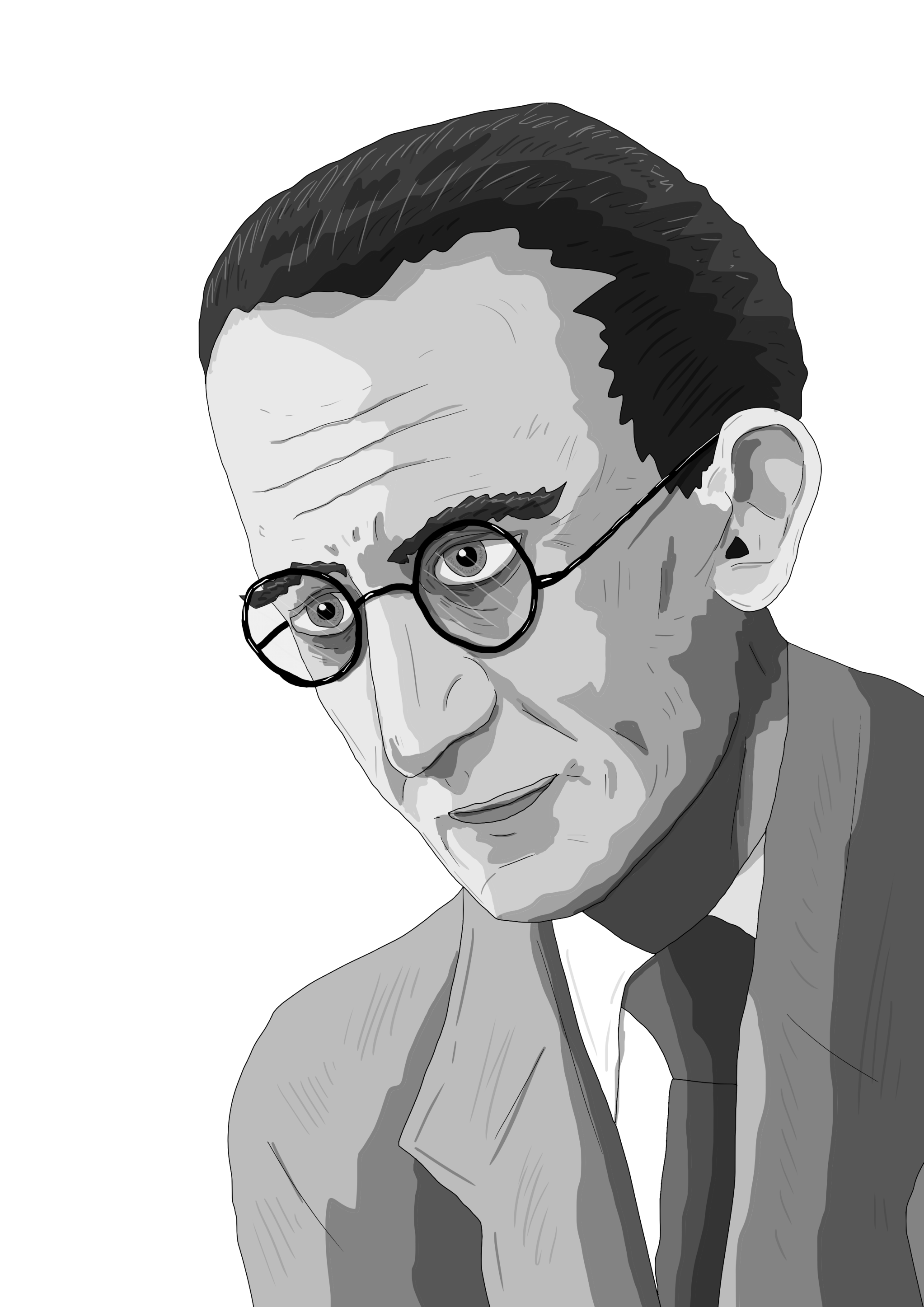
György Lukács is often divided into a succession of apparently incompatible figures. There is the young aesthetic philosopher of Soul and Form and The Theory of the Novel, preoccupied with tragedy, form and the homelessness of modern life. There is the revolutionary Marxist of History and Class Consciousness, for whom the proletariat becomes the possible bearer of historical totality. There is then the official or Soviet Lukács, the advocate of realism, the opponent of modernism and the author of The Destruction of Reason. Finally, there is the late Lukács of the Ontology of Social Being, engaged in the reconstruction of Marxism as a systematic account of objective social reality.
Between the failed Hungarian Revolution and the institutional world of Soviet Marxism, Lukács underwent the most controversial transformation of his intellectual life, and it is this transformation that is the subject of this essay.
This periodisation is not wholly false, but it is philosophically misleading. It organises Lukács’ development according to political settings and public positions rather than according to the internal development of his concepts. The result is particularly damaging to the middle Lukács. His early and late works are commonly treated as philosophy, while the writings between them are reduced to literary doctrine, political accommodation or Soviet ideological polemic. Yet the middle period is not an interruption between two philosophical Lukácses. It is the passage through which the concerns of the early work are transformed into those of the late.
Throughout Lukács’ career, the governing problem is totality. What changes is not the presence of this problem but the form in which it appears. In the early work, totality is remembered as something lost. In the middle work, it must be defended against fragmentation, irrationalism and the crisis of liberal civilisation. In the late work, it is reconstructed as the objective and historically dynamic structure of social being. The middle Lukács can therefore be understood as a philosopher of what might be called reactive objectivism: a thinker whose defence of objective reality becomes especially emphatic and polemical because it develops under conditions in which the intelligibility of reality itself appears threatened.
The early Lukács begins from the experience of a broken relationship between the individual and the world. The Theory of the Novel contrasts the integrated civilisation of ancient epic with the homelessness of modernity. In the imagined Greek world, form does not have to be imposed on an alien reality. The individual, the community and the cosmos participate in a shared order of meaning. Modern life, by contrast, is defined by the disappearance of any spontaneous totality of being. Form and life no longer coincide. The novel is consequently the literary form of a world in which totality is no longer given but must be sought.
This early conception is humanistic, aesthetic and still deeply Romantic. The fragmentation of modernity appears as a metaphysical and cultural disaster before it becomes a determinate social relation. Lukács’ language is one of homelessness, interiority and the separation between soul and world. The loss of totality is diagnosed, but its historical basis remains unclear. The early Lukács can describe modern fragmentation with exceptional power, but he cannot yet explain it.
His transition to Marxism does not abolish this problematic. It relocates it. History and Class Consciousness gives the lost totality a material and historical foundation. Fragmentation is no longer primarily an existential condition. It is produced by commodity society. Reification divides social reality into apparently autonomous objects, institutions and specialised forms of knowledge. Human relations confront their creators as external things. The immediate world is therefore real as appearance but false when treated as a self-sufficient whole.
This is why fragmentation is, for Lukács, not simply unpleasant or culturally impoverished. It is one-sided. The fragment exists, but it cannot be understood truthfully when separated from the social totality that produces and sustains it. The standpoint of totality is thus not a demand for indiscriminate comprehensiveness. It is the demand that particulars be grasped through their mediations.
The movement from the early to the revolutionary Lukács is therefore not a movement away from totality. It is the discovery that totality is social. The metaphysical homelessness of the novel becomes the reified consciousness of capitalism. What had appeared as the tragic condition of modern humanity becomes a historically specific form of social experience.
The middle Lukács develops this project under sharply altered political conditions. The revolutionary wave following the First World War had receded. Fascism had emerged as a mass political force. Liberal institutions appeared incapable of resolving the contradictions of capitalist society, while large sections of European intellectual life turned toward myth, intuition, authenticity, destiny and the critique of reason.
Lukács’ middle writings should be read within this crisis of liberalism. His defence of realism and reason was not simply imposed on an otherwise independent aesthetic philosophy by Soviet cultural policy. Nor was his anti-fascism merely the repetition of official slogans. It was an attempt to defend the intelligibility of modern social reality against currents that interpreted its contradictions as evidence of the impotence of reason itself.
This is the central significance of his disputes over Expressionism. On the surface, the argument concerns artistic form. Expressionism fragments the visible world, distorts ordinary experience and privileges subjective intensity. Lukács objects that this reproduces the immediate experience of capitalist society without penetrating its structure. It presents fragmentation, but does not mediate it through the objective relations that make fragmentation historically intelligible.
Ernst Bloch recognised that the disagreement went deeper than literary taste. He and Lukács explicitly located their dispute in divergent conceptions of objectivity within dialectical materialism. Bloch defended the anticipatory, incomplete and not-yet-realised aspects of reality. Experimental art might disclose tendencies that had not yet acquired settled objective form. Lukács feared that such an emphasis could turn subjective disruption into a privileged access to truth and thereby revive the Romantic identification of obscurity with profundity.
Lukács’ response does not conclusively refute Bloch. It largely clarifies and reasserts his own position. But the exchange reveals the philosophical centre of his aesthetics. The real question is not whether Expressionism is beautiful or politically sincere. It is whether the forms of subjective experience represented by Expressionism disclose objective reality or remain enclosed within its reified surface.
The same concern explains Lukács’ preference for realism, humanism and, in certain contexts, neoclassicism. These currents appeared to him capable of integrating the particular into a comprehensible whole. Their value did not lie in photographic naturalism. Lukács repeatedly distinguished realism from mere surface description. Realism was revolutionary when it represented human beings as social and historical beings, situated within objective relations that exceeded their immediate awareness.
His positive treatment of humanistic and classically ordered forms was therefore bound to his conception of knowledge. Art was valuable when it made reality more intelligible. It was defective when it elevated the deformation of experience into the ontology of reality itself. Lukács’ aesthetic conservatism, where it exists, is consequently inseparable from an epistemological and ontological wager: that the world remains objectively structured even when its structure is obscured by reification.
The term "reactive objectivism", identifies both the strength and the one-sidedness of the middle Lukács. By reactive objectivism I mean a historically conditioned intensification of Lukács's commitment to objective mediation and intelligibility under conditions in which those commitments appeared philosophically and politically threatened His objectivism is not mechanical realism in the simplest sense. He does not believe that reality is exhausted by immediately observable facts. Indeed, his entire Marxism depends on the distinction between appearance and essence, immediacy and mediation. Objective reality is a processual totality whose relations are not directly visible from the standpoint of everyday consciousness.
But this defence of objectivity takes shape in opposition to powerful anti-objectivist currents. Lukács confronts fascist myth, existential ontology, Romantic anti-capitalism, modernist fragmentation and philosophies that treat reason as an instrument of impoverishment or domination. Under these conditions, he stresses coherence, mediation, typification and intelligibility with exceptional force. The reactive character of his position lies in the way its determinations are shaped by what they negate.
This helps explain the severity of his polemics. Lukács is often less substantially mistaken than rhetorically overdrawn. He detects real tendencies but sometimes compresses the distinctions internal to them. His opponents appear as representatives of larger philosophical currents, and their individual complexity can be subordinated to their place within the historical argument.
Yet the polemical excess should not obscure the philosophical stakes. Lukács believed that the abandonment of objective intelligibility had political consequences. If social contradictions were treated as eternal features of existence, historical transformation became inconceivable. If alienation were interpreted as the permanent fate of Dasein, it ceased to appear as a relation produced by determinate social forms. If fragmentation were taken as the final truth of reality, then any project of rational emancipation would be deprived of its object.
The defence of objectivity was therefore also a defence of freedom. Social reality must be intelligible if it is to become the object of conscious collective transformation. The political alternative to rational mediation was not simply error but voluntarism, myth and the aestheticisation of violence.
This places The Destruction of Reason within a broader intellectual project. The book is often treated as a catalogue of reactionary philosophers or as a crude genealogy in which one thinker directly causes another and the sequence culminates in fascism. Such a reading would conflict with the historical materialism that ostensibly organises the work. Philosophies do not generate political regimes through direct textual inheritance. They articulate, systematise and legitimate tendencies already developing within social reality.
Lukács’ question is therefore not simply which fascists read Nietzsche, Bergson or Heidegger. It is which historical currents these philosophies expressed and advanced. A philosopher may give systematic form to a disposition that later becomes diffused through journalism, education, literature and political common sense. Individuals can consequently inhabit a Nietzschean, Bergsonian or Heideggerian intellectual world without having studied the relevant texts.
The force of The Destruction of Reason lies in the scale of its claim. Lukács argues that major currents of modern philosophy displaced historical and social contradiction into intuition, will, existence, myth or an ontologically privileged immediacy. If successful, this argument would affect far more than openly fascist thought. It would also challenge liberal and post-liberal philosophies that bracket social ontology, privilege phenomenological experience or treat the objective tractability of social problems with suspicion.
This does not mean that every genealogy in the book must be defended. Nietzsche’s reception, for example, was shaped by editorial and political circumstances that were less fully understood in Lukács’ time than they are now. Heidegger’s political commitment was direct, although the precise relation between his Nazism and his ontology remains disputed. Bergson’s historical reception included affinities with currents extending from Sorelianism to Mussolini, but this does not settle the truth of Bergson’s philosophy.
The relevant point is interpretive. Lukács is not principally conducting a moral trial of individual philosophers. He is reconstructing a struggle between rival ontologies of modernity. On one side stands the possibility that modern social reality is objectively intelligible through historical mediation. On the other stand philosophies that transform historically specific contradictions into inscrutable, existential or mythical conditions.
His anti-fascism is therefore a defence of modernity, though not of capitalist or liberal modernity as it existed. It is a defence of the unfinished rational content of the Enlightenment, reconstructed through Hegel and Marx. Fascism appears as the violent political form of a wider revolt against universality, mediation and reason. The socialist project, by contrast, appears as the possibility of completing rather than abandoning modernity.
Lukács’ political relation to the Soviet Union belongs within this framework, although it should not be made into a simple explanatory key. The Soviet Union appeared to many anti-fascist intellectuals not merely as one state among others, but as the principal institutional bearer of socialist modernity and the most powerful opponent of fascism. Lukács’ allegiance to it cannot be understood solely through personal conformity or opportunism.
At the same time, the Soviet Union was a partial and deeply contradictory instantiation of socialism. It represented a real break with the liberal-capitalist state form and a claim to planned collective development, but it did not realise the conscious democratic mediation of social life that Lukács’ philosophical categories implied. The incompleteness of socialism as an historical reality formed part of the conjuncture within which the middle Lukács defended objectivity.
This may help explain why his defence sometimes becomes reactive. The objective movement of history was identified too closely with its existing institutional representative, while criticism of that representative risked appearing as assistance to forces seeking its destruction. The tension was not simply between private belief and public loyalty. It lay within the historical form itself: socialism existed, but incompletely; it was actual, but not adequate to its concept.
Lukács’ later criticisms of Stalinism and bureaucratic socialism did not necessarily negate his earlier allegiance. They may instead represent the development of the distinction between socialism as a historical possibility and the Soviet state as its incomplete realisation. His political changes were more erratic than his philosophical development, but they were not unrelated to it. As the conceptual demands of totality, mediation and conscious praxis became more determinate, the inadequacy of bureaucratic socialism became correspondingly clearer.
The middle Lukács is therefore neither the interruption nor the disappearance of Lukács as a systematic philosopher. It is the passage between two formulations of the same central problem.
The early Lukács confronts the loss of an integrated human world. His humanism remains tragic because it lacks a material account of the forces that have divided subject from object, individual from community and form from life. History and Class Consciousness discovers the social basis of that division in the commodity structure and names its characteristic form of consciousness reification.
The middle Lukács then confronts the political and philosophical consequences of a civilisation in crisis. Totality can no longer remain merely a methodological achievement of revolutionary consciousness. It must be defended against philosophies and artistic forms that interpret fragmentation as the deepest truth of existence. His realism, humanism, anti-Romanticism and anti-fascism belong to this defence.
The late Lukács attempts to provide the ontological grounding that the earlier formulations lacked. Totality is no longer simply lost, sought or defended. It is reconstructed as the organisation of real, dynamic and relatively autonomous complexes. Social being arises from nature but develops qualitatively specific categories through labour, teleology and social reproduction. Objectivity is neither static facticity nor the passive object of contemplation. It is the processual structure of a reality transformed through human practice.
This arc does not eliminate the differences between the periods. It makes them intelligible. The middle Lukács may be overly polemical, and his objectivism may become one-sided under the pressure of its opponents. But these limitations belong to the development of his project rather than proving its abandonment.
Between Hungary and Moscow, Lukács did not cease to be the philosopher of totality. He became the philosopher of its defence. His middle passage was the attempt to preserve the possibility of an intelligible human world at a moment when liberal modernity was collapsing, fascism was converting irrationalism into political power, and socialism existed only in a partial and contradictory form.
If the early Lukács asked how totality had been lost - and the late Lukács asked how it was constituted - the middle Lukács asked whether it could survive.
Bibliography
Bloch, Ernst. “Discussing Expressionism.” In Aesthetics and Politics. London: Verso.
Lukács, Georg. History and Class Consciousness: Studies in Marxist Dialectics. Translated by Rodney Livingstone. London: Merlin Press.
Lukács, Georg. Lenin: A Study on the Unity of His Thought. Translated by Nicholas Jacobs. London: Verso.
Lukács, Georg. Soul and Form. Translated by Anna Bostock. London: Merlin Press. Lukács, Georg. The Destruction of Reason. Translated by Peter Palmer. London: Merlin Press. Lukács, Georg. “Realism in the Balance.” In Aesthetics and Politics. London: Verso. Lukács, Georg. “The Ideology of Modernism.” In Aesthetics and Politics. London: Verso.
Lukács, Georg. The Theory of the Novel: A Historico-Philosophical Essay on the Forms of Great Epic Literature. Translated by Anna Bostock. London: Merlin Press.
Lukács, Georg. The Young Hegel: Studies in the Relations between Dialectics and Economics. Translated by Rodney Livingstone. London: Merlin Press.
Lukács, Georg. Toward the Ontology of Social Being. Translated by David Fernbach. London: Merlin Press.