
Introduction
Modern History has certainly heralded many Communist Revolutions in its lifetimes. All throughout the world, from the European uprisings in Provisional Russia in 1917, to Nazi Occupied Wartime Yugoslavia in the 1940s. And, again, from the Latin American uprising in Batista’s Cuba in 1952, to even Asian uprisings in Nationalist China in 1949. But what is rarely mentioned (at least against these other cases), is another country compared to these (and others in general) - Sri Lanka - or ‘Ceylon’ as it was formerly known.
I will outline the origins of the Insurrections instigated by the Sinhala ‘Nationalist-but-simultaneously-Communist’ Jananthi Vimukthi Peramuna (JVP). I will also examine the Insurrections themselves, which took place in 1971 and 1987-1989 - and the aftermath as this once revolutionary (and proscribed) terrorist organisation melded its way into Modern Sri Lankan Politics.
Part 1 - Birth of a Leader and His Party
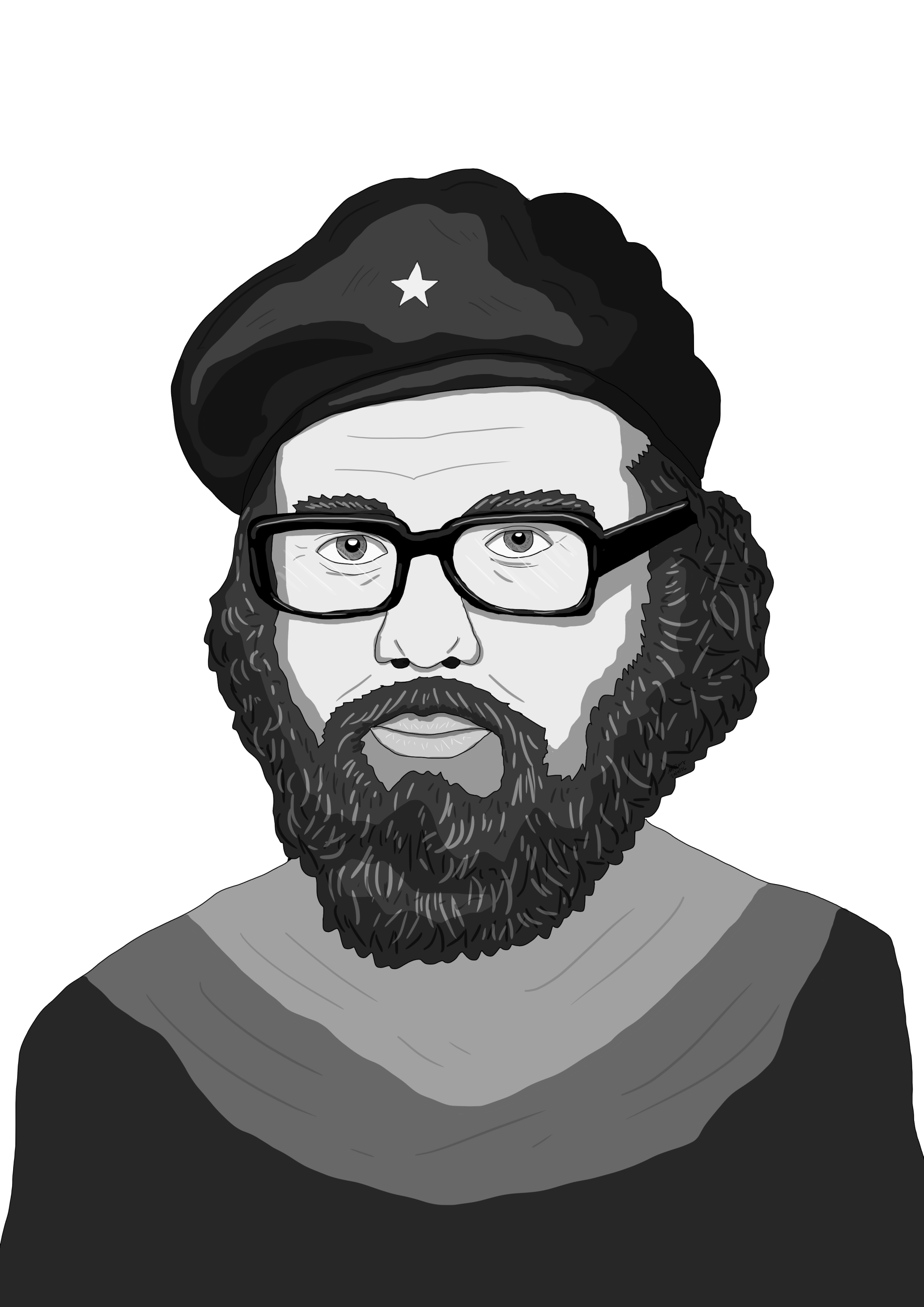
Like other Communist Parties and uprisings of the 20th century, the JVP was headed by a central figure, being Rohana Wijeweera. Born with the name ‘Patabandi Don Nadndasiri Wijeweera’ on July 14th 1943, in Kottegoda to Don Andris Wijeweera, who lived in Tangalle. His father was Nasi Nona Wickrama Kuluotota who lived in Hunudeniya. His alias translated to the term of ‘hero’, something his followers would come to see him as in the next 20 to 40 years. Wijeweera also had two younger siblings by the names of of Ananda and Chitrani.
With a turbulent personal life, stemming from the death of his father in 1965 and some disruption to his studies, a trip to the Soviet Union had begun to influence his communist ideology. The founding of the JVP on May 14th, 1965, with Wijeweera as its inaugural leader, came at a time of tough political climate for the Dominion of Ceylon. It arrived at a moment where the current Prime Minister Sirimavo Bandaranaike of the Left-Wing Sri Lanka Freedom Party (SLFP), was facing opposition to her continuation of ineffective socialist policies - which Wijeweera saw as serving little benefit to the common Ceylonese citizen. The Ceylonese Parliamentary Election that summer saw her toppled in favour of Leader of the Opposition, and two-time Prime Minister beforehand, Dudley Senanayake of the Right-Wing United National Party (UNP).
Furthermore, Wijeweera saw the current Sri Lankan Communist Party (LSSP), headed by Dr. N.M. Perera, as being inadequate in carrying out communist policy, due to its place in the opposition or coalition governments. The JVP was overlooked politically in the 1960, with Prime Minister Senanayake even confusing the Communist JVP with the Right-Wing Nationalist Jathika Vimkuthi Perunama - which was responsible for Anti-Tamil Riots in the 1950s.
This perhaps drew the two parties closer together if the future policy of Wijeweera towards Eelam Tamils is anything to say. However, by the earliest years of the 1970s, the Communist JVP had begun to make its mark.
Part 2 - The 1971 JVP Insurrection in Ceylon
Globally, the 1970s are rightfully classified as a turbulent time in world history, and Ceylon and Sri Lanka would excellently corroborate this. The previous year had seen Dudley Senanayake defeated in a Ceylonese Parliamentary Election to Sirimavo Bandaranaike and her United Front Coalition. It was the last to be classified as a Ceylonese Parliamentary Election before the change of status from Dominion to Republic.
It is interesting to note that Wijeewera merely added to the turbulent reputation of Bandranaike’s Prime Ministerial terms. His plans to stage a coup would not be the first under her premiership, given that in her first tenure as Prime Minister she was nearly unseated by the Ceylon Police and Army in 1962 (a similar occurrence had occurred to her political rival, Senanayake, in 1966), which would lead to her replacing the current Governor General of Ceylon Sir Oliver Ernest Goonetieleike with her uncle William Gopalwalla). This would be the first time, and certainly not the last, that Wijeweera and his party would take up arms against the government.
The revolution itself only lasted for one year and had little success, with Ceylonese Police Offices mostly being destroyed, and the country being able to rely on the support of regions such as India and ironically enough, the Soviet Union, to quell the insurgency. The insurgents even had support from nations such as North Korea.
Wijeweera himself was arrested, thwarting his political ambitions for more than a decade.
Part 3 - The 1987-1989 JVP Insurrection in Sri Lanka
By the late 1970s, Sri Lanka had faced many a change. It had gained its current name, status and a newer constitution on the 22nd of May 1972, seeing the Governor General role (which had existed in the Dominion of Ceylon) replaced by a non-executive Presidential position, inhabited by Gopalwalla. On the 21st of July 1977, Bandaranaike’s political majority was decimated - not having enough seats to form the opposition party. The opposition spot was thus taken by Tamil United Liberation Front leader Appaapillai Amirthalingam, with the role of Prime Minister attained by Senanayake’s successor and Leader of the Opposition, JR Jayawardene of the UNP. Like his future contemporaries of Thatcher and Reagan, Jayawardene had worked to propel the new-right movement, and fashion a more robust capitalist system.
Jayawardene had made the fatal decision of letting Wijeweera and his associates out of prison, and allowing them to participate in politics. In November 1977, though, he ironically used his new powers to restrict Bandaranaike’s involvement in politics in 1980. This in turn allowed Wijeweera and the JVP to participate in the 1982 Sri Lankan Presidential Election primarily against Jayawardene of the UNP, and staunch socialist Hector Kobekaduwa of the SLFP. Jayawardene was re-elected, with Wijeweera and the JVP polling in third, much to their chagrin.
Further tensions arose in 1983. The killings of soldiers in Squadron Four Four Bravo of the Sri Lankan Army by the Tamil Militant Group ‘the Liberation Tigers of Tamil Eelam’ (LTTE) had seen renewed massacres against Eelam Tamils during a period known as Balcacross Sri Lanka. Similar events had previously occurred in 1956, 1958, 1961, 1977 and 1981 with the burning of the Jaffna Public Library, which was perpetrated by both Sinhalese mobs and the UNP itself - with documented involvement of political stalwarts such as Gamini Dissanayake.
Jayawardene himself passed the Prevention of Terrorism Act in 1983 to quell demands for a separate Tamil state, and passed a referendum to prolong his time in power as he sensed the rise of ethnic tensions, the latter of which particularly upset Wijeweera and the JVP. The tensions and massacres against Eelam Tamils in 1983 were insurmountable, leading to the LTTE waging war against the predominantly Sinhala Sri Lankan Government. Wijeweera had furthered the JVP’s political position at this time, such as in his 1986 book ‘the Solutions to the Tamil Eelam struggle’. He opposed an Eelam Tamil state for the reasoning of it being reminiscent of American Imperialism.
Upon his discovery of Indian supplies being airlifted to regions in the North, such as Jaffna, tensions escalated between the Sri Lankan and Indian Governments, leading to extensive negotiation between President Jayawardene and Prime Minister of India Rajiv Gandhi, which culminated in the Indo-Sri Lankan Accord of 1987. This would see the sending of Indian Peacekeeping Forces to the country, as well as the promise of liberties to Eelam Tamils - such as the language being recognised as an equal to Sinhalese in the same year (where, for 31 years, it had not been recognised as an official or national language).
Wijeweera, highly discontented with the involvement of India in Sri Lanka’s affairs, waged a second insurrection against the government in 1987. The earlier years of the insurrection happened under Jayawardene, with a Grenade Attack occurring as Jayawardene and Premadasa were in Parliament, leading to the death of an MP. Jayawardene was recognised for his draconian and violent policies, but his successor Premadasa had escalated such aspects. The 1988 Sri Lankan Presidential Election (and the 1989 Sri Lankan Parliamentary Election) was against liberated opposition leader Sirimavo Bandaranaike (her son Anura had been leader of the opposition as she was politically limited). Premadasa had claimed his election to President came at a time where Sri Lanka was embattled between the ballot and the bullet.
The JVP carried out more prominent violent acts then they had before, including the killing of prolific actor and politician Vijaya Kumaratunga by the militant Deshpremi Janatha Viyaparay, due to fears of him abandoning the Sinhala Nationalist Cause by showing clemency to Eelam Tamils and meeting with LTTE Cadres in the North. What followed from Premadasa was a violent suppression of the JVP, with 60,000 Sinhala youth estimated to have been killed.
Many leaders and members of the JVP (including Wijeewera himself) were not separated from the violence. Operation Combine, launched by the Government to kill the JVP Leadership, had seen the death of Wijeewera on the 13th of November 1989. Notable other killings including those of his successors Sellapperumage Saman Piyasiri Fernando (alias ‘Keeri Vijayabahu’) and his successor Vijalath Pathirannehelage Lalith Wijeratne ('Lalith Wijetratnha’) occurred on December 29th 1989 and on the 4th of January 1990 respectively.
The JVP, as it once existed, and its revolution, were over.
Part 4 - The Democratic Party and the Government
Following the mass killings of the preexisting JVP hierarchy, new leader Somawansa Amarasinghe and General Secretary Tilvin Silva had sought to democratise the JVP for involvement in Sri Lankan politics. This came at a time where the LTTE allegedly carried out assassinations against President Ranasinghe Premadasa on May 1st 1993, with an internal Presidential election allowing Prime Minister Wijetunga to become President Prime Minister Rajiv Gandhi in 1991. Parliamentarians Gamini Dissanayake and Lalith Athultathulamudali were also allegedly targeted in 1994 and 1993 respectively.
1994 had seen Chandrika Bandaranaike Kumartunga win the 1994 Sri Lankan Presidential Election against Srima Dissanayake of the New Democratic Front (NDF), with the widow of Gamini Dissanayake going on to win the Parliamentary Election that year against President Dingiri Banda Wijetunga and his Prime Minister - current leader of the UNP Ranil Wickramasinghe.
1999 was the same year in which current General Secretary of the JVP Masteaga Don Nandana Gunathilake had contested the Presidency against current President (and leader of the SLFP led People’s Alliance) Chandrika Bandaranaike Kumuratunga, and current leader of the UNP Ranil Wickramasinghe. Somewhat echoing the result of the outcome for the JVP in 1982, Kumaratunga had faced a near-fatal assassination attempt allegedly perpetuated by the LTTE. The JVP seemed to not be in the forefront of the violence.
2002 saw peace talks brokered by Norway against the Government of Sri Lanka. The negotiations were headed by Kumaratunga and Wickramasinghe - given that the latter had won the Parliamentary Election of 2001 - and the LTTE, with figures such as Anton Balasingham. However, the JVP had opposed such peace talks, protesting about foreign involvement in Sri Lanka’s Affairs in 2003. SLFP stalwart (and up and coming Prime Minister) Mahinda Rajapaksa, part of the United People’s Freedom Alliance in 2004, replaced the People’s Alliance which Kumaratunga had headed since 1994 without involvement from the JVP. Rajapaksa supported his bid for the Presidency in the 2005 Sri Lankan Presidential Election against Ranil Wickramasinghe.
Like Premadasa, Rajapaksa led a famously violent regime, which saw the shelling and continued genocide of Eelam Tamil Civilians, culminating in the Mullivaikkal Massacre of 2009. It is perhaps interesting to notice how instead of openly participating in the violence, the JVP itself was commending it. The death of Amarasinghe in 2014 had seen his succession by Parliamentarian Anura Kumara Dissanayake. Born on the 24th of November 1968 in Galewela, he was involved in the JVP Insurrections of 1987-1989, before going into hiding and rejoining the party.
He was initially unsuccessful in the 2015 Sri Lankan Presidential election against Maithripala Sirisena of the NDF, who won the election. Another runner was Mahinda Rajapaksa of the UPFA. The 2019 Sri Lankan Presidential Election was against the brother of Mahinda, Gotabaya Rajapaksa, of the newly formed Sri Lanka Podujana Peranuma (SLPP), and the son of Ranasinghe Premadasa, Sajith Premadasa of the UNP. An internal 2022 Sri Lankan Presidential Election was against Ranil Wickramasinghe of the NDF and Dullas Alahapperuma of the SLPP.
Dissanayake led to a change in the fortune of the JVP in 2024. The 21st of September 2024 saw Dissanayake of the National People’s Power Alliance (which he had formed in 2019, with him being a part of the JVP) win a victory against Sajith Premadasa, who had formed the breakaway of the UNP, Samagi Jana Balawegaya (SJB) in 2020. Also defeated was Ranil Wickramasinghe, running as an Intendent of the NDF. Dissanayake further consolidated his victory in the 2024 Sri Lankan Parliamentary Election, against the following candidates: Premadasa, Sivaganamam Shritharan of the Federal Party, Wickramasinghe of the NDF, and Mahinda Rajapaksa of the SLPP. He had subsequently appointed university lecturer Harini Amarasuriya as Prime Minister.
Whilst hopes for him were initially very high (with him partially restoring the Sri Lankan Economic State and allowing the nation to become Upper Middle Income in 2026), the extent in which he is able to quell corruption is still being questioned. The repeated incarceration and release of the Rajapaksa family, as well as grounded concerns from minorities such as the Eelam Tamils about his continuation of draconian policies remain live questions.
The alleged abuses include not granting Article 13 to give the latter more autonomy, not repealing the Prevention of Terrorism Act of 1983 which has been used excessively, and support of Nationalist Sinhala Buddhist Monks. This forms a parallel to the support in which the JVP of the 1970s and 1980s had from Bhikkus, and most recently the suppression of the activities of the Eelam Tamils - such as their Hindu festivals being disrupted by Buddhist Monks. The police’s removal of revered figure Thileepan, who had been on a hunger strike and passed away for a Tamil Eelam in September 1987 further inflamed tensions.
Today, Dissanayake’s reputation seems to be tied simultaneously to his party of the 1980s, and previous Sinhala majority Governments from 1947.
Conclusion
The Communist Revolutions in which the JVP staged across Ceylon and Sri Lanka, as well as their eventual formation of Government seem to pace with the anticipation and fall of Communist regimes across the world. Once in power, they settle into place amongst the capitalist elites they once abhorred.
Bibliography
-Butler, G. (2024). Anura Kumara Dissanayake: Who is Sri Lanka’s new president? [online] BBC News. Available at: https://www.bbc.co.uk/news/articles/c206l7pz5v1o [Accessed 29 Sept. 2026].
-Rohan, G. (1990). Sri Lanka, a lost revolution? The inside story of the JVP. Institute of Fundamental Studies.
-De Silva, K. M. (1981). A history of Sri Lanka. University of California Press.
-Newmont, H. (2025). A history of Sri Lanka. Independently Published.
-Senanayake, D. and Senanayake Foundation (2011). Dudley Senanayake, a biography. Colombo: Sarasavi Publishers.
-Tamilguardian.com. (2024). Who is Anura Kumara Dissanayake? | Tamil Guardian. [online] Available at: https://www.tamilguardian.com/content/who-anura-kumara-dissanayake [Accessed 29 Sept. 2026].,