
The Bacillus in the Carriage (TT26)
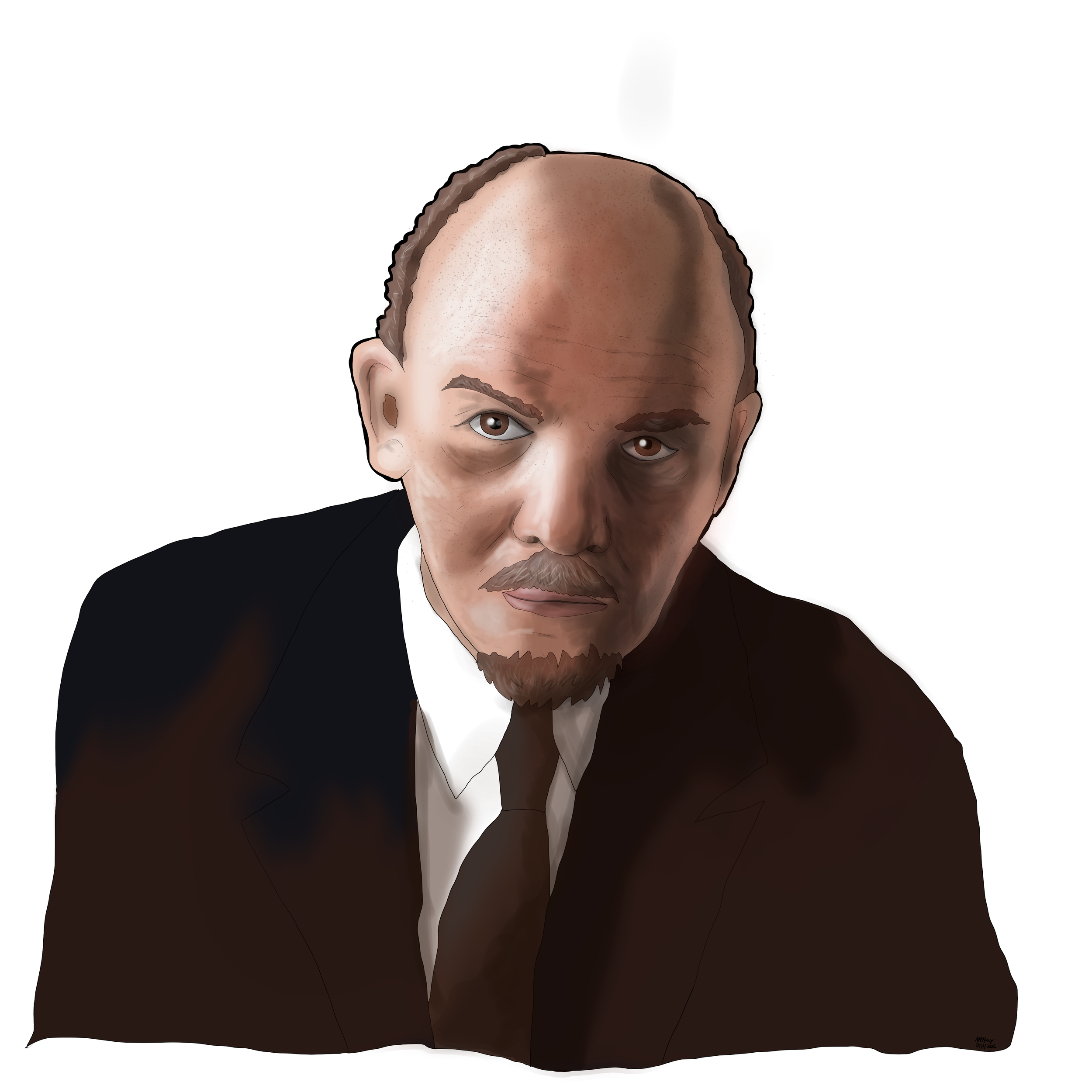
On a cold April morning in 1917, a group of Russian exiles were gathered on a platform in Zürich station ready to board a sealed German train. A large crowd had arrived, not to cheer or wish them well, but to protest. Sticks struck the sides of the carriage. Shouts were shrill - “Provocateurs! Spies! Traitors!” One warned that the revolutionaries would be hanged like German spies. The atmosphere of betrayal and contamination was already spreading before the train had even moved an inch.
Sixteen days later, Vladimir Ilyich Ulyanov - ‘Lenin’ - arrived in Petrograd at Finland Station. His first words after months in exile were to Kamenev, shouting “What’s this you’ve been writing in Pravda?” Such a greeting from Lenin would define his next actions - and what he had been preparing in his weeks in the sealed train from Germany.
He then climbed upon an armoured car and to a crowd of thousands demanded a worldwide socialist revolution. Twenty-four hours later, Lenin had published The April Theses - an act so radical he had shocked even his closest men.
Sir Winston Churchill, a decade later, would describe these events unusually. The Germans, he wrote, had “transported Lenin like a plague bacillus from Switzerland into Russia”. He meant it as an insult. He was also, almost, correct.
But how did this end up happening? How did a group of exiles board a German military train in the midst of World War One, be cheered off by no one, be denounced by their own comrades, and arrive two weeks later to demand revolution? The answer lies in a calculated German gamble, a chalk line drawn down the floor of a train, and an ideology that refused to remain on its scheduled journey back north towards Russia.
By the start of 1917, Germany was exhausted. The war in the East with Russia was draining, and the Kaiser’s government desperately needed the Russians to back out of the conflict. Resources were lacking, as was the morale of their soldiers. However, Arthur Zimmermann, the then German Undersecretary of State, had known as early as 1914 that there was a weapon lying dormant in Switzerland that could free them. He formalised this thinking in a policy document drawn up the moment it was clear the war would not end quickly. His proposal was clear: a revolution inside Russia would force the Tsar to conclude a separate peace, allowing Germany to concentrate their forces on the Western Front.
Their patient zero? An exiled Lenin, staying in Switzerland dreaming of a return to Russia, a return that Germany could provide him with the ticket for.
They called it Revolutionierungspolitik – the deliberate policy of revolutionising the enemy.
Alexander Helphand, better known as Parvus, was a radical socialist who ironically had come to be a millionaire through the means of wartime trading. He had connections in worlds that should have been incompatible; both the German Foreign Office, and Lenin’s Bolsheviks. Parvus went to Berlin in 1915 proposing that Germany channel its own funds into Lenin’s organisation as part of its broader destabilisation project - becoming the main agent in making Revolutionierungspolitik actually happen.
On the journey of the train itself, Parvus sought out a meeting with Lenin in Stockholm, but Lenin refused and requested to Karl Radek, one of his closest lieutenants, that such a refusal should be formally recorded. Parvus responded, utterly offended, “he may go on agitating, but if he is not interested in statesmanship then he will become a tool in my hands.”
Both Parvus and Lenin thought they were using each other. Germany thought that Lenin was their device to use. Lenin thought that he was using Germany’s resources for his own aims. Both were, in different ways, somewhat correct.
Not everyone shared Germany’s confidence in its plan. Emperor Karl of Austria warned Kaiser Wilhelm II himself directly that the Germans were “fighting against a new enemy … the international revolution”. Germany was forming something that it needed but also feared. It wanted to infect Russia but was terrified of infecting itself.
The train carriage itself was a green, eight-compartment rail coach. Three of its four doors remained locked. In the middle of the corridor, a line had been drawn in chalk.
There was one person allowed to move freely across the chalk border, Fritz Platten, a Swiss intermediary. Two German military escorts were at one end of the carriage, and at the other end resided Lenin and his fellow exiles – both groups confined to their own areas. Even the most mundane and docile of acts were regulated, each side had been given their own toilet so that the Germans had, as noted by Michael Pearson, no reason to cross into “Russian territory”.
The arrangement was meticulous, near obsessive. Contact between each side was structurally prevented.
The carriage would be better described as a container. What Germany had started was something that it wanted to direct but not contract itself. The revolutionaries were to pass through the Reich without touching it. The chalk line demonstrated a futile attempt to impose order upon something that was inherently unstable, a belief that the force within the carriage could be precisely delivered without consequence to those who handled them.
However, the terms of the arrangement had never been Lenin’s to set.
Count Gisberg von Romberg was the German ambassador to Berne who oversaw the negotiation to transport Lenin across German territory. When Lenin attempted to dictate the terms of his transit, Romberg reminded the mediators “I was under the impression that it was not I who was asking permission to travel through Russia, but Mr Ulyanov (Lenin) and others who were asking me permission to travel through Germany” - thus confirming that the sealed train itself was a targeted German deployment, not a Bolshevik triumph, and Lenin was just a passenger on a journey controlled by the Kaiser’s strategic interest.
Although, the containment itself was already beginning to fail.
This became clear at Frankfurt station where discipline gave way and German soldiers who had heard of the news that a train full of Russian revolutionaries was passing through broken ranks - surging towards the train, with mugs of beer in each of their hands. They pressed up against the carriage windows, shouting against the glass, “Will there be peace? And when?!” Radek was forced to drive them back himself, haranguing them away until officers intervened and dispersed the crowd.
The German soldiers had not met Lenin, nor had they heard him speak. They did not need to. The knowledge that the carriage existed, and that somewhere behind the glass revolution was travelling was enough to unsettle a group of already war fatigued soldiers. Germany had attempted to design a one-way journey, but Frankfurt demonstrated that ideology could not travel in just one direction.
The train continued its journey, past Frankfurt, through Sweden and Finland, and eventually on the 3rd of April 1917 it arrived in Petrograd. Military bands were playing the Marseillaise, the musicians, not long free of Tsarist rule, had not had the time nor exposure to learn the Internationale.
The April Theses was soon published and the reaction was immediate. Zimmermann’s liaison officer wrote back with satisfaction: “Lenin is working exactly as we would wish”.
The language of contamination had not waited for Churchill; it was already present.
Churchill’s idea of the plague bacillus was not a throwaway comment - he returned to his metaphor frequently. On another occasion in a speech from around 1919-1920 he described Lenin as a “phial containing a culture of typhoid or of cholera to be poured into the water supply of a great city”. Whether it be bacillus, plague, or typhoid, the language of disease and contamination was consistent across Churchill’s interpretation of Lenin.
However, Churchill is limited as a source of meaningful understanding to the person of Lenin. His language is not only ideologically charged, but emotional. Churchill was not a dispassionate analyst writing a clear historical account, he was a deeply conservative politician who had watched an empire which he admired collapse, seen the Tsar and his family murdered, and spent the following years attempting to strangle the Bolshevik revolution at birth through allied intervention – which as we know failed embarrassingly.
By the time he wrote The World Crisis in 1929, he was writing with years’ worth of emotion.
The idea of the plague bacillus language reflects this, it is dehumanising and reduces Lenin to a microbe, stripping him of his intelligence and agency and frames Bolshevism as a pathology rather than a real political movement with causes and support. It is the language of someone who finds the Russian Revolution wholly wrong and incomprehensible; it is as Langworth suggests, slightly melodramatic.
Furthermore, conveniently for Churchill, framing the Germans as the villain in causing the Russian Revolution by sending it on its path sidesteps all questions as to why so many Russians wanted a revolution in the first place.
But even accounting for Churchill’s exaggeration, his horror, his grief for the Russian Empire, the structure of what he describes is accurate. Germany was indeed operating with what could be described to be epidemiological logic.
The chalk line on the floor of the carriage was not just a metaphor for quarantine; it was an actual quarantine.
Churchill’s tone was wrong. It was emotional, ideologically motivated, and his metaphor was an injustice to the actual historical events of the Russian Revolution. Yet despite this, the underlying logic of his metaphor accurately describes the actions of the Germans. Thus, Churchill stumbled upon an accurate description of the Germans whilst trying to make an insult.
Churchill’s metaphor misses one key detail though - plagues have no agency. Lenin did.
The April Theses describes Russia as passing from its first stage of revolution to its second, mutating into something stronger, able to infect a new demographic.
In March 1918 Lenin signed the Treaty of Brest-Litovsk, Russia was out of the war and Germany got what it wanted. Briefly.
In November 1918, revolution came to Germany itself. The Spartacus League, which later became the Communist party, tried to overthrow the new moderate Social Democrat government and install a Soviet-esque system. The ideology Germany had sealed into a carriage to protect its own people arrived anyway, from within.
The Social Democrats eventually crushed the revolution, but the Kaiser had abdicated.
In 1919, two years after the publishing of the April Theses, Lenin set up Comintern – the Communist International. Its main aim was to promote Marxism globally, unite radical left-wing parties, and support the overthrow of capitalism worldwide following World War One. The German Communist Party was a major, and incredibly active, member of Comintern.
Ultimately, Lenin had arrived in Russia through a passage the Germans had facilitated, and he instantly published a document whose entire purpose was to spread the ideology the Germans feared the most. The question as to if Lenin succeeded is the subject of a larger historiographical debate.
But the plague had certainly left the sealed train, and it had aided in killing off the one man who approved its spread in the first place – Kaiser Wilhelm II.
Reading List:
Churchill, W.S., The World Crisis, Part IV: The Aftermath, 1918-1928 (New York, 2013)
Lenin, V.I, ‘The Tasks of the Proletariat in the Present Revolution’ Marxists.org (1917 https://www.marxists.org/archive/lenin/works/1917/apr/04.htm
Langworth, R., ‘Lenin as Plague Bacillus, Churchill as Munitions Minister’, The Churchill Project – Hillsdale College (2024)
Pearson, M., The Sealed Train (London, 1990)
Wood, A., ‘Dual Power and the October Revolution’, in A.Wood, The Origins of the Russian Revolution, 1861-1917 (London, 2003), pp. 66-79.