
‘The Other 9/11’: When the American Empire Overthrew Socialism in Chile (HT26)
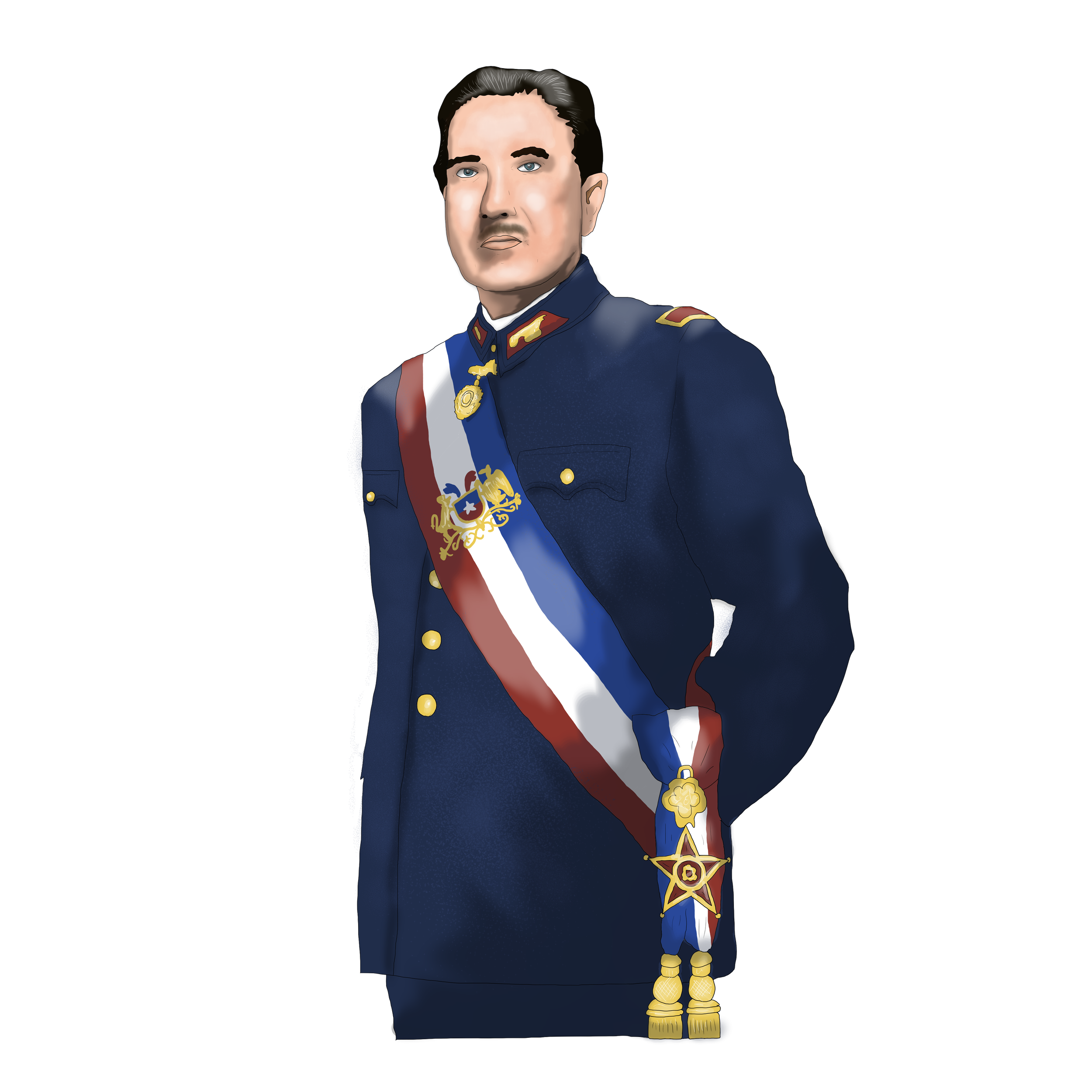
At 6:00 AM on the 11th of September 1973, the Chilean armed forces under General Augusto Pinochet seized the port of Valparaíso. By 9:00, they controlled the entire country. President Salvador Allende, elected three years earlier on a democratic socialist platform, refused to surrender or lead a counter-coup. From the presidential palace La Moneda, bombs raining down from British-built Hawker Hunter jets, he gave a final speech before shooting himself with a gun given to him by Fidel Castro:
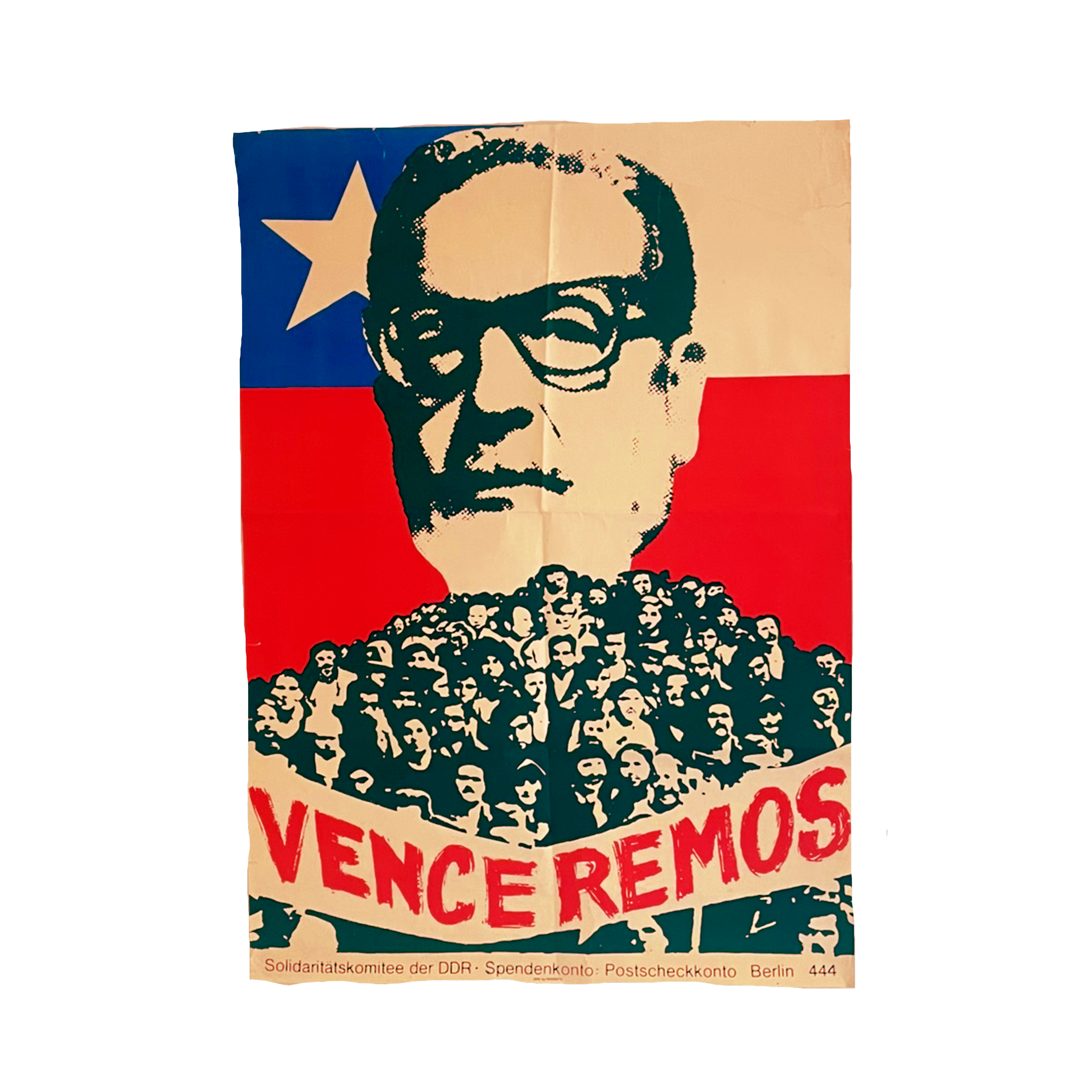
“Workers of my country, I have faith in Chile and its destiny. Other men will overcome this dark and bitter moment when treason seeks to prevail. Go forward knowing that, sooner rather than later, the great avenues will open again where free men will walk to build a better society.
Long live Chile! Long live the people! Long live the workers!”
At 2:30 PM, General Pinochet assumed power. For nearly two decades, he led a junta that killed or ‘disappeared’ thousands of Chileans. His regime, and the coup d’etat that legitimised it, were built on political, economic, and social intervention by the United States government and Central Intelligence Agency (CIA). This marked the pinnacle of US anti-communist action in its Latin American ‘sphere of influence’ – action that also targeted, or would go on to target, Guatemala, Brazil, Argentina, and Nicaragua.
THE CHILEAN CONTEXT
The southernmost country in the world, home to vast reserves of agricultural land, copper, and silver, Chile formed part of Spanish America from 1541. Amidst the wave of colonial uprisings that followed Napoleon’s capture of Ferdinand VII of Spain, a two-decade war led to Chile declaring its independence in 1818. The newly-independent state set up a stable if authoritarian system that became a parliamentary republic in the early 20th century. Yet beneath this democratic facade lay a dangerous, imperialistic undertone. Britain quickly monopolised the nation’s export trade, and Monroe Doctrine America followed, building a system of political and economic influence benefiting US capital. By the 1950s, US companies controlled between 70 and 80% of Chile’s copper industry, and the hemispheric hegemon held major sway over the country’s presidential elections.
This was evident in the election of 1964, which took place in the context of increased Cold War-era polarisation in the region – namely the Cuban Revolution and US-orchestrated coups in Guatemala, Ecuador, and Brazil. Its main contenders were Eduardo Frei, for the Christian Democratic Party (PDC), and Allende, for the Socialists – the latter stood on a platform of nationalisation, inciting a program of American ‘covert intervention’ that funnelled $3 millions of CIA money to the PDC to ensure Frei’s victory.
1970’s election was to be much the same – Frei, who could only constitutionally serve one six-year term, was replaced as America’s candidate by Jorge Alessandri, against Allende’s broad-church socialist coalition, Unidad Popular (Popular Unity, UP). President Richard Nixon and Secretary of State Henry Kissinger’s Project FUBELT ordered the CIA to provide $4 million to the PDC, and budget at least $250,000 to bribe the Congress and prevent Allende’s election. The Chilean people, however, stood with Allende’s message of social reform, and he won with 36.6% of the vote. His confirmation as president in November angered the US – Nixon stated that it was “firm and continuing policy that (Allende) be overthrown in some way.”
ALLENDE’S RULE
Like many of the Latin American leaders overthrown by US-backed coups, Allende enacted a programme that aimed to free Chile from both the chains of its Spanish colonial past and those of US neo-colonialism. This was La vía Chilena al Socialismo – the Chilean Way to Socialism, that enacted reforms based explicitly on Chilean conditions. Chief amongst these was nationalisation, a policy which had experienced considerable success by the time of Allende’s overthrow. Returning Chile’s vast industries to indigenous control enabled extensive land reform that redistributed land and food to disadvantaged tenant-farming and mining communities. Allende also enacted income equality reforms in urban centres, and started the first free school meals programme in Latin America, which had benefited 60% of Chile’s children by 1973.
Yet in the context of the Cold War, these proved to be high-risk decisions. American political, economic, and social intervention became far more insidious in response, ultimately creating the conditions for Pinochet’s coup. The Chilean military, already shaped by ties to social elites and anti-communist sentiment, was politicised, seeking greater contact with the CIA and regional actors in an attempt to ‘actively precipitate’ an armed takeover, whilst Allende’s allies were systematically targeted. Soon after Allende’s assumption of power, General René Schneider – the army commander-in-chief who had resisted America’s attempts to manipulate his forces – was assassinated by a group of three ultranationalist officers, funded and armed by the CIA’s Santiago office.
Nationalisation, an unacceptable threat in the eyes of America’s informal empire, made Chile the target of far-reaching economic destabilisation, designed to delegitimise Allende’s regime and – according to Nixon – “make the economy scream.” American efforts viewed the protection of US capital interest as imperative – companies like Kennecott and Anaconda reaped 56.8% and 21.7% respectively of their annual profits from pre-nationalisation Chilean copper, and both lobbied Kissinger to act against Allende. A campaign of sabotage followed, under which all imports to Chile were cut off, some $326 million of loans were rescinded, and the Chilean peso was devalued on the global market.
These campaigns succeeded in “condemning Chile and the Chileans to utmost deprivation and poverty” (US Ambassador Edward Korry), allowing yet more covert action to exploit the nation’s pre-existing ideological polarisation. This included the CIA’s funding of both the 1972-3 strikes of wealthy shipping and mining company owners that further destabilised the economy, and neofascist groups such as Patria y Libertad (Fatherland and Liberty), which carried out organised terror against UP politicians and supporters. Much of the CIA’s propaganda campaign was funnelled through the right-wing El Mercurio newspaper, the funding for which was personally approved by Nixon. Its daily ‘reports’ targeted the Chilean middle-class, raising fears of ‘Marxist atrocities’ and Cuban or Soviet interference in the nation – by June 1973, it was actively calling for a coup, claiming that ‘no Chilean is obliged in law or morality to obey an illegitimate government.’
This is not to say that Allende’s tenure was without its mistakes. His coalition was flawed by its lack of unity and the conspicuous actions of extreme left-wing groups such as the Movimiento Izquierda Revolucionaria (Revolutionary Left Movement), and as such never held a stable majority. Perhaps income redistribution was introduced too early, perhaps the partial alienation of the middle-classes played a role in their later support for Pinochet, perhaps the UP’s allegiance with Castro was foolhardy. But all of these missteps were made in the context of a systematic assault on all sides from the United States and its allies – by 1973, this had exploited Chile’s internal fractures, rendered governance impossible, and doomed La viá Chilena to a violent overthrow.
THE COUP AND ITS CONSEQUENCES
And it was violent. By the end of the 11th of September, Allende was dead. Pinochet’s men controlled the country, supported by the parliamentary opposition that had accused the UP of ‘violating the constitution.’ The CIA congratulated the coup plotters, and Kissinger’s telegram to Nixon five days later boasted that America had “created the conditions for a coup as greatly as possible.”
The junta that took power was initially a three-man body, but Pinochet quickly moved to make himself the dominant power – he remained so, and used this power to commit what Steven Stern has described as a “politicide.” All opposition to the government was officially banned, with strikes, free speech, trade union membership, and most other civil liberties made illegal. The army, secret police, and paramilitary groups ran torture centres where those suspected of association with left-wing politics were subjected to sexual assault (including by dogs), waterboarding, beatings, and electric shock therapy. Many perceived ‘enemies of the state’ were ‘disappeared,’ thrown from helicopters into the ocean, or buried in mass graves. Víctor Jara, a songwriter and supporter of Allende, was amongst the 40,000 citizens detained in the National Football Stadium in the days following the coup – after playing the anthem of Unidad Popular to the crowd, with several fingers cut off, he was shot 44 times. The full scale of these abuses remains unknown– Chile’s truth and Reconciliation report estimated at least 40,000 victims.
Western support for Pinochet’s regime remained constant throughout his rule: the junta became an important political and economic ally against the supposed ‘communist threat’ in Latin America. In collaboration with the right-wing regimes of Argentina, Brazil, Bolivia, Paraguay, and Uruguay, Pinochet took part in Operación Cóndor, a US-funded campaign of political repression that killed some 50,000 people – this figure included Allende’s Foreign Minister Orlando Letelier, who was killed in 1976 in Washington DC under the orders of Pinochet’s secret police.
Domestically, Chile provided a laboratory for the neoliberal economics that would come to define Thatcher’s Britain and Reagan’s America. Spearheaded by the ‘Chicago Boys’ group of American-trained economists, the regime introduced mass privatisation and deregulation reversing many of Allende’s poverty alleviation measures and causing an economic crisis in 1982-83.
JUSTICE?
It was this crisis that led to the dictatorship being abolished by plebiscite in 1988. Chile is now a democratic nation. Gradually, it has moved to investigate this phase of its past, establishing a commission to shed light on torture, killings, and ‘disappearances.’ There is now a memorial to the victims, at least those whose identities are known, in Santiago. But justice remains incomplete – the legacy of the dictatorship, and America’s role in enabling and maintaining it, endures.
Pinochet remained a senator until his death in 2006, with full legal indemnity in the nation he terrorised – a 1998 trip to London saw him placed under house arrest, but bailed out by Margaret Thatcher and George H.W. Bush on the grounds of ‘ill health.’ Amnesty International estimates there has been “no justice, truth, or reparation” in over 70% of cases of executions or ‘disappearances.’ And amidst the rise of a new form of US imperialism, far-right candidate José Antonio Kast, the brother of Pinochet’s Central Bank director, won the Chilean presidential election in December 2025.
Bibliography
Bevins, V., TheJakarta Method: Washington’s Anti-Communist crusade and the mass murder program that shaped our world (New York, 2020)
Church, F., Foreign and Military Intelligence: Covert Action in Chile, 1963-73 (Washington D.C., 1976)
Grandin, G., The Last Colonial Massacre: Latin America in the Cold War (Chicago, 2004)
Harmer, T., Allende’s Chile and the Inter-American Cold War (London, 2011)
Kornbluh, P., The Pinochet File: A Declassified Dossier on Atrocity and Accountability (New York, 2003)
Petras, J. and Morley, M., The United States and Chile: Imperialism and the Overthrow of Allende (New York, 1975)
Stern, S.J., Remembering Pinochet’s Chile: On the Eve of London 1998 (Durham N.C., 2004)