
Dudley Senanayake - Principled Power? (HT26)
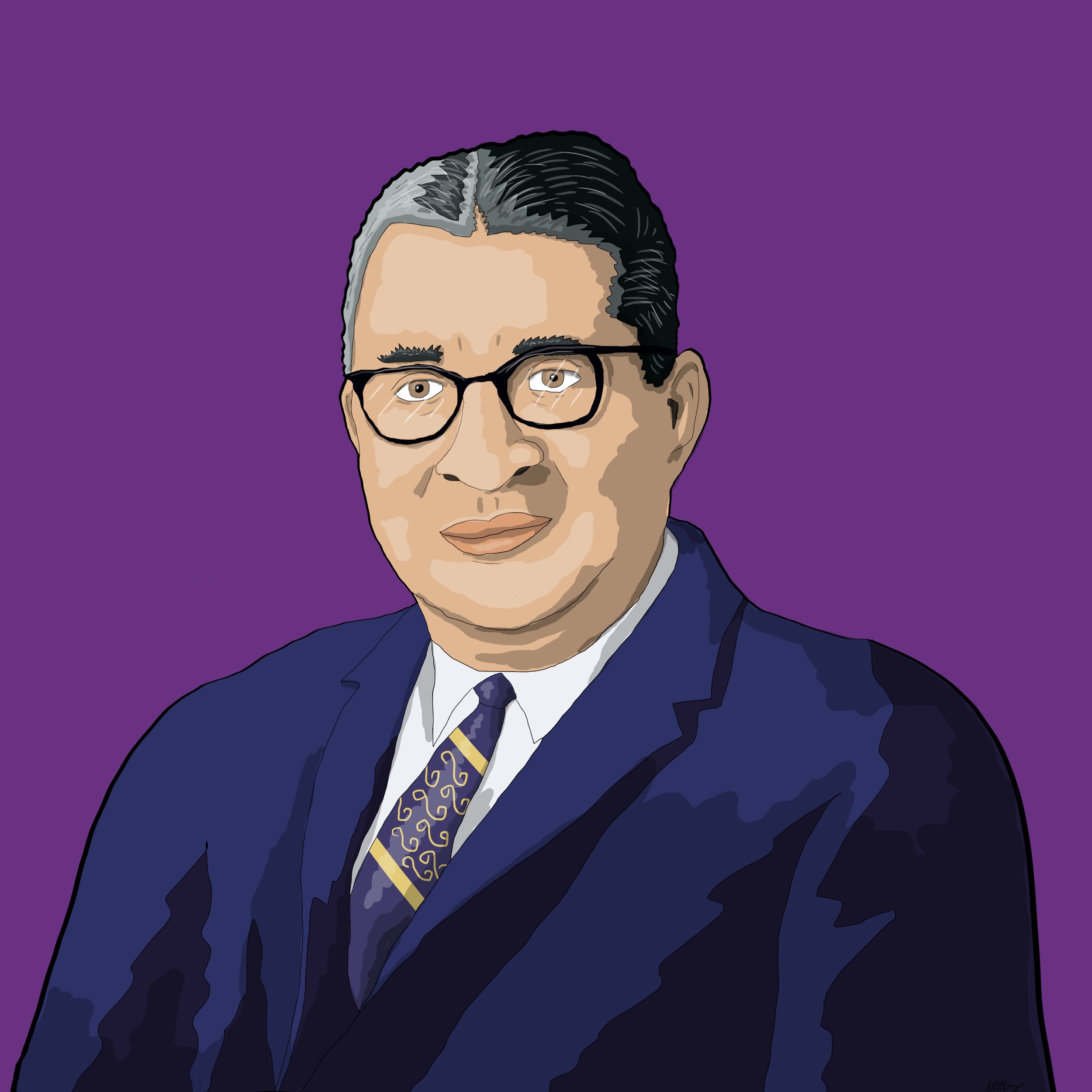
Dudley Senanayake
Introduction
“A time like this demands strong minds, great hearts, true faith and ready hands! Men whom the lust of office does not kill, men whom the spoils of office cannot buy, men who possess opinions and a will, men who love honour, men who cannot lie.”
So spoke Bradman Weerakoon, Former Secretary to the Prime Minister and Presidential Advisor in Sri Lanka, quoting Josiah Gilbert Holland. In 1952, the Dominion of Ceylon (Sri Lanka) was in a period of mourning on account of the sudden demise of the Father of the Nation, The Honourable Don Stephen (DS) Senanayake, UNP (United National Party) Prime Minister. Only one man was fit to succeed him: his own son Dudley Senanayake. Throughout his life, Dudley Senanayake achieved many positions of power, most notably as Prime Minister of Ceylon four times between 1952 and 1970:
Early Life and Political Career (1911-1952)
Dudley Shelton Senanayake was born on the 19th of June 1911 (one day after my own birthday) during the Buddhist Festival of Poson-Poya to Don Stephen and Molly Senanayake. Like his father, he was educated at St Thomas’ College, Mount Lavinia, and excelled in his academics and athletics alike. Noted for his voracious eating habits, being able to eat 75 String Hoppers in one sitting, he then studied at Corpus Christi College, Cambridge and was called to the bar at the Middle Temple. However, he was dissatisfied with a career in law. Many members of his family and friends encouraged him to go into politics, and although hesitant (he was deemed “the reluctant politician”), he represented the constituency of Didigama in the 2nd Council of Ministers of Ceylon in 1936. His pedestrian peacetime career was upended by British Ceylon’s decision to join the rest of the British Empire in the Second World War. Whilst his father DS Senanayake was strongly committed to aiding the Empire, Dudley was less inclined, and to avoid political collision with his father resigned from his seat, thereby gaining the respect and admiration of Senanayake senior. When Ceylon became independent on February 4th, 1948, Dudley succeeded his Father as Minister of Agriculture and Lands, and completed many of the irrigation projects he had inititaed, such as in Minneriya. However, the sudden death of DS Senanayake in March 1952 brought Dudley further into the political spotlight.
First Term as Prime Minister (1952-1953)
Upon the death of DS Senanayake in March 1952, Ceylon was plunged deep in mourning and faced a succession crisis. Governor-General Henry Monck Mason Moore scrambled to find a successor for DS Senanayake. Choices included Sir Lionel John Kotelawala, a prominent cabinet minister, the nephew of DS Senanayake and cousin of Dudley: he’d been educated at the Royal College in Colombo, before doing Agricultural studies at Christ College, Cambridge. Solomon West Ridgeway Dias (SWRD) Bandaranaike was also an option: a cabinet minister who had crossed the bench in 1951 to form the left-wing Sri Lankan Freedom Party (SLFP) and had studied PPE at Christ Church College, Oxford. Dudley was selected as the successor to DS Senanayake, much to the dismay of the latter. Dudley initially seemed a continuity candidate, continuing many of his father’s policies. To consolidate his own power, however, Dudley Senanayake called a Ceylonese Parliamentary Election in May 1952, winning a large majority over the SLFP and its leader – his rival for the premiership – SWRD Bandaranaike. After consolidating his success, he embarked on agricultural schemes like his father, most notably the Gal Oya Irrigation Scheme and began to address the issue of Indian Tamils settling in Ceylon. However, owing to a Hartal in 1953 and as well as his own ill health, Dudley Senanayake resigned from the premiership in October of that year and was swiftly succeeded by Lionel John Kotelawala. Kotelawala, however, lacked the support of his cousin, and led the UNP to landslide defeat to SWRD Bandaranaike’s MEP (Mahajana Eksath Peramuna, People’s United Front) Coalition in the 1956 Ceylonese Parliamentary Election. Combined with SWRD’s Bandaranaike assassination whilst serving as PM in September 1959, Dudley was back quicker than he and the Ceylonese public thought.
Second Term as Prime Minister (1960)
The second half of the 1950s in Ceylon had certainly continued the troubles the first had inaugurated. The sudden assassination of Bandaranaike in September 1959 had led to his education minister, Wjeyananda Dahanayake, forming a caretaker Government, with Dahanayake as Prime Minister, until March 1960, when elections were held (there are parallels here with the assassination of President Ranasinghe Premadasa in 1993, and the consequent caretaker presidency of Dingri Banda Wijetunga until elections could be held in 1994). Having become leader of the UNP in 1957, after Kotelawala had resigned in disgrace and entered self-exile in Kent, Senanayake led the party to victory in the March 1960 Election against leader of the SLFP C.M. De Silva, although he received no majority, forming another caretaker government: he was appointed PM by the first native Governor General, Sir Oliver Ernest Goonetilleke. Dudley set out to reform the social policy which Bandaranaike had passed, the Official Language Act in 1956, which had led to political discontent by decreeing only Sinhala the official language of Ceylon, thereby excluding Tamil. However, his second Prime Ministerial tenure came to an end in the July 1960 Ceylonese Parliamentary Election: he lost to the first female Prime Minister in the world – Sirimavo Bandaranaike, widow of SWRD Bandaranaike. As Elizabeth II was then Queen of Ceylon, the country thus became the first in the world to have simultaneously a Female Head of State and Head of Government. Dudley meanwhile was sent to the opposition for a further five years.
Final Term as Prime Minister (1965-1970)
Dudley emerged victorious from the 1965 Ceylonese Parliamentary Election, a rematch against Sirimavo Bandaranaike, and was appointed PM for a third term by the Final Governor-General of Ceylon, William Gopawalla. Forming a government for the third and final time, he set out to deal with the economic crisis Ceylon was sliding into. He also made attempts to reform Ceylon’s foreign policy, maintaining a strong relationship with Great Britain: like his British counterpart, Harold Wilson, he was known to smoke a pipe. He also managed to strengthen Sino-Ceylonese relationships, cultivating a relationship with Mao Zedong. However, not all his foreign policy was successful. His cabinet was divided over the Vietnam War (1955-1975), straining relations with the USA. Democratic President Lyndon B. Johnson threatened Senanayake with aid cuts, damaging relations between the two nations: the wounds were arguably not fully healed until the 1980s, when JR Jayawardane, now leading the Democratic Socialist Republic of Sri Lanka, formed cordial relations with Republican President Ronald Reagan. Senanayake sought to continue his agricultural commitments, increasing exports of Chilis and Cinnamon from Ceylon. His most notable policy, however, never came to fruition. His plans for new political District Councils within Ceylon could perhaps have reduced tensions between the Sinhalese and Tamils but was rejected: Dudley did not attempt to enforce the policy without the consent of his government. However, the failure of his magnum opus was not the last of Dudley’s political troubles.
End of Political Career (1970-1973)
The loss of the 1970 Ceylonese Parliamentary Election came as a shock to Dudley and much of the Ceylonese public. Whilst Dudley’s UNP Government had won the most votes, they had attained the lowest number of seats (just 17) in part due to the United Front Party, which had supported Dudley in 1965, refusing to support him again. Sirimavo’s SLFP coalition had attained a lower vote share but 91 seats. Dudley gracefully bowed out of mainstream politics, as he had done in 1952, handing the reigns of the UNP to political rival and longtime UNP Cabinet Minister, Junius Richard Jayawardane (Prime Minister from 1977 to 1978, President from 1978-1989). Whilst though he butted heads several times with Jayawardane’s successor Ranasinghe Premadasa (Prime Minister from 1978 to 1989, President from 1989 to 1993), leading to murmurs of a split in the UNP, he stepped down from mainstream politics as MP for Didigama. And then on the 13th of April 1973, Dudley Senanayake passed away from a stroke. 21 years before, the Dominion of Ceylon had been plunged into mourning by the death of his father – now, it was the Democratic Socialist Republic of Sri Lanka turn to grieve.
Legacy and Conclusion (1973-Present)
Tens of Thousands attended Senanayake’s funeral procession, a tribute to his gentlemanly and intellectual leadership. Dudley had remained a lifelong bachelor, his parent’s attempts to wed him notwithstanding (describing a lunch arranged by his parents to meet a spouse, Dudley admitted he had enjoyed the food but had taken no notice to the woman his parents had chosen: that woman was a young Sirimavo Bandranaike, and generations of Sri Lankans have asked “what if?” ever since). His successor JR Jayawardane delivered a touching eulogy, gesturing to Shakespeare’s Hamlet in its conclusion: “Goodnight Sweet Prince, may the flight of Devas sing you to sleep.”.
Like British and American counterparts Heath, Nixon and Ford, Dudley oversaw the beginning of the end of consensus politics (if the Soulbury Commission is taken in the same vein as Keynesian and Cold War policy respectively). His successor JR Jayawardane, like his British and American counterparts Thatcher and Reagan, presided over the New-Right Era in the 1970s and 1980s, which oversaw an end to Ceylon and then Sri Lanka’s socialist policies. And yet, 52 years after his death, the nation of Sri Lanka calls out for this era of gentlemanly leadership and politics once again: one that embodied power and principle.
Bibliography
- Dailymirror.lk. (2016). Dudley Senanayake: the gentleman Politician. [online] Available at: https://www.dailymirror.lk/opinion/Dudley-Senanayake-the-gentleman-Politician/172-108240 [Accessed 19 Dec. 2025]
- www.ft.lk. (n.d.). Dudley Senanayake’s demise and the Premadasa problem | Daily FT. [online] Available at: https://www.ft.lk/columns/Dudley-Senanayake-s-demise-and-the-Premadasa-problem/4-747317
-Senanayake, D. and Senanayake Foundation (2011). Dudley Senanayake, a biography. Colombo: Sarasavi Publishers
-The Sunday Times Sri Lanka. (2018). Dudley: The principled leader who was never power hungry. [online] Available at: https://www.sundaytimes.lk/180624/sunday-times-2/dudley-the-principled-leader-who-was-never-power-hungry-299352.html [Accessed 19 Dec. 2025]
- Sundaytimes.lk. (2026). The Sunday Times Sri Lanka. [online] Available at: https://www.sundaytimes.lk/080615/Plus/timesplus0020.html [Accessed 2 Jan. 2026]