
Awakening Begriffsgeschichte: A Genealogy of Revolution (HT26)

Former Prime Minister Liz Truss announced the launch of her new YouTube show last Thursday. The imaginatively named Liz Truss Show aims to expose the political sham of current Western leaders and restore the values they have eroded in a ‘Trump-style revolution’. It was somehow the second part of that remark which drew my attention the most. For there appears no other word for effecting change, for ushering in a new beginning, that has so captivated the modern vocabulary in recent times. We encounter the “AI Revolution”, the “Rail Revolution”, a “manufacturing revolution”, a “Revolution of Common Sense”, and in a recent news headline “West Ham’s Midfield Revolution”. The casualness with which the term is widely employed suggests to me that we have become lost in the definitional jungle which lies at the heart of this deeply mythic concept. In an age where the power of world leaders and states seems to enable them to excessively shape the course of history and does much to animate our political discourse as a consequence, the power of ideas and concepts appears to have been relegated to the margins of our imagination. Reinhart Koselleck recognised this power more than anyone with his notion of Begriffsgeschichte, or conceptual history, nearly half a century ago. In this article, I seek to renew this power by unravelling the genealogy of “revolution”.
“Revolution” derives from the post-classical Latin term revolutio, the root of which is revolvo, ‘to roll back’. Its earliest known use dates back to 426 AD when it was deployed by St Augustine in his City of God, though it was not a commonly used term among writers of his age. During the sixteenth century, revolution was introduced as an astronomical term by Copernicus when he included it in the title of his seminal work on celestial movements, De revolutionibus orbium caelestium (1543), and has thereafter retained an important scientific usage in describing the revolving, orbital motion of stars and planets. The literal application of the term “revolution” in natural science lent itself to its metaphorical appropriation by early modern writers who inserted it into the lexicon of political thought, as the astrological sensibility ingrained in the sixteenth-century mind made it inevitable to assume a connection between the revolution in the heavens and this-worldly events. Yet to explain this introduction of revolution into political vocabulary it is necessary to direct our attention away from the scientific advancements taking place and towards another important phenomenon happening concurrently: the revival of classical political thought in the era of the Renaissance. And nobody’s resurrection is of greater significance in this context than that of Polybius.
It is, more specifically, constitutional change in ancient Greek thought and the intervention made by Polybius in this subject that is central to the conceptual history of revolution. Changes in political regimes were regarded by political writers in classical Greece as an inevitable aspect of politics. The decentralised, non-tribal nature of the Greek polis, by contrast to the modern Weberian state exercising a monopoly of violence, made violent political turmoil a frequent and feared (and even necessary) part of life. Thus Book V of Aristotle’s Politics, which represents a largely empirical enquiry intended for the practical purpose of advising the statesman on how to secure political stability, emphasises the role of stasis – violent civic disorder – in serving as a prelude to regime change, metabolē. Indeed, Aristotle identifies more than twelve different potential causes of stasis within the sixfold classification of constitutions which he had espoused in Book III.
Polybius adopted this distinction between varieties of constitution as the analytical framework for his famous Book VI of The Histories approximately two centuries later. In this, he described the change from one constitutional form to another as a recurring cycle (anacyclōsis): from monarchy to tyranny, from tyranny to aristocracy, from aristocracy to oligarchy, from oligarchy to democracy, and finally from democracy to an anarchical ochlocracy which eventually renews the cycle by introducing a single leader - in other words, a monarch. It was only by adopting a mixed government of the three pure forms (monarchy, aristocracy, and democracy) on the model of republican Rome, according to Polybius, that it was possible to endure this onerous circle of history, which guaranteed the perpetual return of corrupt political regimes sapping the lives and fortunes of those in its wake. This eternal, cyclical movement between forms of government on Polybius’s model provides our point of departure for establishing the connection between Polybius and revolution; as Hannah Arendt notes, the latter ‘is the perfect Latin translation of Polybius’s anacyclōsis’
It was only in the second wave of Polybian reception in the 1540s that his anacyclōsis began to be translated as “revolution”. The first print translation of Book VI, which can be found at the end of a book published in 1540 by the Venetian bookseller Francesco Marcolino, departed from Lascaris’s literal translation for the first time by deploying terminology from the trecento: ‘E questo è il rivolgimento de le Republiche’ (‘And this is the revolution of republics’). A French translation of Book VI by the grammarian Louis Maigret appeared in print in 1545, which understood politeiōn anacyclōsis as ‘the resolution of the republics as if in a circle’ (‘la refolution des chofes publiques comme en façon de cercle’), in which “resolution” was a printing error originally intended to be “revolution” (‘la revolution’). The translation published by the humanist Lodovico Domenichi in the same year, which became the conventional Italian translation of Polybius for over a century, is indicative of the growing incorporation of “revolution” into the language of political thought as it not only used it for anacyclōsis but also for the regime changes described by Polybius in traditional Aristotelian terms, metabolē: Domenichi spoke instead of the ’revolutions of republics’ (‘rivolutione delle republiche’). The Protestant Theologian Wolfgang Musculus’s publication in 1549 of a new edition of Niccolò Perroti’s original Latin translation of Books I-V in 1473, this time including Book VI, followed the growing orthodoxy of rendering anacyclōsis as “revolution”: ‘Here is the revolution of governments, here the natural order according to which governments mutate and are transformed, and revolve back to their origins’ (‘Hæc est illa politiarum revolutio, hæc natura œconomia, secundum quam Reipublicæ status mutator & transfertur, ac rursus in idem revoluitur’). Reprinted four times in Lyon (1554), Basel (1557), and Geneva (1597, 1608), Wolfgang’s edition enjoyed great popular demand. Thus by the latter part of the sixteenth century “revolution” emerged as the most common term used to interpret Polybius’s political thought in Italian, French, and Latin (Spanish and German had to wait until the eighteenth century), displacing Aristotelian vocabulary of in discussions of political change.
This new language of “revolution” in political discourse is exemplified by the contemporary description and interpretation of the political upheavals occurring in seventeenth century England. Hobbes endorses a Polybian view of the cyclical motion of political regimes when considering the revolution of 1660 in Behemoth (written c. 1668, published 1679): ‘I have seen in this revolution a circular motion, of the sovereign Power through two Usurpers Father and Son, from the late King to this his son’. The Revolution of 1668-9, moreover, was labelled “glorious” by the Whigs not because it marked the dawn of a new age but because it restored the ancient liberties enshrined in Magna Carta, thus closing a cycle. As in Polybius, revolutions were still a problem; they were to be forestalled by the prudent adoption of mixed government, as the accession of William III and Mary II facilitated in 1689. The metaphoric substance of “revolution”, as it was used in a political sense in the seventeenth century, thus retained an intimate relationship with its original meaning and Polybius’s language of political change: a revolution was restorative, revolving back to a pre-established order.
It was not until the climax of the Enlightenment in the later eighteenth century that this understanding of revolution was subverted in favour of a positive, progressive, and forward-looking interpretation. The “new science” of the prior century stimulated a new enlightened faith in reason and progress. The mechanical interpretation of matter in motion advanced by Isaac Newton’s seminal Philosophiae Naturalis Principia Mathematica (1687) was applied in natural philosophy to conceive of a society which, just as the universe was made up of a diverse organisation of atoms forming a homogenous and natural order, so too comprised the random and free movement of individuals governed by law. This, in turn, lent itself to the legitimacy of the secular belief in the superiority of man over nature; Newton’s physics seems to sanction Kant’s urge for man to ‘Have courage to use your own reason!’, the very ‘motto of enlightenment’. Reason was placed on the throne; and soon gave birth to the prince of progress. ‘Nature has set no limit to the realization of our hopes’, discovered Marquis de Condorcet; ‘the time will therefore come when the sun will shine only on free men who know no other master but their reason’. The French philosophes in Condorcet, Voltaire, Rousseau, Kant, Turgot, and Diderot championed progress and in particular their own ability to propel humanity forward with the engine of reason. In addition, the political economists born out of the Scottish Enlightenment attempted to implant their understanding of the natural world in a conception of human society which would contribute to a philosophical history aimed at explaining and furthering the progress of humanity. They adopted a secular, sociological understanding of history as one which progresses through fixed stages (hunters, shepherds, farmers, merchants). This ‘natural progress of opulence’ from agriculture to modern commercial society, explored by Adam Smith in his Wealth of Nations (1776), represented the rational organisation of history which unfolded in a positive and permanent development.
These enlightened ideals of reason and irreversible progress were injected into contemporary understanding of revolution, which turned the cynical model of the Ancients on its head and introduced a positive interpretation of revolution anchored in a novel, optimistic view of the future. ‘Everything I see scatters the seeds of a revolution which will definitely come’, wrote Voltaire in a letter to the diplomat Bernard Chauvelin in 1764, ‘though I won’t have the pleasure of being its witness…Enlightenment has gradually spread so widely that it will burst into full light at the first right opportunity, and then there’ll be a fine uproar’. It was revolution as cast in this positive light, moreover, which animated the French revolutionaries. ‘Everything has changed in [how we make sense of] the natural order’, declared Robespierre in 1794, ‘everything must change in the political and moral order. Half of the world revolution is already complete; the other half remains to be done’. As the cyclical view of historical change was eroded by the rising tide of the Enlightenment, which championed a new, progressive version of history, the Polybian conception of revolution as a problematic and inescapable part of politics gave way to a positive understanding of revolution as the means of thrusting society into an exalted future.
The violent political upheavals across Europe in the following century, in particular the events in Germany in 1848-49, precipitated another seismic shift in the thinking about revolution. The French Revolution and the struggle against Napoleon awakened a national consciousness in the minds of nineteenth century Germany, stimulating a growing liberal movement advocating the unification of the 38 members of the German confederation which reached its climax in 1848. This gave a nationalistic inflection to the understanding of revolution, sanctioning revolutionary movements which were committed to national liberation and the establishment of a strong, national state. In the aftermath of the failure of the revolution, moreover, the harshness of the reactionary governments along with the rapid industrialisation taking place served to create a miserable and bitter atmosphere in the latter half of nineteenth century Germany. This brought to the fore the “social question” of poverty and labour, which especially caused anxiety among the growing intellectual middle-class of the Protestant Bildungsbürgertum, the relatively elite group of civic leaders closely associated with social service and education and serving as the intellectual guardians of Kultur.
The apparent entanglement of national and social questions introduced a social dimension to the contents of revolution, hitherto conceived in a purely political sense. Theodor Mommsen, who coined the term “Roman Revolution” in his Roman History (1854) nearly a century before the appearance of Sir Ronald Syme’s The Roman Revolution (1939), advanced an interpretation of the Tribunates of Tiberius and Gaius Gracchus in which was etched liberal and nationalist concerns characteristic of nineteenth century German scholars in general and the Bildungsbürgertum in particular. Mommsen viewed the Gracchi brothers with sympathy, and delivered an account of the actions of these ‘revolutionaries’ which emphasised the miserable condition of the proletariat induced by the ‘class war’ between landholders and farmers, resulting in a serious ‘conflict between labour and capital’.
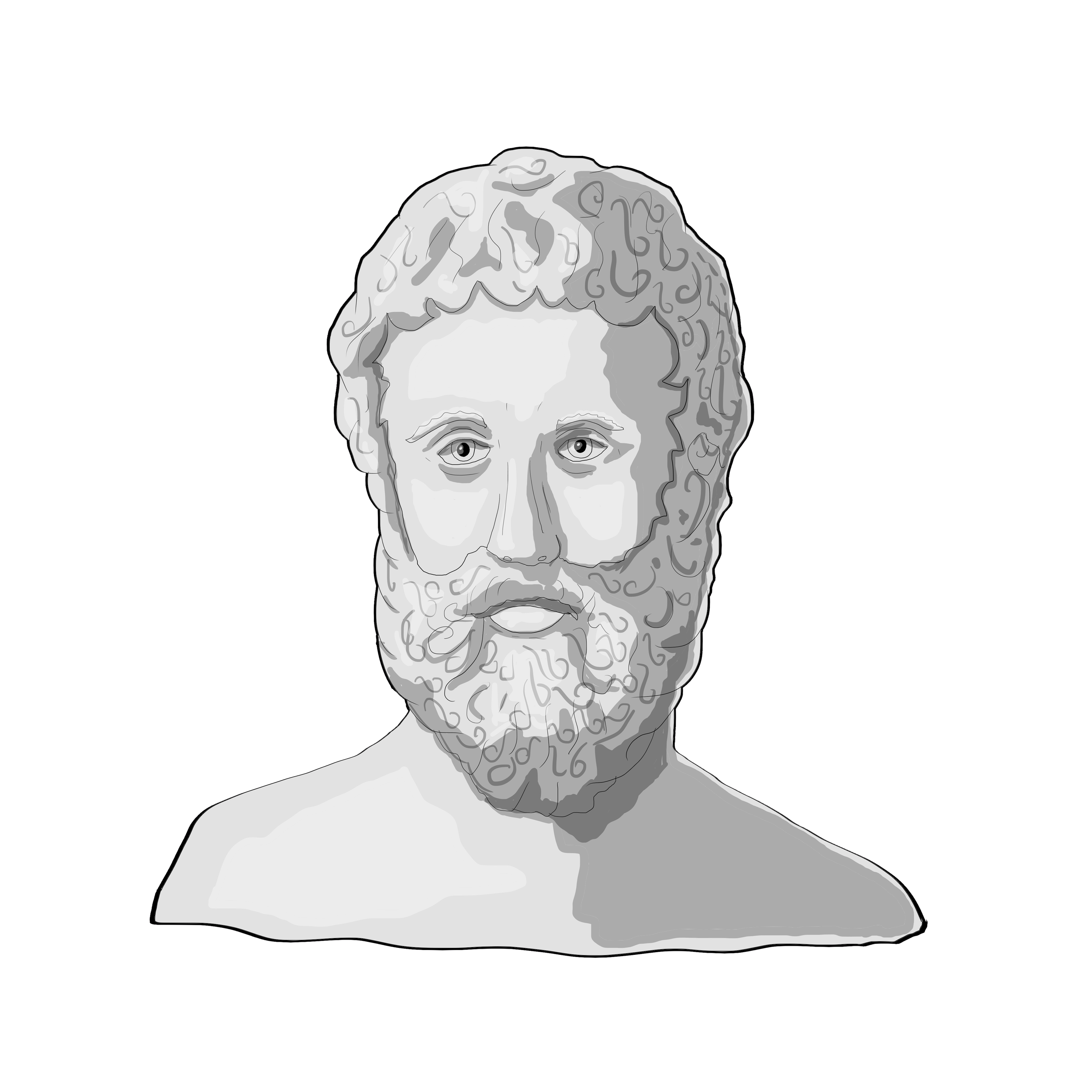
The figure of Karl Marx obviously looms large in the conceptual history of revolution, and like Mommsen he formulated his ideas within the atmosphere of the fifties. Marx’s theory of revolution catalyses the shift of thinking about the contents of revolution from the political to the social plane, which we saw in Mommsen. Influenced by the criticism of Hegel’s optimism of modernity and of the nature of the modern state advanced by the Young Hegelians, an intellectual circle to which Marx belonged as a student at Berlin University in the 1830s, he developed a materialist understanding of history in his Preface to the Critique of Political Economy (1859)which saw social life as dependent on the economic forces of production prevailing at any time. This enabled Marx to anatomise revolution into a particular political revolution that effected a change in regime on the one hand, and a wider social revolution brought about by a change in the modes of production on the other; the former merely constituting a component of the latter. When the development of the material forces of production reaches a point that the existing relations of production are unable to support them, according to Marx, ‘these relations [of production] turn into their fetters. Thus begins an epoch of social revolution’. It is accomplished, says Marx, through socioeconomic conflicts between classes – the ‘infrastructure’ – by a revolutionary class born out of the old mode of production. This materialist framework of analysis constructed by Marx nearly two centuries ago remains a linchpin of much scholarship attempting to understand revolution today.
The ideas about revolution formulated by another intellectual of the nineteenth century, which have generally failed to appear in historical enquiries into the concept of revolution but are certainly worth drawing attention to, are those of the great Whig historian Thomas Babington Macaulay. Perhaps the reason why scholars tend to be uninterested in his conception of revolution is because of its peculiarity in relation to the prevailing understanding of the term, shaped by forces to which Macaulay at times seemed immune. In this context, Macaulay was Schrödinger’s intellectual: he simultaneously held an understanding of revolution and occupied an enlightened climate that were seemingly incompatible with each other.
On the one hand, Macaulay possessed a linear and structured view of historical movement and progress for which he was indebted to the Scottish Enlightenment. His developmental model of history, which made sense of the past with a kind of quasi-historicism by assuming that different forms of thought and government were appropriate for different stages of history, was derived from the stadial theory of society adopted by Hume and Smith. At the same time, however, Macaulay’s outlook was characteristically moulded by the utilitarian ideas which he encountered in the liberal climate at Cambridge, and to which he became attracted after quietly growing disillusioned with his evangelical upbringing. Though rejecting radical utilitarianism soon after leaving Cambridge, criticising Mill’s deductive method of enquiry for its ahistorical nature which rendered it at odds with ‘that noble Science of Politics’, Macaulay evaluated institutions and events in terms of their utility in serving the needs and interests of the actors involved. This lent itself to a tendency to “trim” the sails of history, favouring the moderate course of action in order to ensure prosperity and progress. ‘In all movements of the human mind which tend to great revolutions’, writes Macaulay in 1828, ‘there is a crisis at which moderate concession may amend, conciliate, and preserve’. He describes the Revolution of 1688-9 in similar vein, portraying it as a conservative and restorative event in a manner which is seemingly divorced from any enlightened understanding of revolution as ushering in a new beginning. ‘Not a single flower of the Crown was touched; not a single new right was given to the people’, declares Macaulay in chapter 14 of his History of England (1848).
Macaulay’s frame of mind is somewhat illustrative of how revolution is perceived today, revealing in its resistance to prevailing frameworks of thought the intrinsic suppleness of the concept. An enticing path to follow to refine the term into a more intellectually satisfying concept is the one recently erected by Keith Michael Baker and Dan Edelstein, in Scripting Revolution: A Historical Approach to the Comparative Study of Revolutions (2015). In this edited collection, Baker and Edelstein suggest that revolutions and the continuous battles of meaning – exemplified in Macaulay – can be connected and comprehended across time and space by tracing the revolutionary “script” giving shape to revolutions. Although this offers an intuitive framework to apply and clarify the concept of revolution, however, one can anticipate that the flexible concept of the historical “script” falls into the same problems of conceptual ambiguity as “revolution” itself. Revolution remains an enigma. As Nietszche once remarked, ‘all ideas, in which a whole process is promiscuously comprehended, elude definition; it is only that which has no history, which can be defined’. In an age dominated by louder and more visible forms of power, therefore, the power of ideas and concepts should not be forgotten.
Bibliography
Arendt, H., On Revolution (London, 1990)
Aristotle, The Politics; and, The Constitution of Athens, ed. S. Everson (Cambridge, 1996)
Berent, M., ‘Stasis, or the Greek Invention of Politics’, History of political thought, 19/3 (1998), pp. 331-362
Edelstein, D. and Baker, K.M., Scripting Revolution: A Historical Approach to the Comparative Study of Revolutions (Stanford, 2015)
Edelstein, D., The Revolution to Come: A History of an Idea from Thucydides to Lenin (Princeton, 2025)
Finley, M.I., ‘Revolution in antiquity’, in R. Porter and M. Teich (eds), Revolution in History (Cambridge, 2015)
Hamburger, J., Macaulay and the Whig Tradition (Chicago, 1976)
Hobbes, T., Behemoth, or, The Long Parliament, ed. P. Seaward (Oxford, 2010)
Porter, R., The Creation of the Modern World: The Untold Story of the British Enlightenment (New York, 2000)
Marx, K. and Engels, F., Selected Works in One Volume (London, 1968)
Mommsen, T. and Dickinson, W.P., The History of Rome (Volumes 1-5) (Salt Lake City, n.d.)
Macaulay, T.B., Critical & Historical Essays (3 vols, New York, 1907)
Macaulay, T.B., The History of England from Accession of James II./By Thomas Babington Macaulay: vol. 3, (New York, 1856)
Nietzsche, F. and Diethe, C., On The Genealogy of Morality, ed. K. Ansell-Pearson (Cambridge, 2007)
Smith, A., An Inquiry into the Nature and Causes of the Wealth of Nations (Dinslaken, 2021)
S, Salvatore., Most, G.W., and Grafton, A. (eds), The Classical Tradition (Belknap, 2010)
F. Gilbert, ‘Revolution’, in P. Weiner (ed), Dictionary of the History of Ideas: Studies of Selected Pivotal Ideas, vol. 4 (5 vols, New York, 1973)
Further Reading
Clive, J.L., Thomas Babington Macaulay: The Shaping of a Historian (London 1973)
Kimmel, M., Revolution: A Sociological Interpretation (Philadelphia, 1990)
Koselleck, R., ‘Historical Criteria of the Modern Concept of Revolution’, in R. Koselleck, Futures Past: On the Semantics of Historical Time, trans. K. Tribe (Cambridge, Massachusetts, 1985)
McGew, M.F., ‘Revolution and Freedom in Theodor Mommsen’s “Römische Geschichte”’, Phoenix, 40/4 (1986), pp. 424-45
Pincus, S.C.A., 1688: The First Modern Revolution (New Haven, 2009)
Skockpol, T., States and Social Revolutions: A Comparative Analysis of France, Russia, and China (Cambridge, 1979)