
Identity, Imperialism and India: how British rule forged the modern idea of the subcontinent (MT25)
India, as a unified nation-state, is a relatively new concept. The geopolitical idea of India has existed under many names in many different languages since the time of the Maurya Gupta and Mughal Empires. Akin to neighbouring China, India went through periods of imperial unification, separated by decades of regional powers competing for dominance amidst a motley assortment of small princedoms.
Yet for most of this history the vast majority of those rulers and their subjects understood they shared a cultural identity and a history, outside of the subcontinent’s peripheral regions where identities blended such as the border with what-is-now Afghanistan and the Southern tip of the Indian landmass. This identity was rooted in the similarities between the diverse languages and regions of the subcontinent: their common traditions and histories, hemmed in by the mountains which ring India to the north, and the seas which surround it to the south.
But asserting political control over a heavily populated but decentralised, culturally diverse country like India is a task all of its rulers have struggled to achieve. Certain groups, like the Maratha Confederacy, answered the challenge through a loose style of government, emphasising regional autonomy over direct central control. The Mughals appointed local Niwabs, governors with their own political bases in their territories; so long as taxes were paid to the central coffers and local affairs were administered well, there was no need for the government to intervene in the affairs of their vassals. That being said, the extent of liberality extended to the Niwabs did vary depending upon the Shah who sat on the Peacock throne. Emperor Akbar sought to include his non-Muslim subjects within cultural and political life, whilst the Emperor Aurangzeb spared no such niceties in his more authoritarian, militarist reign which took the Empire to its territorial zenith and its political breaking point.
When the British, in the shape of the East India Company, arrived on Bengal’s shores seeking economic advantage (and later political dominion) they were initially subsumed into this imperial mainframe. Before Clive’s rapacious conquests scorched names like Plassey into Indian and British history, the EIC utilised the decaying corpse of the Empire to govern Bengal and its gradually accrued territories through a facade of subservience to the Delhi-based Shah. The Mughals had exerted little control over India after the 1757 sack of Delhi by the Durrani Empire (now Afghanistan) and could neither repulse the EIC nor control Niwabs, who consequently behaved like twentieth century Chinese warlords; de jure servants of the regime, de facto rulers in their own right. Local governors were masters in their own domain, paying just enough tithe and respect to Delhi to sustain the image of the emperor.
Up until 1835, the East India Company declared itself another such subject of the Mughal Empire. It minted coins bearing the emperor’s visage, whilst British soldiers intermarried with local populations; their children, and the children of locals, could readily find work within the EIC’s growing bureaucracy, outposts or factories. But British officials, like Governor-General Warren Hastings, truly commanded the power in India during the dying days of Mughal rule. Directives from the company’s surprisingly small headquarters in London, despite being the nexus for communications from the British government and the EIC’s shareholders, were treated as recommendations by company figures on the ground. This irreverence was born from the desire of the company’s servants to use their service in India to make a small fortune for themselves and their families; something far easier to do thousands of miles from the constraints of norms and rules that governed contemporary Britain. Thomas Pitt, grandfather and great-grandfather respectively to future Prime Ministers Pitt the Elder and Younger funded his own political career with the spoils of his time in India; he brought the rotten borough Old Sarum (which would one day be passed down to his grandson) and acquired the nickname ‘Diamond Pitt’ for his opulence.
Yet there was a less cynical reason to treat instructions from Leadenhall Street as requests. Such was the length of time it took to travel between India and Britain, by the time communications reached India the European or local situation could have totally shifted. Company officials needed great flexibility to respond to the political challenges of attempting to profit from (and then conquer) a subcontinent of independent kingdoms and other European forces, especially in the context of effective isolation from Europe itself. When France and England entered their intermittent periods of scuffling during the 18th century, neither the French nor British colonies in India were aware that conflict existed between them for several months.
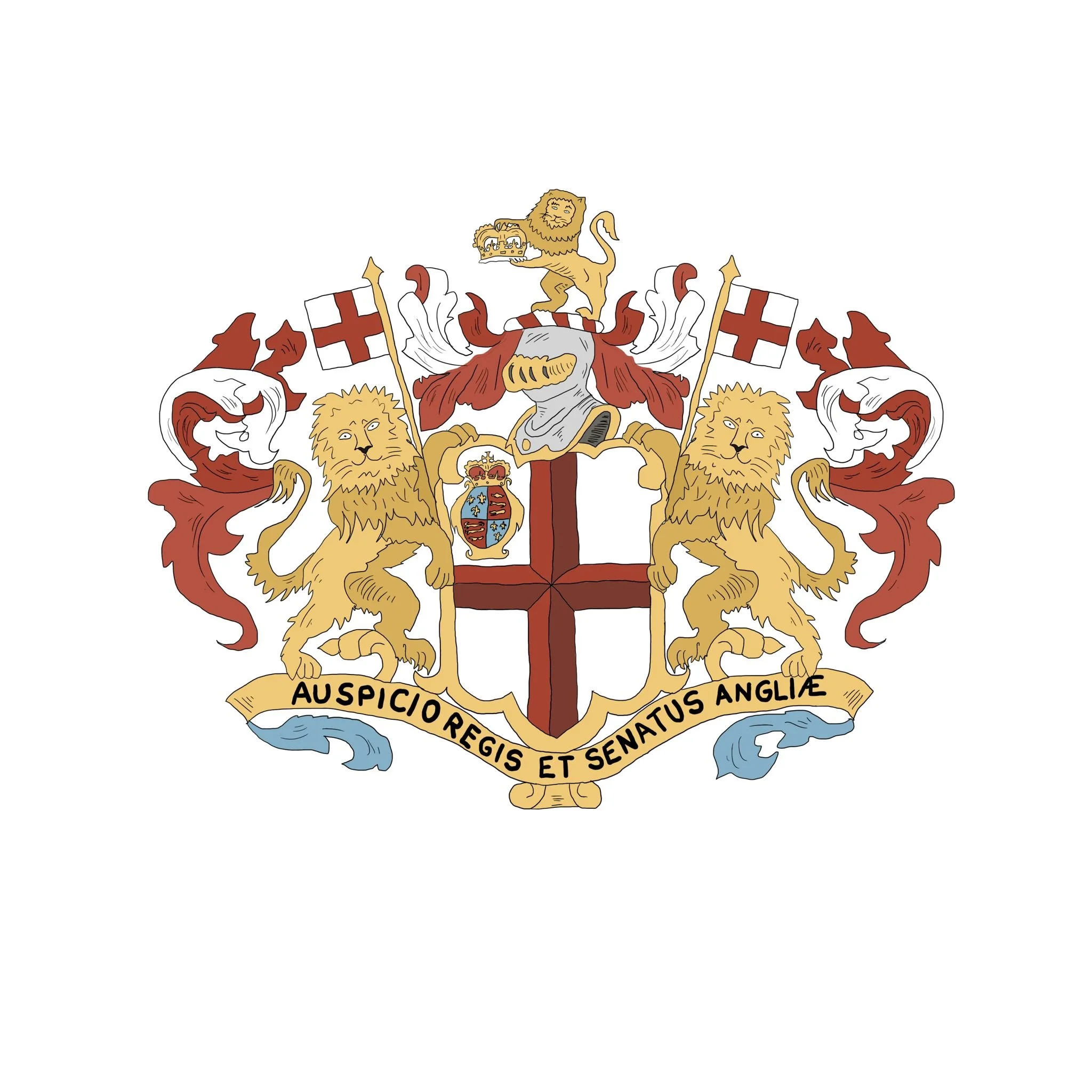
In the aftermath of Napoleon’s defeat, and Britain’s success in pushing all other powers (bar a token Portuguese and French presence in Goa and Pondicherry respectively), the British position in India took a marked turn. The company’s presence in the subcontinent had increasingly relied on military power since Tipu Sultan’s defeat at Seringapatam in 1799, and the 1858 Government of India Act ended the EIC’s autonomous rule and imposed British colonial control. With the state itself now managing the British presence in India, much of the rest of the subcontinent, such as Punjab, was brought under British control. Maharajahs across India pledged their fealty to the British Viceroy and ruled on his behalf and at his pleasure, maintaining a pretence of domestic autonomy whilst delegating major policy decisions to British advisors.
Military achievement led to social change. Once the initial conquest was complete, the fealty of local rulers was secured and the infrastructure of colonial rule complete, two spheres of life were constructed. These two worlds rarely interacted, periodically meeting when the institutional and social systems and hierarchies of British rule faced internal and external strain. The first consisted of the ruling British administrators, colonial and military figures, clearly separated from their colonial subjects by social prejudice reinforced by Company, and later Raj, policy. The second sphere’s main inhabitants were the subjects of the British state, ever more separate and ever more looked down upon by their governors. The British sphere was inhabited by men like Viscount Wellesley, who built an impressive palace as the Governor in Bengal for himself, continuing the tradition of Clive: milking the subcontinent for every penny it had in the hopes of further political elevation. Wellesley conducted so many affairs in his official residence that his brother the Duke of Wellington, by no means a paragon of virtue himself, was shocked.
Despite these clear lapses in the morals of the governing class of British administrators and military officials – overwhelmingly affluent men but drawn from a surprisingly wide range of British social backgrounds – the language of Christianity and civilisational struggle legitimised British rule. This rhetoric was deployed both within the UK and amongst the massed ranks of colonial officers on the subcontinent. The lower-level servants of the Empire were often drawn either from the working classes or the destitute elements of the UK’s professional classes. Their superiors attempted to foster an atmosphere of unity amongst the British, predicated on a racial division between themselves and their Indian subjects.
Yet this was an illusory ruse, a facade erected by the British colonial administration to separate the footsoldiers of colonial rule from those they ruled. To deepen the illusion, a sprawling infrastructure of government was built, mainly on the back of Indian labour, to make governing a diverse subcontinent more practicable for the garrison of around 50,000 British troops, supplemented by a few hundred thousand indigenous sepoys. Railways began to dot the continent, as did the communities and services necessary to support and govern these railways and their military inhabitants.
Whilst the services and infrastructure were constructed in Indian areas, they did not exist primarily to serve the interests of the governed, but to facilitate the dominance of the British over the subcontinent. Furthermore, despite later pretensions that the railways were a transformative boon for India, the military railway network was of limited use to the civilian population given that it was not constructed with their use in mind. Many of the accompanying services and systems of British rule, such as the elite schools through which members of the Indian elite (e.g. Jawaharlal Nehru and Mohammad Ali Jinnah) gained education were limited not just to the financially wealthy and those with high status, but those who were close to the British administrators and colonials. For decades, a policy existed restricting the offspring of interracial children from service in the Raj’s administration or military. As this policy, and the elitism of the educational structure reflects, sharing between Indians and Britons was rarely willing nor amicable. Rather, it was accepted as a necessity by the British for their continued rule as an imperial power, with all the prestige and economic benefits that brought; and it was begrudgingly accepted by a diverse population in India often too busy attempting to survive to plot national independence.
This continued throughout the First World War, a conflict in which hundreds of thousands of Indian men served, including in Western Europe and the Mediterranean theatre. India’s economic heft and raw resources, moreover, were utilised to achieve victory over Germany, Austria-Hungary and the Ottoman Empire. None of this reduced tensions in the subcontinent. In particular, the Muslim population of India, present in the subcontinent for centuries by the outbreak of the war, was a point of concern; the Ottoman Sultan, steward of the Holy Cities of Mecca and Medina, had declared a jihad against the Triple Entente in November 1914. In the event, no large-scale uprising occurred in India during the war. But British concerns over communal tensions were not entirely misplaced in the longer term. A policy of divide and conquer, keenly implemented by successive Viceroys, notably Curzon, attempted to utilise India’s religious and cultural differences to actively buttress the passive base of support the Raj had.
Via this policy of division, increasing awareness of the iniquity of British rule, and brutal instances of British inhumanity towards the local population (for example the suppression of the 1858 War of Independence or the Amritsar Massacre) a sense of Indian nationhood began to arise. The educated elites, such as Jawaharlal Nehru’s father Molital, could support British rule if it provided good government, maintained the current social order securely and provided the foundations for a slow, gradual move toward autonomy. Indeed, for many years, Gandhi, Nehru, Jinnah and other leaders were unified by the Indian National Congress - INC - as a vehicle campaigning for an independent India, with rights for its various communities.
As Britain’s other colonies, like South Africa, Australia, New Zealand and Canada were granted Dominion status and treated increasingly as junior partners rather than subjects, a question arose in the minds of the Indian elite; why not us? The answer to this question was primarily based in racial animus and fears over prestige in Whitehall: that India, if given greater autonomy, might plot a course separate to that of the UK, and play no part in supporting the continued power of the Sterling area or Britain in the world. The very military and administrative power which had secure the rule of a small island nation over one of the world’s most populous and diverse regions now helped unwind the empire as Britain’s status relative to India diminished.
But the fact Britain had been the midwife to ideas of Indian nationhood did not mean they remained passive as these ideas became increasingly prominent. As the INC and All-India Muslim League - AIML, led increasingly by Jinnah - began to split over the plans for independence, the British attempted to utilise the divide. They sought to neuter the increasing threat of Indian independence by driving a wedge between former allies. This was made easier as the growing possibility of independence forced politicians to think more seriously about the practicalities of a post-British India. The INC felt they could not concede to the AIML’s concerns over the security of the Muslim community in a Hindu plurality country without tainting their claim to be a national movement that transcended division: the AIML could not accept a unified India without significant protections for the Muslim minority, which would undermine the secular equality necessary to unify such a nation.
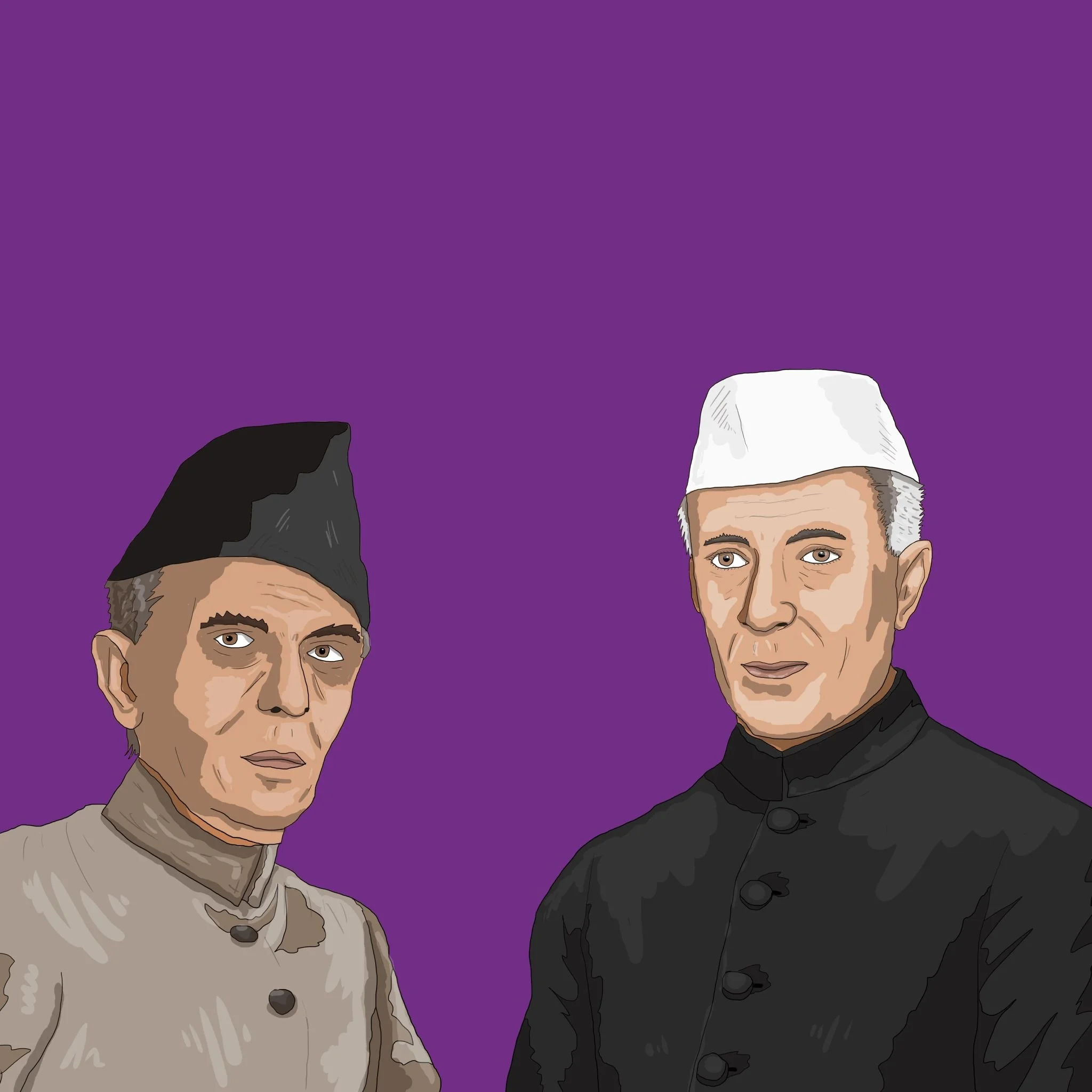
Nevertheless, broad protests like Gandhi’s Swaraj movement, his Salt March and the INC’s 1942 declaration in support of an independent India - the Quit India Movement - continued until the end of the Second World War. The die for politics after this, however, was cast when elections were held in 1945 for the two chambers the British had established as part of piece-meal 1930/40s concessions. Generally, the INC performed well. But the Muslim League swept the seats reserved for Muslims, and although idea of multi-religious India was still proclaimed by the INC, Partition was increasingly likely. The arrival of the last Viceroy of India, Lord Mountbatten, to oversee the process of Indian independence signalled definitively there would be no preservation of British rule in India, nor a process of gradual independence.
Instead, due to estimates that predicted policing intercommunal violence would take hundreds of thousands of soldiers (Britain could not spare these from the Middle East, Africa or Malaya, nor afford to employ new men) independence for two separate states - India and Pakistan - was granted in August 1947. My grandmother, a Hindu who lived in Lahore at the time of independence, speaks of escalating tensions between communities that had previously coexisted relatively amicably. Some, like my great-grandfather, refused to accept the decline before his eyes whilst others, like my great-grandmother, prepared for the worst. In the end, they had to join the estimated 11 million other refugees who fled from one side of the border to the other, driven by the fear they might join the ranks of the one million killed in the violence of Partition. In Punjab and Bengal, the violence was particularly severe as the two provinces were divided along religious lines. India and Pakistan (the latter made up of West Pakistan and East Pakistan, now Bangladesh) were thus born in a bloody botched caesarean; British rule ended not with a bang but a whimper as Attlee’s government fled the country to avoid the humiliation of losing control of it.
The idea of India and of Pakistan is still not a settled one. The Nehruite dream of a secular, unified country seems ever more at odds with the Hindu nationalism of the BJP and Prime Minister Modi. Pakistan, perhaps due to Jinnah’s passing only a year after independence, has had a far more tumultuous struggle to define itself, whether along religious, ethnic or ideological lines. Yet it is inescapable that the idea of India, and later Pakistan, as unified countries, was one forged unwillingly through the dominion of Britain. In asserting itself as the imperial overlord of the whole subcontinent, it provided a focus point (itself as an enemy) for campaigners of all stripes, allowing them to construct a modern idea of the subcontinent.