
Canonised to Hell: Power, Propaganda, and Papal Authority under Pius II (HT26)
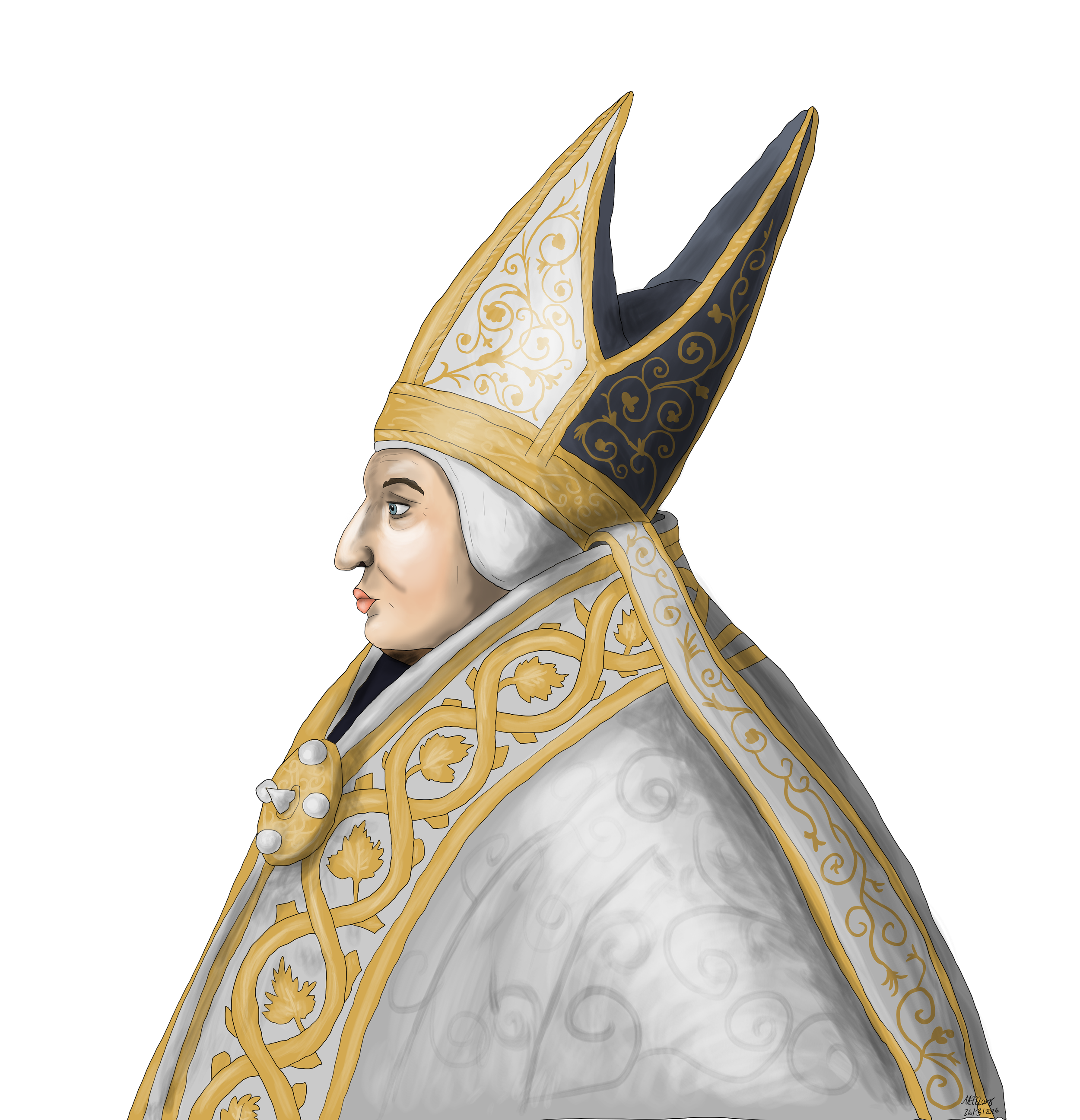
On Christmas Day 1460, a trial in absentia delivered its verdict on Sigismondo Malatesta, condottiere and Lord of Rimini. Declared a heretic, he was excommunicated and cursed, without a chance to defend himself. “No mortal heretofore has descended into Hell with the ceremony of canonisation,” Pope Pius II, who presided over the trial, announced. “Sigismondo shall be the first deemed worthy of such honour.” Sigismondo’s likeness was publicly burned in Rome, and a de facto crusade was launched against him. Though not formally proclaimed, it united four of his most dangerous enemies: the Papacy; Ferrante d’Aragona, King of Naples; Francesco Sforza, Duke of Milan; and Federico da Montefeltro, Lord of Urbino.
Pius II’s condemnation of Sigismondo Malatesta was an act of political theatre designed to assert papal authority rather than to punish wrongdoing. Sigismondo’s alleged crimes were spectacular: the murder of his wives; sexual immorality ranging from incest to sodomy; brutal tyranny over his subjects; and the construction of a church designed for the worship of demons. The evidence, however, was conspicuously absent. His conduct, even if unscrupulous, was not unprecedented among Italian rulers, and those who accused him were men he had angered or betrayed. Yet no other figure before or since was subjected to so theatrical a condemnation. Pius II’s extravagant damnation of one man therefore reveals much about the nature of power in Renaissance Italy.
The ceremony itself suggests that this was no ordinary excommunication. Three effigies of Sigismondo were burned: one on the steps of St Peter’s Basilica, the symbolic heart of Christendom; one in the Piazza del Campidoglio atop the Capitoline Hill, the perceived centre of imperial Rome’s power; and one at the Campo de’ Fiori, where common criminals were executed. Each bore the same inscription: “This is Sigismondo Malatesta, king of traitors, enemy of God and man, condemned to the fire by the decision of the College of Cardinals.” The geography of the spectacle was deliberate. Spiritual, imperial, and civic authority were mapped onto a single condemned body. This was not merely punishment. It was symbolic annihilation.
If anyone understood the political power of language, it was Enea Silvio Piccolomini. Before his elevation to the papacy in 1458 as Pius II, he had been imperial poet laureate, diplomat, and prolific humanist author. He composed comedies, wrote an erotic novel, and later crafted his own Commentaries, a rare papal autobioragphy. Pius did not simply exercise authority; he authored it. He was acutely conscious of the relationship between rhetoric and rule.
It was precisely this rhetorical conception of power that brought him into conflict with figures such as Sigismondo Malatesta. Pius’ papacy unfolded in a fragile political landscape where authority was often secured through force, wielded by the condottieri warlords. Sigismondo was one such figure. At thirteen, the illegitimate nephew took control of his late uncle’s forces and resisted papal attempts to seize Rimini. Despite not being the eldest son, within two years he was lord of Rimini, Fano, and Cesena. His career was marked by opportunistic alliances, broken contracts, and political pragmatism. He was no paragon of virtue, but neither was he uniquely monstrous. What he was, however, was ill-suited to papal obedience.
Sigismondo shared another trait with Pius: he was a humanist patron. In the 1450s he commissioned Leon Battista Alberti to remodel the Gothic church of San Francesco in Rimini. The resulting structure, nicknamed the Tempio Malatestiano in honour of its patron, incorporated the form of a Roman triumphal arch and a rotunda reminiscent of the Pantheon. Decorated by leading artists including Piero della Francesca and Agostino di Duccio, it blurred the sacred and the classical. Its very nickname shifted the building conceptually from church to temple and attached the ruler’s name to a religious space, unsettling conventional hierarchies. To Pius, it provided fertile material for portraying Sigismondo as a man who had turned from God.
The charges levelled against Sigismondo were no less theatrical. He was accused of poisoning his first wife, Ginevra d’Este, in 1434 (her powerful family never joined the later coalition against him). His second wife, Polissena Sforza, died during an outbreak of plague: rumour transformed plague into strangulation. The accusations conveniently mirrored the trajectory of Sigismondo’s alliances: first with Ferrara, then with Milan, then against Milan in the complex wars surrounding the succession crisis following the death of Filippo Maria Visconti. His shifting loyalties, particularly his betrayal of Francesco Sforza, left him diplomatically isolated and excluded from the stabilising framework of the Treaty of Lodi.
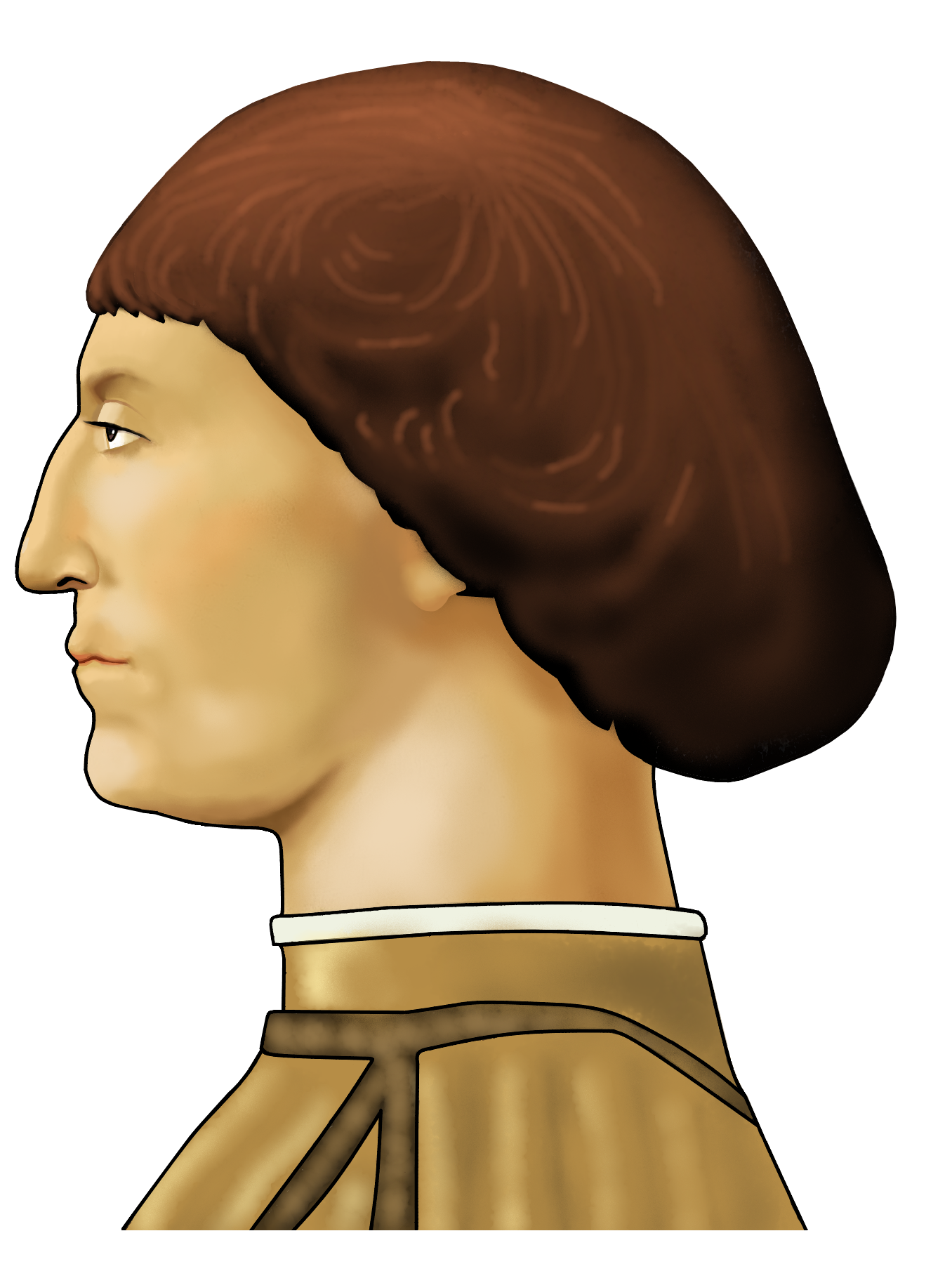
The formal condemnation of 1460, reinforced by Pius II’s carefully curated Commentaries, crafted an image of impiety, depravity, and treachery. A man without fear of God or respect for man. Yet no evidence was offered, nor does any surviving judicial inquiry corroborate the charges. Diplomatic archives from Milan, Venice, Florence, and Mantua do not confirm the more lurid claims, and even the oft-cited connection to the Ottoman Sultan Mehmed II proves insubstantial. In 1461 Mehmed requested that Sigismondo’s court artist, Matteo de’ Pasti, travel to Constantinople to paint his portrait. Venetian authorities, suspicious of possible collusion, detained Matteo as a spy, confiscating his gifts of maps and Valturio’s military treatise De Re Militari, and charged him before the Council of Ten with aiding the Turks in a potential invasion of Italy. No credible plot emerged, and Pius himself never foregrounded the episode in either his formal indictment or his Commentaries. The striking feature of the condemnation, therefore, is not its severity but its evidentiary emptiness. Condemnation replaced demonstration. In this case, power did not need to prove; it needed to proclaim.
The coalition that formed against Sigismondo clarifies the political logic. Ferrante of Naples resented earlier betrayals; Francesco Sforza had been directly undermined by shifting allegiances; Federico da Montefeltro stood to gain territorially from his downfall.
Each had something to gain from Sigismondo’s removal. Papal condemnation transformed a regional rival into a universal enemy. The language of heresy elevated political conflict into moral necessity. Opposition to Sigismondo became a defence of Christendom itself.
The canonisation to Hell inverted the ritual logic of sainthood. Canonisation typically affirmed exemplary holiness; here, damnation was ceremonially formalised with similar gravitas. By appropriating the symbolic machinery of sanctification in reverse, Pius II demonstrated that spiritual authority could define not only sanctity but monstrosity. This was symbolic domination at its most explicit. Sigismondo’s body remained in Rimini, but his reputation was executed in Rome. Such theatricality also hints at fragility. Though the pope wore the crown of a secular ruler, his military power was real but not absolute. Territorial authority remained contested, and the papal states were largely governed by condottieri who operated with considerable autonomy. By recasting Sigismondo as a heretic and sexual deviant, categories over which religion and canon law gave the papacy particular authority, Pius attacked the foundations of his political standing. The destruction of reputation functioned as a weapon.
The episode therefore reveals a conception of power that was at once spiritual and profoundly political. Pius II did not merely punish Sigismondo; he sought to annihilate him spiritually, politically, and reputationally. Through excommunication and canonisation to Hell, he imperilled Sigismondo’s soul; through public ritual and crusading rhetoric, he legitimised military action against him; and by embedding his condemnation within the Commentaries, he wrote Sigismondo’s infamy into the historical record. If authority could define virtue and vice, it could shape memory itself. Yet the very excess of the spectacle invites scepticism. No other ruler received such treatment. The singularity of the act suggests not confident supremacy but the need to assert it emphatically. Power that must burn effigies in three symbolic centres of Rome is power acutely aware of the instability of perception. Sigismondo’s canonisation was less a judgment on a soul than a demonstration of authority. It exposed how papal power in Renaissance Italy operated not only through armies and alliances, but through rhetoric, ritual, and the capacity to define moral reality. In condemning Sigismondo Malatesta, Pius II revealed that the most enduring battleground of the fifteenth century was not only territorial, but reputational. Damnation, in this case, was propaganda. An act of political authorship disguised as divine judgment.
Bibliography
Anthony E. D’Elia, Pagan Virtue in a Christian World: Sigismondo Malatesta and the Italian Renaissance (2016)
Helen S. Ettlinger, ‘The Sepulchre on the Facade: A Re-Evaluation of Sigismondo Malatesta's Rebuilding of San Francesco in Rimini’ (1992)
Mary Hollingsworth, Princes of the Renaissance (2021)
Michael Mallet's Mercenaries and their Masters: Warfare in Renaissance Italy (2019)
Pope Pius II, trans. Marcello Simonetta and Margaret Meserve, Commentaries, Vols. 1–3 (2004, 2007, 2017)