
“No vestige of a beginning, no prospect of an end”: Temporal Distortion in the Lives of Gulag Prisoners (MT25)
In 1788, James Hutton proposed his controversial and groundbreaking thesis the world was not, as it was commonly assumed to be, 6,000 years old. He challenged the beginning of human history not only by challenging its date, but our notion of beginnings in general. By dating parts of the earth, Hutton could find evidence that our planet had existed for more than 6,000 years but could not find evidence of its exact beginning. Refuting the commonly accepted Western conception of time, Hutton famously stated:
“We find no vestige of a beginning, no prospect of an end.”
Hutton coupled the idea of beginning and end in a way that applies to human history as well as natural history. There is no tabula rasa from which beginnings are launched in human history; “beginnings” transform existing trends, following or causing the end of a status quo. Beginnings are accompanied by endings and therefore can and perhaps ought to be examined in conjunction. When analysing any historical trend – in this case beginnings and endings – historians should not fear drawing inspiration from methods in other fields of research. Hutton’s conclusions came from investigation into parts of a whole, rather than the grand entirety of a geological development. Just as James Hutton examined small samples of sediment to come to conclusions about far larger geological trends, each broad historical trend consists of many small-scale individual beginnings and endings, indispensable for analysis of a larger development.

Certain beginnings and endings are considered typical for people to experience in their lives; take, for example, marriage and birth, or graduation and retirement. Nevertheless, the very kind of beginnings and endings we see as common can reflect changes in history; graduation as a ‘beginning’ is a contemporary phenomenon borne of the advent of mass education. By analysing changes in beginnings and endings of trends for individuals, historians can piece together the nature and significance of historical developments. This article will explore how expected or “normal” personal beginnings and endings can be distorted, which is often a sign of a significant or unusual development.
The mass imprisonment of Soviet (and non-Soviet) citizens in labour camps from the 1930s through the mid 1950s severely distorted the beginnings and endings people expected to experience in their lives. Experiences people anticipated from an early age, such as parenthood or marriage, did not occur or occurred in anomalous ways, creating temporal distortion in the histories of many individuals. While imprisonment is generally likely to cause the distortion of beginnings and endings in people’s lives, such a period of mass imprisonment was historically abnormal. An estimated 18 million people passed through the Gulag system as prisoners, each of whose expected and actual personal life chronologies differed significantly.
Many prisoners shared the experience of relatively sudden arrest. While there were political prisoners and conventional criminals, who were more likely to understand the risk of arrest, many prisoners had no forewarning their life was about to be demolished. People could be arrested for showing up to work late if they worked in a critical industry during WWII or be caught by accident in the crossfire of workplace purges. Many were also arrested for familial or social association with someone else who had been arrested. Even if they suspected they were to be arrested, most prisoners did not have time to part with family, wrap up domestic matters, or arrange to defend themselves before the law. Sudden arrest and imprisonment was an abrupt ending to a phase of their life they could never return to, and the beginning of an inhumane experience that would mark them, both internally and to society, for the rest of their lives. It was not a true ending, just as later returning from the Gulag would not be a fresh beginning either.
It is often forgotten that a significant portion of Gulag prisoners were women, many of whom became mothers in labour camps. However, their experience of motherhood was not what any may have expected. To begin with, the mortality rate of infants at Gulag nurseries was high, so the beginning of motherhood was often swiftly followed by its end. Additionally, most children were sent to orphanages if they lived to the age of two, often never meeting their mothers again. In such a situation, birth was not the beginning or end of a parental lifestyle, as women, knowing that they would have to give their children up, could properly not raise them. Could they really consider themselves parents? Was their child really their own? In this way, the Gulag distorted a typical milestone of parenthood for many Soviet women: the beginning of motherhood. It also distorted the end of parenthood, as one’s child remained alive, but not in the life of its biological parents.
Marriage, a cornerstone of many people’s lives, was also distorted in the Gulag. Those who were married prior to entering the Gulag might never see their spouses again. Some renounced them, some found new spouses, others were imprisoned for association with a partner and still more could not contact one another. As such, for many married prisoners, upon entering the Gulag system it seemed that their marriage was over. If spouses did manage to keep in contact, their communication was filtered through the state. Additionally, the Gulag was a place of unofficial relationships, from simple sex to “camp marriages”, where two people would enter a (usually) sexual relationship with additional benefits, which were typically protection or acquisition of necessary provisions. These relationships had varying emotional significance for prisoners but were arguably more real than the increasingly intangible relationship with a spouse several thousand kilometres away. Thus, one’s marriage did not entirely end upon their entrance to the Gulag, yet new ones still began, even if their existence was dependent on imprisonment.
One would imagine this haze of temporal distortion would dissipate when people were released from imprisonment into civil society once again. However, this temporal distortion did not end, as many features of camp life followed its inmates home (if “home” was even what they could call where they went). Many stayed in Siberia or northern Central Asia, where the labour camps were located, enveloped in an environment of trauma and foreignness. Psychological trauma was a feature of post-Gulag life for many prisoners but was not where the impact of the Gulag ended. Many people were shunned in their own home cities, or sometimes even prevented from returning by concerned municipal administrations. They had to return to people who had denounced them, and to much-changed environments. Finally, these Gulag returnees were practiced in black marketeering, which had kept them alive, and thus often plugged themselves into unofficial economies wherever they returned to. This was necessary for many Soviet citizens, not only former Gulag prisoners. However, the influx of Gulag returnees in the 1950s meant that the shadow economy became negatively associated with their identity outside of the camps. As a result, the experience of the Gulag – of isolation, psychological challenges and involvement in shadow markets – did not end when prisoners were released.
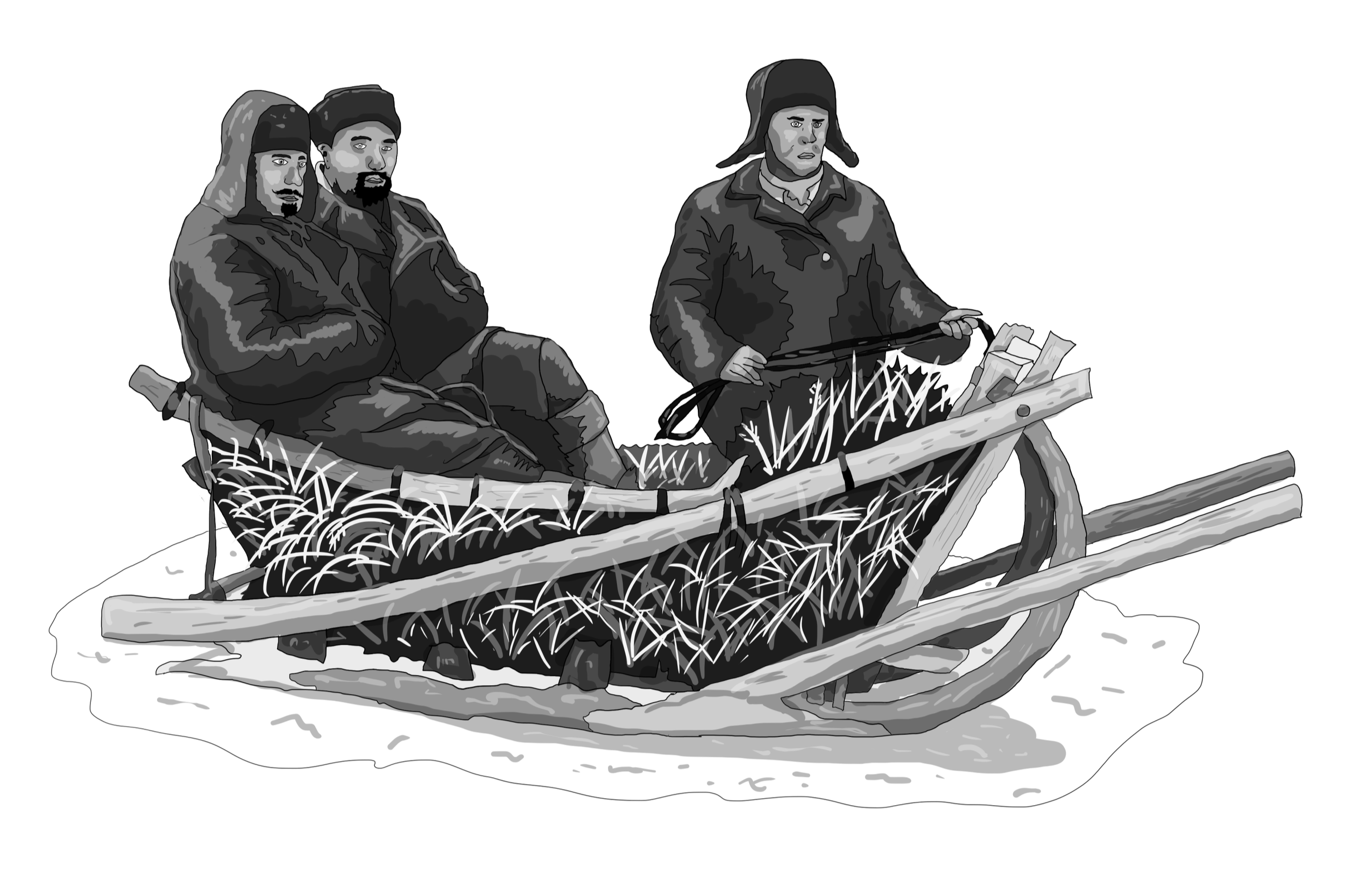
The beginnings and ends of a typical life do not apply to a prisoner or former prisoner of the Gulag. These prisoners experienced incomplete and uncertain beginnings and endings to parenthood, marriage, and other life events. They had fragments of each but the full trappings of none, experiencing life through a temporal kaleidoscope rather than an expected chronology.
As I draw to a close, some might be surprised Solzhenitsyn hasn’t been quoted yet. After all, this is an article about the Soviet Gulag, right? This is intentional: this article discusses every single one of the 18 million that went through the Gulag, not just the subsection of this number who were political prisoners and dissidents. While important, the overemphasis on Gulag memoirists like Solzhenitsyn obscures the experiences of the majority of prisoners who did not craft their experiences into literary masterpieces. Sadly, we have very few primary sources on the Gulag save these memoirs, meaning historians are often forced to over-rely on the literature of political dissidents. To piece together the impact of the Gulag on the majority of the prisoners, investigating their shared actual and expected experiences is crucial. Instead of quoting Solzhenitsyn, I will quote Mahmoud Darwish, a Palestinian poet, since distorted beginnings and endings are not only a facet of history, but a feature of the modern day. In 2004, Mahmoud Darwish said in a speech:
“A person can only be born in one place; however, he may die several times elsewhere: in the exiles and prisons, and in a homeland transformed by [an] occupation and oppression into a nightmare.”
While this quote originally referred to Palestine, it applies equally well to the Gulag prisoners that experienced these several deaths. For them, returning from the Gulag was not escaping the authorities that inflicted pain and chaos upon them; it was returning to find society occupied by the same repressive state. To die several times is both not to die and not to live, to live without the promise of the beginnings or endings that humans are raised to expect. To better understand how any development impacted people in any historical space, exploring such promises and expectations is crucial.