
1948: A new beginning for Ceylon? (MT25)
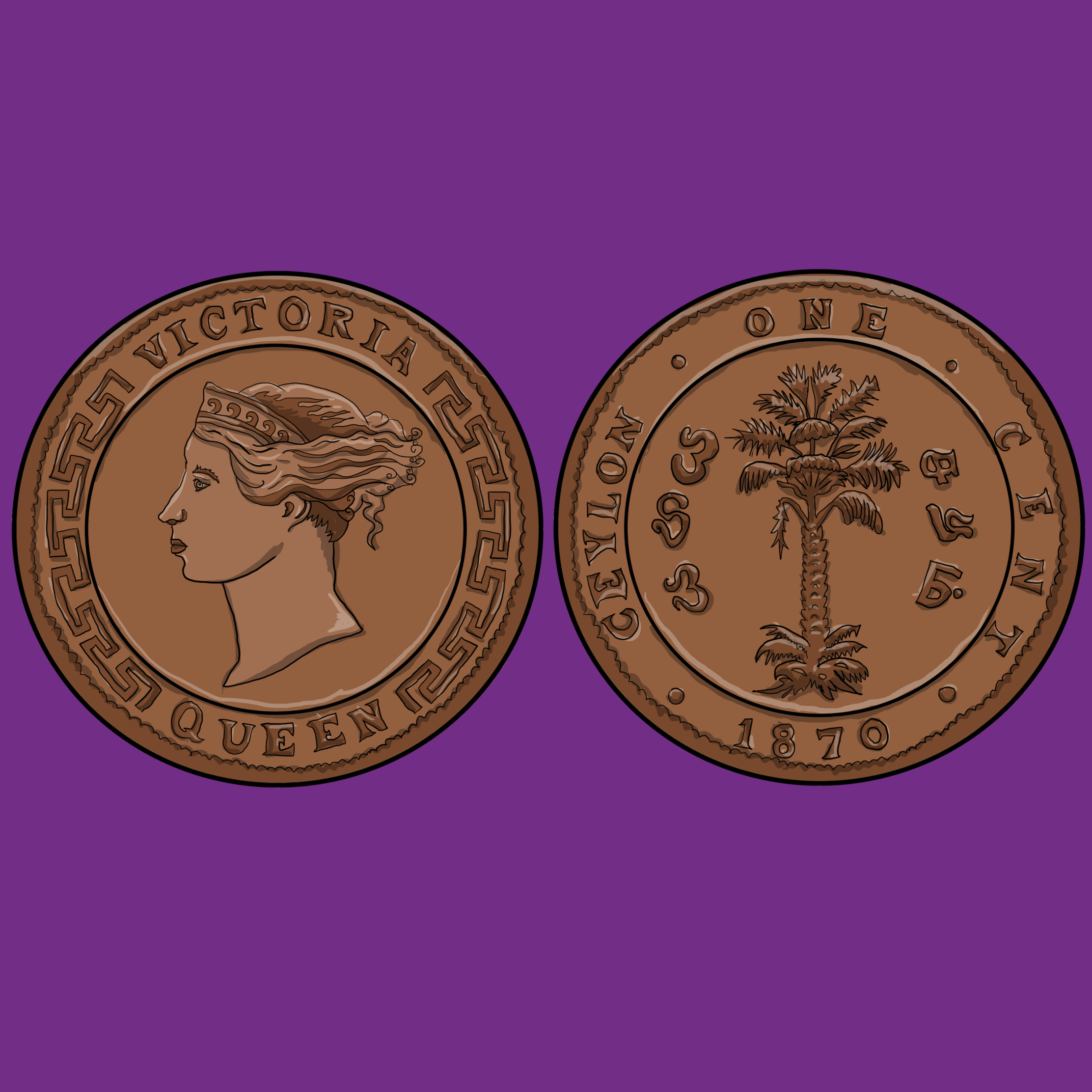
The year 1948 marked a lot of new beginnings. The NHS had been introduced under Health Secretary Aneurin Bevan in the first Attlee Ministry. Secretary of State and former Chief of Staff George Marshall had introduced Marshall Aid in the second Truman premiership. China was nearing its socialist revolution under Chairman of the Chinese Communist Party Mao Zedong. 1948 also saw the birth of my grandmother: moreover, she arrived in this world at the same time as the nation she was born into. In this article, on Ceylon’s (Sri Lanka’s) independence in 1948, I will explore the build-up to the country’s independence, independence itself and the consequences which accompanied this event.
Why did Ceylon become independent?
The year is 1948. Just under 3 years has passed since the conclusion of the Second World War and Britain is still under enormous economic strain. The cost of the Second World War has meant that it has begun to cede its empire. Undergoing its own independence movement, with prominent figures such as Mahatma Gandhi at the helm of it, Britain cedes the British Raj, which become modern day India, Pakistan and (later) Bangladesh. To the south of the Raj is an island, much smaller in area and population (it is inhabited by approximately 56 times fewer people) known as British Ceylon. Like its North Asian neighbour, British Ceylon assisted Britain and the wider British Empire during the Second World War, fighting Japan on the South-Asian front in 1942, supplying 60% of the rubber for the British Empire, and converting the prestigious Colombo Racecourse into an airstrip for RAF Bombers. However, the wartime loyalty to Britain and the British Empire cannot conceal the fact there is a demand for independence.
How did Ceylon gain its independence?
The year 1931 saw a big change for British Ceylon; in that year, it became the first colony of the British Empire to receive universal suffrage. Elected as a result, Don Stephen, better known as DS Senanayake, became Minister for Agriculture that very year. Born in 1884, Senanayake had quite a prestigious upbringing, being educated in St Thomas’ College in Colombo. Nevertheless, he was no stranger to Ceylonese activities to defy the rule of the British, such as the riots of the 1910s. Between 1931 and 1948, there were legislative agreements Senanayake himself participated in, which made ever more tangible the prospect of Ceylonese independence. The Soulbury and Whitehall commissions of the mid-1940s made it clear that there would be, at the very least, some political independence for British Ceylon. And then, the year 1945 saw a change in party at the helm of the British Government. Winston Churchill’s Conservatives were replaced by Clement Attlee’s Labour. George Hall, who replaced Oliver Stanley as Secretary of State for the Colonies after the election, resigned from his position the following year, making the prospect of independence imminent. Further political development occured in British Ceylon itself. Senanayake formed the United National Party (UNP) and contested the 1947 Parliamentary elections against the Trotskyist candidate Edmund Sammarakody, leader of the Bolshevik Party of Ceylon. Whilst Senanayake won with 16,000-votes, this was not enough for him to form an overall majority. Consequently, he formed a coalition government with the All-Ceylon Tamil Congress. The wheels were set in motion. With a coalition in place, the Governor General of Ceylon, Sir Henry Moore, invited Senanayake to form a government as the first Prime Minister of Ceylon. The country became an independent nation in 1948 (though retaining the British monarch as head of state) and, dropping ‘British’ from its official name, was known only as Ceylon.
Consequences-The beginning of the end?
DS Senanayake served as Prime Minister until his death in 1952. He presided over improving the Ceylonese economy, as well as developing invigoration projects. On his death he was succeeded by his son Dudley Senanyake, inaugurating an age of Ceylonese Prime Ministers, and eventually Presidents, serving multiple political terms in different years and decades due to an absence of term restrictions. For example, Dudley Senanayake served as Prime Minister non-consecutively in the 1950s, 1960s and 1970s before his death in 1971. With decolonisation came attempts by Ceylon to tackle the cultural problems and the divides which came with the British. SWRD Bandaranaike (who like his British equivalent, Prime Minister Anthony Eden, was an alumnus of Christ Church College, Oxford) attempted to implement Sinhalese as the main language through the Commonwealth Nationality Act in 1956, neglecting the wider population of Sri Lankan Tamils, in part due to their newfound educational advantage through universities which the Empire had provided for Ceylon. This only led to a violent increase in tensions, culminating with his assassination in 1959. The last years of Ceylon saw the island nation nearly face its own Russian Revolution, with the JVP Insurrections in 1971 and 1989 organised by the Sri Lankan Communist Party. Violence continued even after 1972, when Ceylon renamed itself Sri Lanka and removed the British monarch as head of state, replacing Elizabeth II with an elected President. The Black July Riots in 1983, which occurred under former Sri Lankan Prime Minister turned 2nd President of Sri Lanka Junuis Richard Jayewardayne saw the island nation plunged into 26 years of civil war (The Sri Lankan Civil War). Whilst strictly a Civil War, the island nation saw much foreign proxy activity on both sides, from the UK to the USA, China, India and the USSR (as well as the Russian Federation after 1991). Stemming from the brutal nature of colonisation, as well as general Sri Lankan political corruption (with two core families having taken the helm of Sri Lankan politics) this conflict made the end of Sri Lanka seem a real possibility.
Consequences-A new beginning?
In recent years, however, things have been looking up for Sri Lanka. The 2024 Sri Lankan Presidential Election saw a first for the country; a majority for a third-party candidate. Aruna Kumara Dissanayake, representing the National People’s Party, affiliated with the JVP Party involved in the insurrections of the late 20th century. Like DS Senanayake nearly 80 years before, AKD has sought to promote the economic reconstruction of Sri Lanka after an extended period of crisis (which, after one year in office he has been somewhat able to achieve). As a third party candidate of little prestige he been able to somewhat eliminate the issue of political corruption in Sri Lanka, the core of its present problems. As the 80th Anniversary of Ceylonese independence approaches, has the island nation truly become an independent and stable nation?