
From Machiavelli to Facebook: How shifting power dynamics in the Middle East created the Arab spring (HT26)

Niccolo Machiavelli once remarked that ‘Revolutions rarely begin with calls for freedom, they begin when ordinary life becomes quietly intolerable’. His maxim captures the essence of the Arab Spring, a movement which lacked any single ideology or political manifesto: those who took to the streets were united by contempt of those who ruled and disillusionment with the life of those who were ruled. Indeed, as Machiavelli predicted, the revolutions of 2011 did not begin with calls for freedom or mass unrest, but with a single act – the self-immolation of Mohammed Bouazizi, a Tunisian street vendor, protesting his harassment by local officials. Nevertheless, the consequences of this act included the following: the downfall of Tunisia and Egypt’s leaders, the descent of Syria into an inconclusive civil war and NATO intervention in Libya. Machiavelli’s remark leaves one aspect of the Arab Spring unilluminated, however. What kind of power made life so ‘intolerable’ that such a small act could provoke such and a widespread and violent response?
Although the death of Bouazizi was the immediate spark to protests, the underlying grievances protested by the population had been developing for years. The calls for ‘bread, freedom and social justice’ that persisted across protests show the problems abundant in the Middle East, and these issues were far from new. Food security for most had been becoming less guaranteed since the 1980s, and political freedom had been encroached upon since the 1950s. Economic power had become increasingly concentrated in the hands of elites: since the 1970s, privatization and the dismantling of the welfare state had reduced the obvious manifestations of government generosity for most of society. Wealth had instead been concentrated on a class of super-rich individuals. By 2011, although the absence of a social safety net was proving problematic, the real bone of contention held by the population was that social welfare policy and public sector employment were within living memory.
Although economic problems were not new specific to 2011, they had become more apparent due to the withdrawal of policies such as a bread subsidy (baladi bread). Bread shortages from 2008 onwards raised prices: without any meaningful subsidization, riots began. Growing income inequality became increasingly visible to the Arab lower and middle classes. Revenue from oil transformed social hierarchy by creating a highly mobile and globally connected Arab elite, whose wealth and proximity to Western economic interests placed them at a distance from the everyday moral and economic pressures experienced by the majority. This internationalisation drove the Arab lower and middle classes to a sense that elites had absolved themselves from religious accountability. The family of the president of Tunisia’s lavish, state funded lifestyle was broadcasted on Al Jazeera after WikiLeaks revealed their embezzlement of state funds, much to the horror of a population suffering the dual evils of political oppression and economic precarity.
Not only did such inequality exist, but it was also a conspicuous element of everyday urban life. Private security and gated neighbourhoods associated typically with cities like Johannesburg were also a reality for Middle Eastern cities such as Cairo, segregating urban life to create a stark divide between rich and poor. Displays of opulence through lavish villas, luxury cars and walled compounds strikingly contrasted with a significant proportion of the population forced to spend most waking hours on the street. An Iranian professor, from his time in Cairo, recalled being led to an address in return for 2 dinars (30p) by a college graduate in his 20s. An overqualified and underemployed population within clear view of grossly visible wealth forged a backdrop for mass protests to eventually erupt. This was especially true when members of society who had previously held respected positions in the middle classes were reduced to working underpaid and unofficial jobs as Middle Eastern economies faltered. As they were cut off from the flow of wealth, those who retained power over it locked themselves into a closed cultural circuit. Elites attended the same beach clubs, private mosques and exclusive restaurants, creating a social barrier between those with the economic means to separate themselves from the majority and those without that power.
A lack of economic freedom was compounded by the reduction of political freedom that corresponded with increasing state power. Expansion of police forces, intelligence services and emergency laws made life increasingly difficult for Arabs desiring to express political opinions. This political restriction, when combined with the reduction of the welfare state, meant that state power had a more visibly negative than positive effect for many Middle Eastern citizens. This was conspicuous especially to urban populations where most uprisings were concentrated. Police brutality martyred citizens like Khalid Said, who was beaten to death by police officers in Alexandria after sharing a video of their prior violent actions. The Facebook page ‘We are all Khalid Said’ stirred public anger towards President Mubarak’s regime, sharing photos of the 28 year old’s disfigured face and organising protests in response to his death. Whilst state oppression and brutality in the Middle East predated the 21st Century, the state had previously legitimized its actions by providing welfare and introducing other positive elements to its citizens daily lives. Increasing privatization and a turn away from socialism without a reduction of political censorship or control meant that the presence of the state became a negative force rather than a positive one. Economic shifts meant that political control that had previously been regarded as a necessary evil became unbearable. The kind of power Middle Eastern states exercised became one sided, an oppressive power became illegitimate without state provision.
This changing nature of state power put Arab populations into a generally worse situation. A lack of political rights combined with an economically worsening position certainly gave cause for a revolution but alone doesn’t present the whole story. For protests and uprisings to take place on the scale that they did across the Middle East, new collective power held by the population to protest effectively had to have materialized. In the years before the Arab Spring, the Middle East had not experienced the level of popular protest the rest of the world had become increasingly used to, with protest groups such as Kefeya struggling to muster even a few hundred protestors. This was not because conditions in the Middle East were significantly better than the rest of the world, but because on an individual level the cost of protest outweighed the benefits. Harsh police repression along with little collective power to organize social mobilization made protest an individually dangerous decision.
However, several things changed in the years preceding the Arab Spring that made popular protest possible. Although state welfare and investment programmes had generally receded with the end of the 20th century, what remained from them was an educated population with a high literacy and university enrolment rate. A lack of jobs that matched these skills became problematic in states with little or no access to oil. With a 30% graduate unemployment rate by 2011 in Egypt, Tunisia and Jordan, a population that had worked hard for an education had their expectations dashed by a lack of meaningful opportunity. Their expectations were not limited to economic opportunity, but also the opportunity to partake in the political future of the country, an opportunity which was put to bed by strict police controls enforcing authoritarian monarchies or meaningless elections. The discontent fostered by this situation could be publicly shared by an important new element in society: the internet.
The internet provided an alternative narrative than the one presented in state media. More importantly, it presented a channel in which Arab populations could understand that the negative role state power played in their everyday lives was not confined to them as individuals, but rather experienced by the whole population. This was very important, as knowledge certainly became power in the sense that it made popular protest possible. Protest was no longer an individually dangerous decision when you knew how many people were going from Facebook. Groups on Facebook shared images of brutality to explosive effect, online blogs critiqued the regimes provoking public discussion, and news sites like Al Jazeera linked small-scale protest to national discontent. The internet put power in the hands of protestors by illuminated their shared experience and grievances. The power of isolation that the state had previously held over its people was dissipated by online connection.
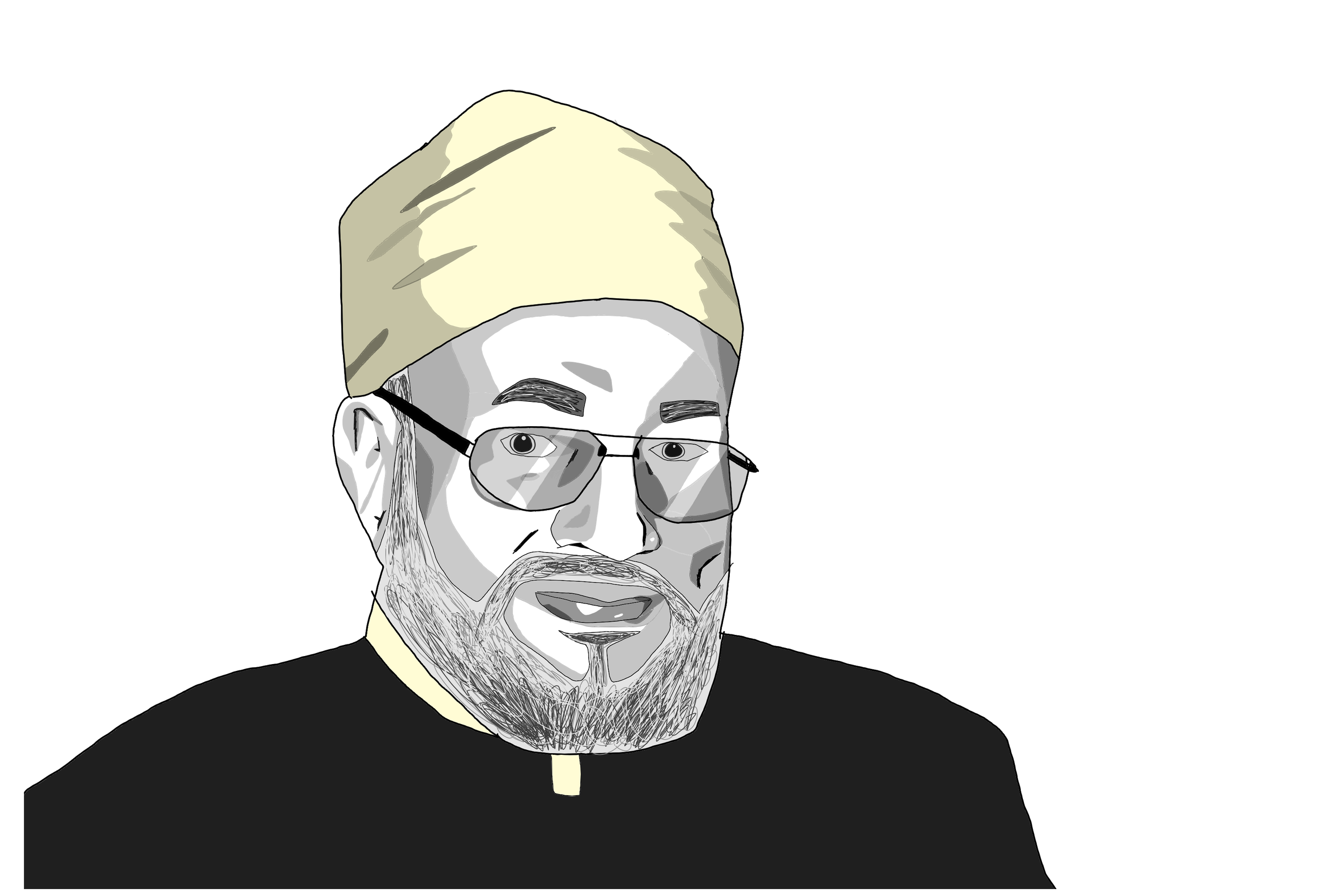
Another element of growing power within the Arab population was the generally growing entrenchment of Islamism in Arab society. Islamism is an ideology which seeks to entwine Islam and politics. More secular and nationalist governments had become popular from 1930 to 1960, but since the Arab defeat against Israel in 1967 Islamism had seemed to be the successive ideology for a Middle East in crisis. While Islamism did have its ebbs and flows, the political success of groups such as the Muslim Brotherhood in elections in Jordan and Egypt and the presence of Islamic groups which provided healthcare and education in place of the state had shown its prominence by 2011. Islamism was far from being the ideological mandate of the Arab Spring, but its prominence did foster collective power against the state. Islamism presented a political channel alternative to the state, as speakers drew large crowds and sparked debate and conversation in mosques and public spaces. This discussion had the potential to develop into dissent against Arab regimes. One ideal of Islamism was anti-imperialism, which stemmed from a rejection of persisting Western political influence on Middle Eastern society. Figures such as Yusuf al-Qaradawi, an Islamic scholar with a programme on Al-Jazeera, critiqued the US’s tendency to ‘support rulers who deny their people freedom’. His critique of Arab states that they ‘deny their people freedom’ shows how Islamist ideals differed from those of the incumbent regimes. Islamism also presented a different kind of revolutionary power in society, as while previous Arab revolutions had often revolved around elites and the military, Islamism drew protesting sentiment straight from communities and the general population. Islamism certainly did not present a unified opposition to Arab regimes in 2011, but its presence in society provided an alternative moral, organisational, and political power to incumbent regimes that was difficult to challenge.
The Arab Spring was thus a series of revolutions that were not driven by a singular ideological power. Instead, it was driven by changing power dynamics between the state and its population, as the majority of Arab society became increasingly disenfranchised by the power of elites, while at the same time becoming more politically empowered. Education, Islamism, urbanisation and the internet empowered the population, while at the same time eroding state provision, increasing surveillance, economic exclusion and visible injustice incentivized the population to take political action. The Arab Spring was driven by an empowered population reacting to encroaching state power that had lost its legitimacy.
Bibliography
Asef Bayat (2017). Revolution without Revolutionaries: Making Sense of the Arab Spring. Stanford, California: Stanford University Press.
Bellin, E. (2012). Reconsidering the Robustness of Authoritarianism in the Middle East: Lessons from the Arab Spring. Comparative Politics, 44(2), pp.127–149. doi:https://doi.org/10.5129/001041512798838021.
Gelvin, J.L. (2015). The Arab Uprisings: What Everyone Needs to Know. Oxford ; New York, Ny: Oxford University Press.
Gerges, F.A. (2014). The New Middle East: Protest and Revolution in the Arab World. New York, N.Y.: Cambridge University Press.