
Hernán Cortés and La Malinche – conflicting legacies of power (HT26)
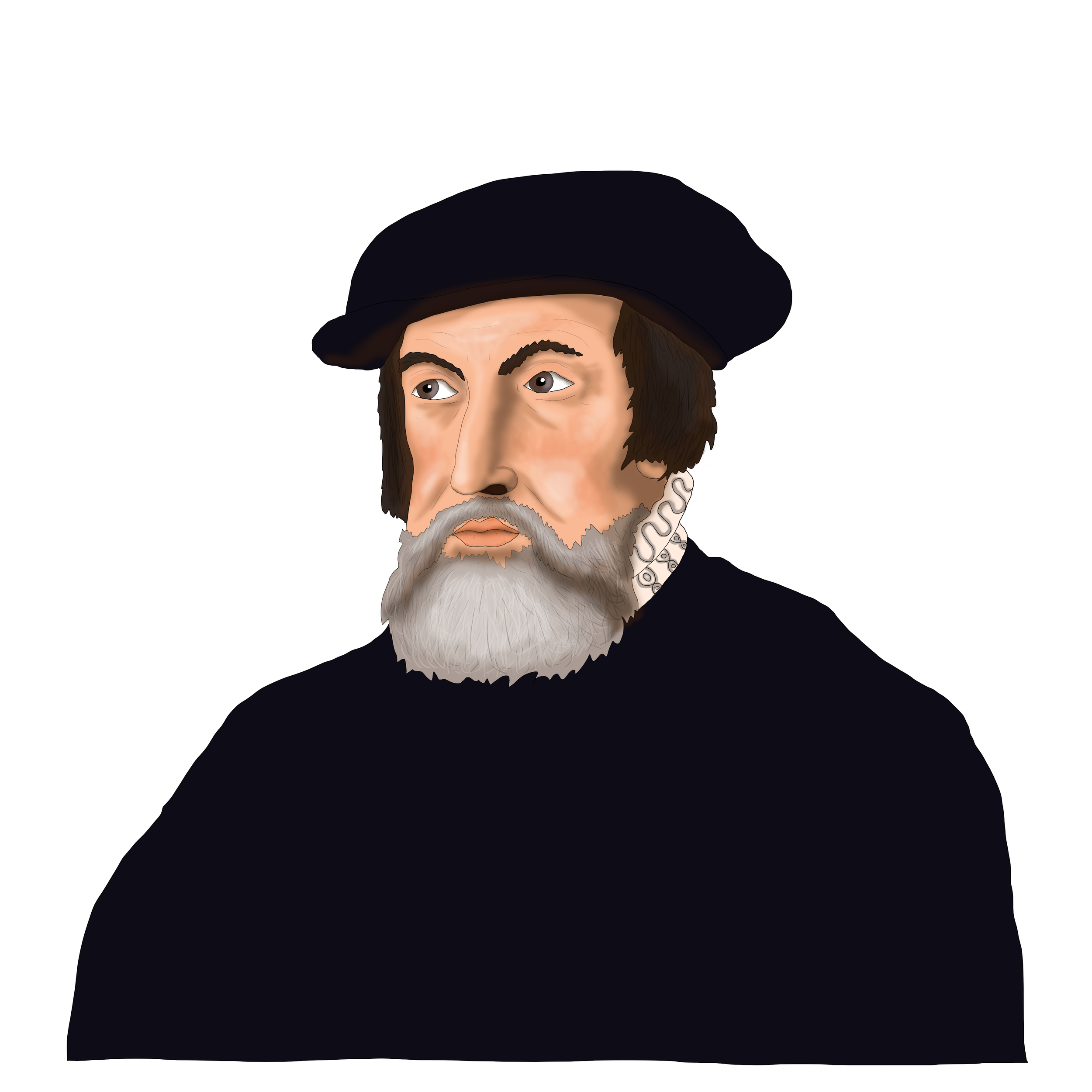
On the 13th of August 1521 the city of Tenochtitlan fell to the Spanish imperial forces. The loss of this indigenous city (in modern-day Mexico) was the final stage in what we now know as the conquest of the Aztec Empire. This convergence of the New and the Old World secured Spanish dominance in the region, a dominance which would have a lasting effect upon Mexico’s history, culture and language. The most resplendent figure of the conquest, the man who’s name crops up when discussing this resounding Spanish victory, is that of Hernán Cortés. Born in Medellín, Spain, in 1489, Cortés would go on to make his way across the Atlantic, first to Cuba and eventually to Mexico, where he would earn the title of ‘conquistador’ as he led the Spanish troops in their vanquishing of the Aztec state (who were also known as the Mexica). Power, undeniably, is at the fore of Cortés historical character.
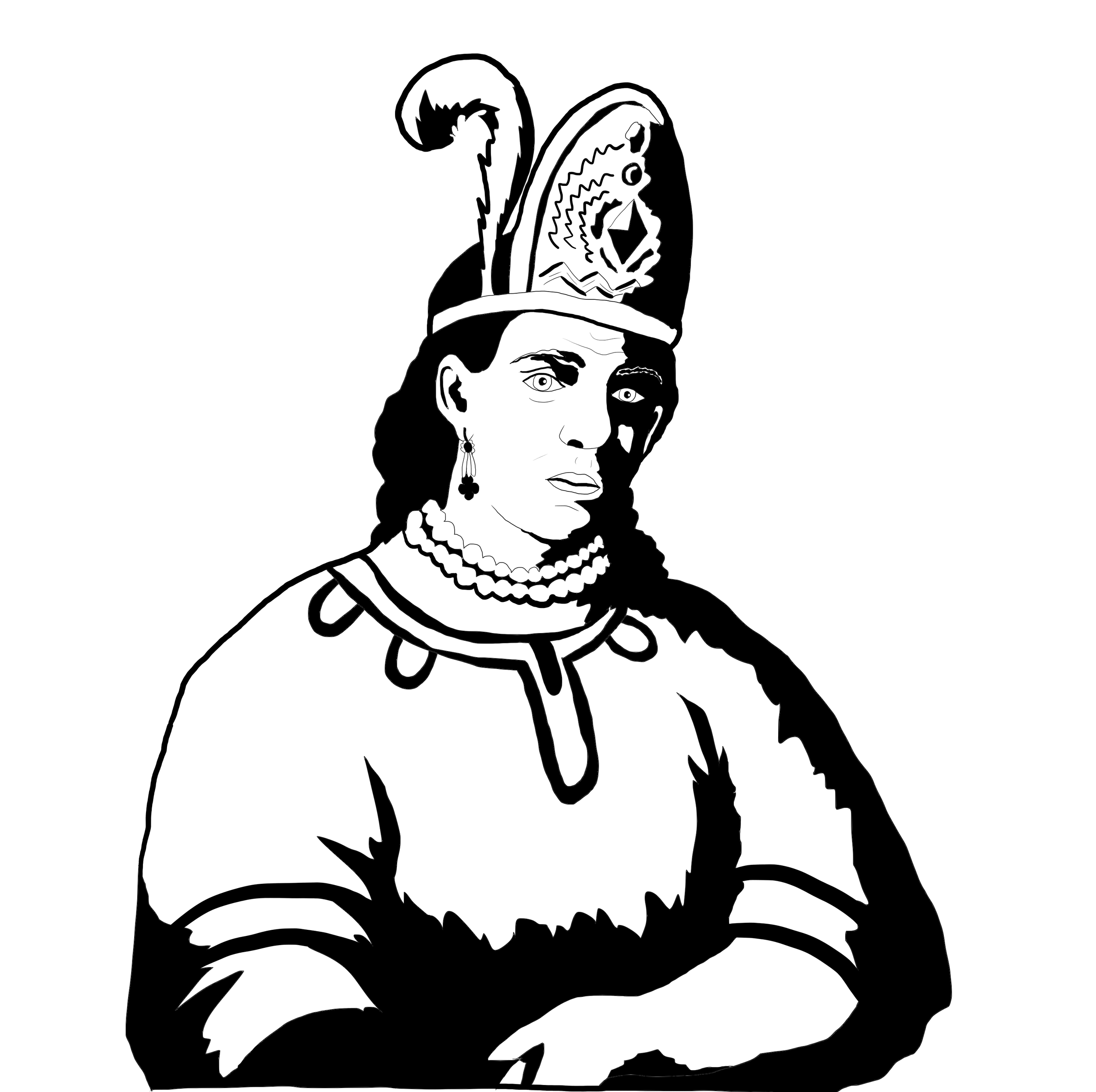
At the same time, it is essential to recognise the multi-faceted nature of power in this context, for it does not always emanate solely from a powerful military leader like Cortés. Power can also be forged out of necessity, in ways more subtle than imperialist annihilation. The role of a noble indigenous woman by the name of La Malinche in aiding Cortés conquest of the Americas is demonstrative of this type of power. La Malinche (also known as Marina or Malintzin) became one of Cortés’ slaves in the early stages of the conquest, yet even within this limited space she sought to establish herself as his interpreter, owing to her knowledge of Nahuatl (an indigenous language which was spoken amongst the Aztecs). By juxtaposing Hernán Cortés and La Malinche, we can understand how imperialism paves the way for both the colonisers and the colonised to seek power and carve out their respective historical legacies.
Cortés’ power most evidently rests in his ability to lead a small army of Spanish troops to conquer one of the largest indigenous empires of his age within the span of two years. Initially, he was part of the Spanish expedition to Cuba, led by Diego Velázquez, but a growing dispute between the two men resulted in Cortés abandoning the expedition and, with a mere 530 troops, arriving in Yucatán on the east coast of modern-day Mexico, in February 1519. The first conflict between the Spaniards and the Aztecs took place not long after, in March of that year, when the ‘conquistadors’ defeated the indigenous army during the Battle of Cintla (or the Battle of Tabasco). As we shall see, the spoils of this battle would prove to be invaluable to Cortés’ success, for he received 20 slaves from the Mexica. One of these slaves was La Malinche, and from this point onwards she would become Cortés’ indigenous mouthpiece in his interactions and dealings with the Aztecs.
Although her exact year of birth is unknown, La Malinche was born in Coatzacoalcos to a family of noble descent. Her prospects would have therefore tbeen relatively positive, had it not been for the death of her father, after which she was allegedly sold or kidnapped into slavery. It would have been very easy for La Malinche to slip through the net and disappear from the history books, had it not been for the Battle of Tabasco: following this change in fortune, her value to the Spanish mission swelled when her linguistic skills were discovered by the ‘conquistadors’, in that she spoke both Yucatec Maya and the indigenous Uto-Aztecan Nahuatl language.
The most striking example of La Malinche’s polyglot abilities aiding the Spanish cause comes from the account given of the Cholula massacre in October 1519. In the days leading up to this event, the Spanish ‘conquistadors’ had stopped by the city of Cholula on their way to Tenochtitlan. It was claimed that the Cholulans had stopped giving the Spanish army food and had hidden a large Aztec army in the outskirts to prepare for an attack. This plot, later accounts claim, was uncovered by La Malinche herself, who had allegedly listened in on a conversation between Aztec generals about their plot to kill the Spanish in their sleep. If this is the case, then La Malinche was responsible for bringing this news to Cortés and his men, resulting in a pre-emptive strike and a victory for the Spanish. By using La Malinche as a medium by which the Spaniards could communicate with local communities and rally more support for their mission, Cortés was able to establish closer ties with the indigenous population, which ultimately strengthened the imperialist effort to vanquish the Aztec Empire.
The relations forged between the Spaniards and the Aztecs are a crucial contributing factor to Cortés’ power and influence in the region, and ultimately his success by 1521. The local Mexica population resented their emperor, Moctezuma Xocoyotzin, due to the high taxes imposed by his government. Therefore, the forming of local alliances between the Spanish army and the locals was eased by the fact that Cortés’ proposal of leadership was far more attractive than what was offered by Moctezuma. The significance of the relations between the Spaniards and the locals is evidenced in that, by the time the expedition reached its final stages in Tenochtitlan, members of the Mexica population made up approximately 95% of Cortés army. Whilst local support was undeniably important to the Spanish conquest of the Aztecs, the combination of Cortés’ diplomatic communication skills and fundamentally La Malinche’s ability to translate and interpret dialogue between indigenous communities and the Spaniards which secured this support.
So exactly how powerful were Cortés and La Malinche? Can we even compare their power? Cortés would likely have answered with a resounding yes. He was powerful both militarily and politically, and the success of the Spaniards as they vanquished the Aztecs is widely attributed to his leadership skills and his ability to rally support from local indigenous populations. His extensive conventional power vastly outweighs La Malinche’s irregular grasp of it. Her strengths do not fit typical categories of power; she did not conquer an expansive army, as Cortés did, nor did she explicitly rebel against the constraints of her position. Nevertheless, La Malinche manipulates her status, one which would usually grant her little to no power at all, to allow her a relatively large amount of influence: the Spaniards were reliant on her ability to speak Nahuatl to communicate with the indigenous peoples whose support they needed.
At the same time, this assumption begs the question whether La Malinche was even powerful at all, or if her unlikely legacy came about not through her own doing but because of a ‘perfect storm’ of conditions, specifically her linguistic abilities and her presence by Cortés’ side. The unconventionality of her power is evident in the ensuing debates surrounding her role as Cortés’ advisor, especially in her denunciation as a ‘traitor’ to her own people. However, we must take into consideration the lack of autonomy which La Malinche would likely have had in taking this step, which sparks the debate as to whether she was powerful, or whether she was simply obeying orders from a higher imperial power.
The figures of Hernán Cortés and La Malinche certainly reflect the variable nature of power. Cortés, as the coloniser, crafts a legacy of power in his control over others, and this vein of power is relatively straightforward to examine. He is powerful in his lifetime, and his legacy preserves this imperial power. On the other hand, the discussion of power in relation to La Malinche blurs boundaries and sparks questions. Does she create this power for herself? Is it simply a case of luck, in that she grew to prominence by being Cortés’ linguistic advisor? Would she have wielded an even more powerful legacy if she had explicitly rebelled against the rule of the Spanish, and refused to aid the conquistadores?
Perhaps these questions will continue to be debated and never yield a satisfactory answer. Whatever the case, I feel that La Malinche’s legacy, her role in the conquest as an indigenous woman who (controversially) aided the Spanish, brings her to the fore of this period of history. We know who she was, what she did, and how she contributed to the defeat of her own people. This historiographical permanency, atypical for an indigenous slave, is what defines La Malinche’s power.
Bibliography
- Blake, Jon Vincent. “HERNÁN CORTÉS Y LA CONQUISTA INTELECTUAL DE AMÉRICA.” Romance Notes 16, no. 3 (1975): 764–69. http://www.jstor.org/stable/43801389.
- Candelaria, Cordelia. “La Malinche, Feminist Prototype.” Frontiers: A Journal of Women Studies 5, no. 2 (1980): 1–6. https://doi.org/10.2307/3346027.
- Clendinnen, Inga. “‘Fierce and Unnatural Cruelty’: Cortés and the Conquest of Mexico.” Representations, no. 33 (1991): 65–100. https://doi.org/10.2307/2928758.
- Cruz, Valeria y Martínez, Diego (2015, 23 23Europe/Madrid enero). Conquista de México. Historia de México. https://lahistoriamexicana.mx/virreinato/conquista-de-mexico
- Martínez, José Luis. “Las Crónicas de La Conquista de México (Un Resumen).” Historia Mexicana 38, no. 4 (1989): 677–99. http://www.jstor.org/stable/25138250.
- Namala, Doris. “Mesoamerican Perspectives on Mexican Conquest History: Using Digitized Indigenous Primary Sources in the Undergraduate Classroom.” The History Teacher, vol. 52, no. 2, 2019, pp. 237–64. JSTOR, https://www.jstor.org/stable/26646489.