
Creating the Iron Lady: Mechanisms of Female Power in 1970s British Politics (HT26)
What are some of the enduring images of British politics in the 1970s? Saatchi and Saatchi’s ‘Labour isn’t Working’ poster is probably one of them; the miners’ strikes in the early part of the period, which brought down Ted Heath, another. In contrast to the 1980s, which were dominated by Margaret Thatcher’s premiership, it was a rather masculine decade, particularly within politics. But just because the women of Westminster have been glossed over in the canonical histories of the period, this does not mean that they were not there. Thatcher did not just appear a fully formed neo-liberal in 1979, and Harold Wilson’s second term (1974-76) saw him much weakened, both personally and politically, and thus increasingly dependent on the women in his life – or rather, one woman in particular. Female politicians and public figures remained important and powerful, even in the absence of a female prime minister (PM).
In this period, we are well before Labour’s all-women shortlists and it will be fifty years until we get our first female chancellor. British politics was not a friendly place to be a woman: Ted Heath reportedly struggled to even hold a conversation with someone of the opposite sex, and throughout his four years as PM attempted to freeze Thatcher out of various important policy decisions. So how did the women of this period fight, not necessarily against sexism as an overarching concept (Thatcher had a very limited interest in holding the door open for other women), but against the individual barriers they faced as a result of their gender? There are multiple models of female power, but here we will explore three: deriving power through a man (the Marcia Williams strategy), holding ‘male’ power as a woman (the Thatcher strategy), or rejecting male modes of power altogether (the Maureen Colquhoun strategy). Using these women as case studies, we will seek to discover which of these strategies is the most effective in gaining power, which involves not just bossing people around, but having meaningful autonomy to instruct yourself and others.
We will begin with someone who has not yet been mentioned: Mary Wilson, wife of the Labour leader 1963-76. Wilson is mostly remembered for the quintessential The Private Eye column, Mrs Wilson’s Diary, which did not paint her in a very serious light. Although in her personal life she held deep-seated political convictions, she never embraced the public and political life which she had not asked for. There was power in this decision: as a result, she was able to oppose her husband in the 1975 European Economic Community (EEC) referendum which he had called, and she remained a supporter of the (at times radical) Campaign for Nuclear Disarmament (CND). However, this did leave a vacuum for someone else to be PM Wilson’s right-hand man, a gap which was filled rather enthusiastically by Marcia Williams, later Baroness Falkender, Wilson’s political secretary. In modern terms she might be referred to as his ‘work wife’, and there were rumours of an affair between the two, although this is dated to well before the period we are discussing. In Bernard Donoghue’s diaries, which focused on the years 1974-76, Marcia Williams is mentioned almost 800 times, completely dominating his narrative: she ‘controlled access from and to the whole political and personal side of the Prime Minister’s Life’. Perhaps the best example of this is the ‘lavender list’, or Wilson’s 1976 resignation honours. The list itself is indicative of a dissemination of power from the traditional aristocracy to a broader microcosm of society, but also highlights Williams’ personal power. Not only was the initial draft of the list drafted on her pastel lavender paper (hence the name), but many of the most controversial names on the list had much closer relations with Williams than with the prime minister, although both insisted everything had come from Wilson. The scandal disgraced both Wilson and Williams in the public eye, but the damage had been done. The resignation honours were an effective consolidation of power because of the life peerages that were awarded; Williams’ influence long outlasted Wilson’s stint as PM. This incident illustrates one of the ways women held power within the period: through men. Although this left their ability to exercise power to the whims of men, many of whom had their own ideas as to how it should be wielded, it was perhaps so effective because of its insidious nature. They were, after all, Wilson’s resignation honours: by wielding power through men, perhaps women were able to use them as shields from the criticism they would have almost undoubtedly faced presenting these ideas on their own.
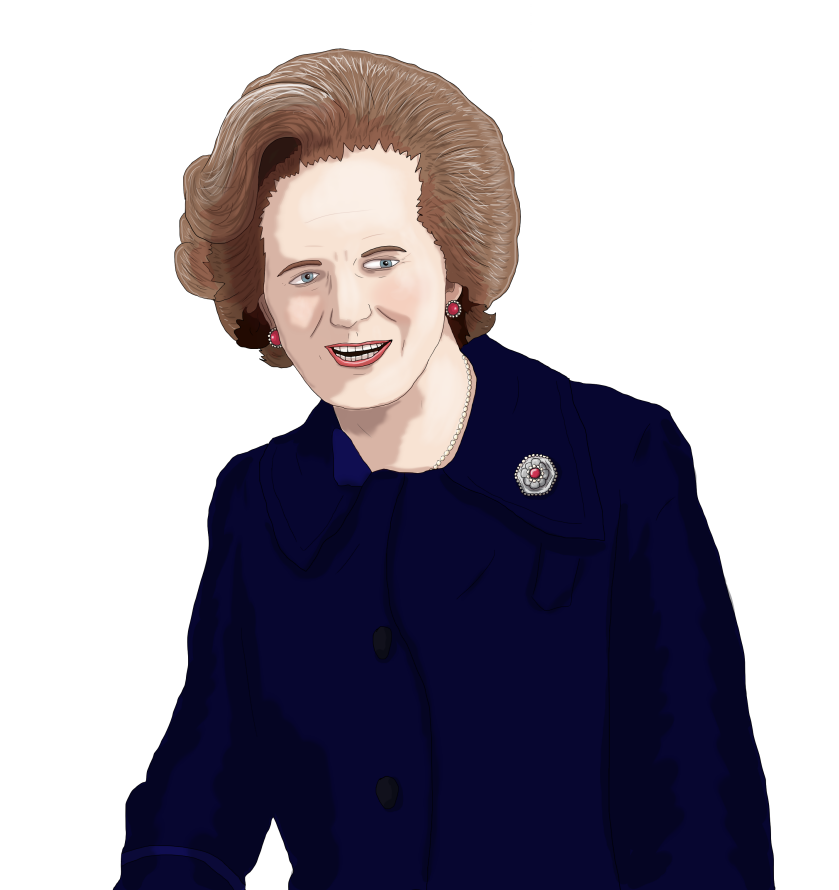
For other women, however, there was a need to cut out the middleman. It was inconvenient to have to ingratiate yourself with a man in order to hold any power at all (Marcia Williams wasn’t an elected official, so lacked democratic legitimacy) and even once that was done, the ways in which you exerted your power had to remain palatable to him. Although effective, it was a strategy with clear limitations which some women weren’t prepared to accept. They aspired to greater heights than being political secretary. Enter the Secretary of State for Education, Margaret Thatcher. Her appointment as Education Secretary was in part to serve as a national punching bag for the difficult education reforms that took place under Heath – hence her being nicknamed ‘Maggie Thatcher Milk Snatcher’ – as well as, being the only female full cabinet member, serving as a maternal face of government. This was not a role which Thatcher was prepared to accept, even in the short term. She chose to revoke Labour’s policy of comprehensivisation without consultation, much to Heath’s personal chagrin. This dictatorial style of leadership would come to define the latter part of her premiership (post-Falklands), but it is clear that even in the early 1970s Thatcher had her own distinct way of wielding power. Rather than relying on men as a conduit, Thatcher became the ‘political man’: according to Nuttall, in the 1970s this revolved around strength in terms of both morals and mechanics. What made Thatcher so powerful, both in retaining her cabinet position and in her later leadership of the Conservatives, was combining a powerful moral message with her ability to actually get things done. On one level, we can see ‘morality’ as a feminine mode of power, challenging the idea that a key way of gaining power was by adopting masculine attributes, but this model was spearheaded by the likes of Callaghan and Heath. Thus, we can see that, rather than dividing power into ‘masculine’ and ‘feminine’, which is rather arbitrary, the morality/mechanics thesis was used by the political establishment, which was dominated by men, meaning that when Thatcher adopted this as her leadership style, she was assimilating into male modes of power rather than creating her own distinct way of operating.
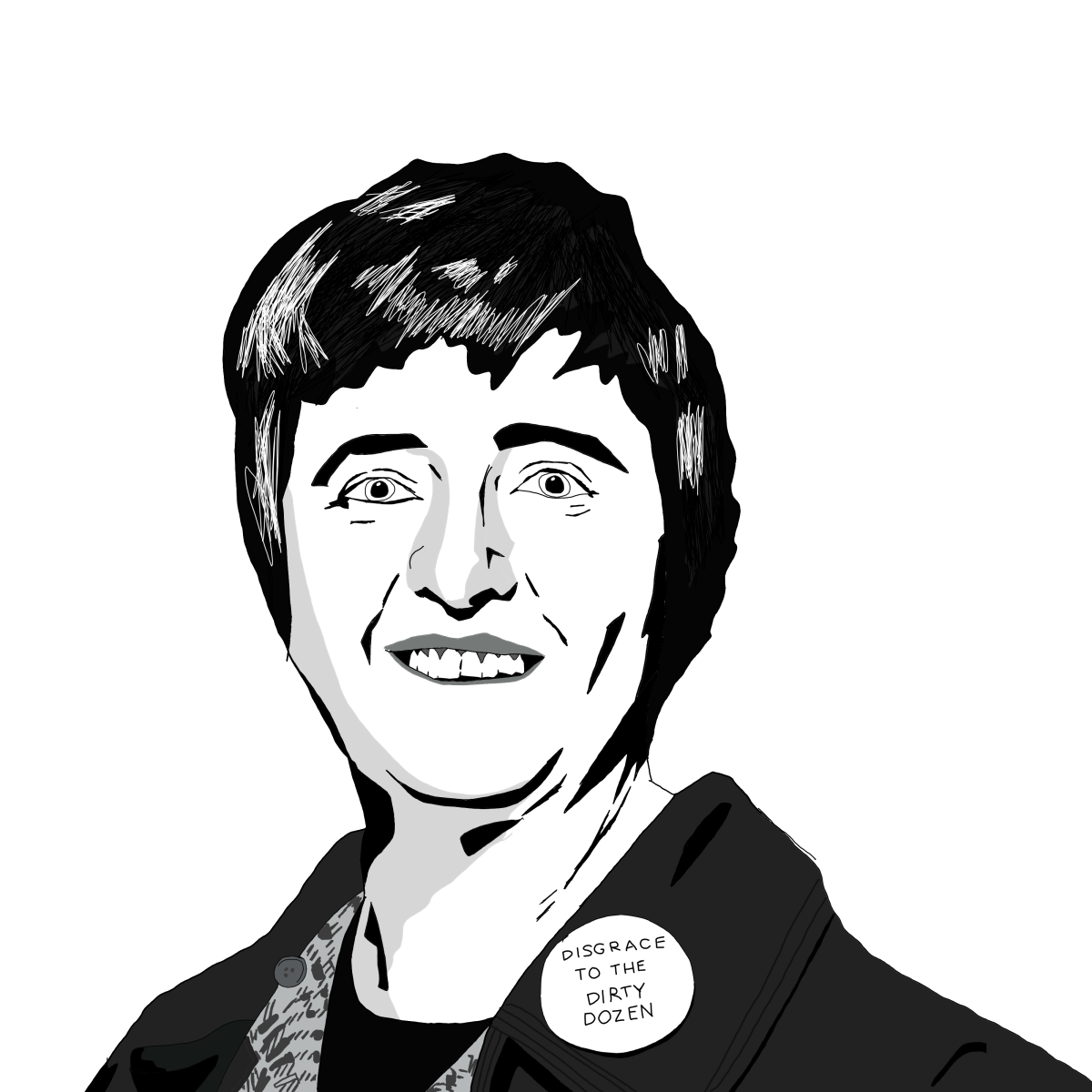
With these two examples, I, for one, am left somewhat unsatisfied. Although it is clear that women wielded significant power in 1970s British politics, they were forced to do so by either direct assimilation through ingratiating themselves with the more powerful men around them, or indirect assimilation through buying into the male-dominated political establishment. Maureen Colquhoun, a little-known Labour MP from 1974-79, offers us a more distinct alternative. From the very beginning of her political career, she refused to capitulate to male ideas of how women should operate in political and public life, being removed from positions as governor and library committee member for ‘talking too much’. Rather than simply being someone in politics who happened to be a woman, she dedicated much of her politics to championing women’s rights, including positive discrimination on public boards. When she was outed as a lesbian in 1976, this too became a part of her politics, so much so that she used it to deflect (substantiated) accusations of racism after she endorsed comments made by Enoch Powell. When we consider what many would class as a politicisation of lesbianism by radical feminists in the 1970s, we can see that the way that Colquhoun gained and then held onto power was very different to the male establishment’s methods, as well as to conventions of masculinity and femininity. Whilst Colquhoun did not necessarily create a ‘female’ power, she certainly rejected the idea that one had to behave like a man, or behave as men like, in order to gain some power. However, it is worth noting that of all the figures which have been discussed, Colquhoun created by far the least material change. Whilst she was significant in bringing gender issues to the forefront of British politics, she initiated relatively little concrete legislation. Therefore, we can see that whilst it was possible to reject male modes of power, it was perhaps not particularly effective if one had high political aspirations.
Ultimately, we return to the contradiction mentioned at the beginning of the last section. Whilst women undoubtedly could and did hold political power in 1970s Britain, there was a clear price to pay which was not exacted so keenly from their male counterparts. They either had to surrender to male interests, making it difficult to hold power in a meaningful way because they were unable to create their own agenda, or accept that their power would be limited by their womanhood. Although Thatcher was able to buck this trend to a degree in the late 1980s, she too was beholden to her male cabinet, and in the 1970s struggled to escape the shadow of Ted Heath. When we consider the prevalence of modern-day identity politics, the rise of Thatcher and her contemporaries in the 1970s serves as a stark reminder that when we think about who has power, simply looking at descriptive characteristics is not enough. A woman having power does not necessarily mean she is rejecting patriarchal notions of what power is; if we desire a truly pluralistic society, then we must think about socio-political diversity, too.
Reading list/bibliography
Crook, Sarah, “The Labour Party, Feminism, and Maureen Colquhoun’s Scandals in 1970s Britain”, Contemporary British History, 34.1 (2020)
Donoghue, Bernard, Downing Street Diary: With Harold Wilson in No. 10 (London: Random House, 2005)
Elliot, Imelda, “Second-Level Education Policy in England and Wales in the 1970s” in Le Royaume-Uni à l’épreuve de la Crise 1970-1979 (Paris: Atlande, 2017)
Harper, Tobias, ‘Harold Wilson’s ‘Lavender List’ Scandal and the Shifting Moral Economy of Honour’, Twentieth Century British History, 31.1 (2020)
Holland, Tom and Dominic Sandbrook, ‘Britain in 1974: Countdown to a Coup’, The Rest Is History, (Goalhanger Podcasts, 15 February 2024) https://podcasts.apple.com/ee/podcast/britain-in-1974-countdown-to-a-coup-part-3/id1537788786?i=1000643911874 [accessed 21 December 2025]
Langdon, Julia, “Mary Wilson Obituary”, The Guardian, 7 June 2018 < https://www.theguardian.com/politics/2018/jun/07/mary-wilson-obituary> [accessed 16 December 2025]
Nuttall, Jeremy, “The Persistence of Character in Twentieth-Century British Politics”, Journal of Contemporary History, 56.1 (2021)